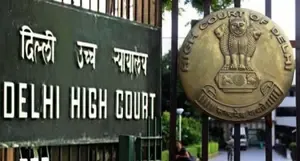
Delhi High Court Orders Removal of Unauthorized Videos of Kejriwal in Excise Policy Case
Synopsis
In a significant ruling, the Delhi High Court has mandated the police to eliminate unauthorized recordings of Arvind Kejriwal's courtroom arguments from social media, spotlighting the ongoing controversy regarding the integrity of judicial proceedings.
Key Takeaways
The Delhi High Court has ordered the removal of unauthorized videos related to the excise policy case.
Advocate Vaibhav Singh filed a complaint alleging the illegal recording of court proceedings.
Kejriwal argued for his recusal from the case, emphasizing his discharge from accusations.
The court has reserved its decision on the recusal plea.
The case highlights concerns regarding the integrity of judicial proceedings.
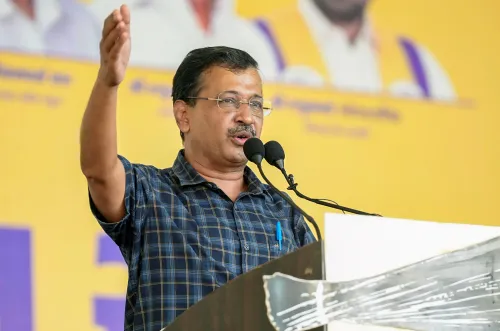
New Delhi, April 15 (NationPress) The Delhi High Court has instructed law enforcement to remove all unauthorized videos shared on social media that depict Aam Aadmi Party (AAP) leader and former Chief Minister Arvind Kejriwal presenting his arguments before Justice Swarana Kanta Sharma during the proceedings related to his request for the judge's recusal in the Delhi Excise Policy case.
This directive follows a controversy surrounding the unauthorized recording and distribution of the court proceedings, with registry officials indicating that measures are being taken against individuals who recorded and shared these videos in breach of video conferencing protocols.
“This is not the first time actions have been initiated for sharing recordings of court proceedings online. Similar measures have been enforced previously,” stated officials.
Earlier that day, attorney Vaibhav Singh lodged a complaint with the Delhi High Court, claiming that audio and video from the April 13 proceedings before Justice Sharma were recorded and disseminated without authorization.
In his complaint directed to the Registrar General, Singh alleged that numerous political figures, including Kejriwal and other AAP members, “intentionally and deliberately” recorded and shared the proceedings on various social media platforms in violation of established regulations.
He argued that this act constituted a “clear violation” of the Delhi High Court Rules for Video Conferencing, 2021, along with the Electronic Evidence and Video Conferencing Rules, 2025, which explicitly prohibit unauthorized recordings or distribution of court proceedings.
The complaint further claimed that the widely circulated recordings on platforms such as X, Facebook, Instagram, and YouTube were part of a “pre-planned conspiracy” aimed at tarnishing the judiciary's reputation and misleading the public.
“A detailed inquiry into this matter is requested, along with appropriate action against all individuals and political entities for willfully violating the rules,” the complaint asserted.
The April 13 hearing was related to Kejriwal’s request for the recusal of Justice Swarana Kanta Sharma from cases associated with the alleged Delhi Excise Policy matter.
Kejriwal attended in person, arguing his application for nearly 45 minutes. He emphasized to the Delhi High Court that he is “no longer an accused” in this case, noting that the trial court had discharged him and other accused parties due to a lack of evidence to substantiate charges.
He contended that Justice Sharma’s subsequent ex parte order, which partially stayed the trial court’s findings, led to a “grave and reasonable apprehension” regarding his ability to receive a fair hearing.
“When this order was issued, my heart sank. I had significant doubts about receiving justice,” Kejriwal remarked to the Delhi High Court, adding that he had previously written to Chief Justice Devendra Kumar Upadhyaya—the roster master—requesting a transfer of the case before submitting his recusal application.
He also stated that the principle governing recusal is based on a litigant’s reasonable suspicion of bias, rather than the existence of bias itself.
In response to his arguments, Justice Sharma noted that matters concerning the urgency or manner of judicial orders cannot be evaluated in recusal proceedings and are better suited for challenge in the Supreme Court.
Opposing the request, Solicitor General Tushar Mehta asserted that the legal standards for recusal are well-defined, cautioning against making allegations that could compromise the integrity of the judicial process.
“Regardless of the outcome, we must maintain fairness towards the court,” remarked the Centre’s second-highest legal officer.
After hearing all arguments, the Delhi High Court has reserved its judgment on Kejriwal’s recusal request and instructed the parties to submit brief written submissions within the designated timeframe.
Point of View
The Delhi High Court's decision to remove unauthorized recordings underscores the delicate balance between transparency in the judicial process and the need to uphold legal protocols. This incident reflects broader concerns about the misuse of technology in legal contexts and the implications for public trust in the judiciary.
NationPress
2 Oct 2026
Frequently Asked Questions
What did the Delhi High Court order?
The Delhi High Court ordered the police to ensure the removal of unauthorized videos showing Arvind Kejriwal arguing in court.
Why were the videos deemed unauthorized?
The videos were considered unauthorized as they violated the Delhi High Court Rules for Video Conferencing, which prohibit recording or publishing court proceedings without permission.
What was the nature of Kejriwal's argument?
Kejriwal argued that he is no longer an accused in the excise policy case, citing a lack of evidence and expressing concerns about receiving a fair hearing.
Who filed a complaint regarding the recordings?
Advocate Vaibhav Singh filed the complaint, alleging that several political leaders, including Kejriwal, recorded and circulated the court proceedings illegally.
What is the next step after the court's decision?
The Delhi High Court has reserved its verdict on Kejriwal's recusal plea and directed the parties to file brief written submissions.