Has the Kerala Cabinet Approved the Thiruvananthapuram–Kasaragod RRTS Corridor?

Synopsis
The Kerala Cabinet has taken a significant step by approving a 583-km RRTS corridor from Thiruvananthapuram to Kasaragod, reinforcing its commitment to a high-speed railway system post SilverLine challenges. This project promises to enhance connectivity and reduce travel times across the state.
Key Takeaways
583-km RRTS corridor approved by Kerala Cabinet.
Focus on high-speed railway connectivity.
Project aims to enhance access to jobs and education.
Funding modeled after Delhi's successful transit system .
Construction for Phase I set to begin in 2027.
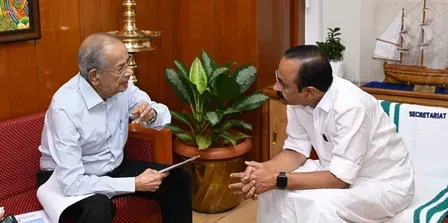
Thiruvananthapuram, Jan 29 (NationPress) The Kerala Cabinet, under the leadership of Pinarayi Vijayan, has granted preliminary approval for the establishment of a 583-km Regional Rapid Transit System (RRTS) corridor connecting Thiruvananthapuram and Kasaragod. This decision indicates a renewed commitment to developing a comprehensive high-speed railway network across the state, especially following the challenges encountered with the SilverLine initiative.
On Wednesday, the Cabinet formally resolved to express Kerala's intent to the Central government and empowered the state Transport Department to begin discussions with the Union authorities.
Upon receiving the initial approval from the Centre, the state will proceed to draft a Memorandum of Understanding. Following this, the project’s technical, financial, and funding details—including loan sources—will be presented to the Cabinet for final approval.
The Cabinet emphasized that high-speed transport is a fundamental aspect of the state government’s developmental strategy. Given Kerala's unique geographical features and dense population, there is a pressing need for an efficient and environmentally friendly railway system.
The envisioned RRTS is designed to significantly reduce travel durations, enhance inter-regional connectivity, and broaden access to job opportunities and educational institutions.
This decision follows the stalled progress of the K-Rail (SilverLine) project, which faced technical objections from Indian Railways and public opposition in various regions.
Approval for the detailed project report submitted by Kerala has been delayed, with proposed conditions deemed inconsistent with the state's growth objectives.
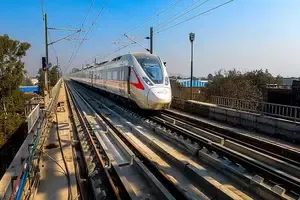
The Cabinet has identified the RRTS as a more feasible option, drawing inspiration from the successful Delhi–Meerut RRTS corridor that operates at speeds between 160 and 180 km/h, boasting high passenger capacity and minimal station spacing.
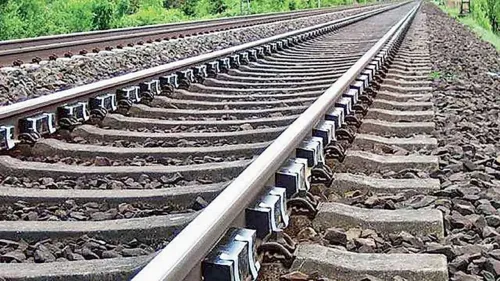
The proposed system will be primarily elevated and fully grade-separated, a strategy that Kerala intends to replicate to minimize land acquisition, safeguard natural water flow, and address community concerns.
Use of embankments and tunnels will be limited to essential areas only.
The RRTS corridor will integrate with existing and planned metro systems—such as Kochi Metro and the anticipated Thiruvananthapuram and Kozhikode Metros—aiming to enhance last-mile connectivity and lessen reliance on private vehicles, thus creating a cohesive multimodal transport network.
In terms of financing, Kerala plans to adopt the Delhi model, with 20% of the funding sourced from the state, another 20% from the Centre, and the remaining 60% from long-term loans from international financial institutions, implemented in phases to alleviate fiscal strain.
The project is structured in parallel phases: Phase I, covering the 284-km Thiruvananthapuram–Thrissur Travancore Line, is slated to commence construction in 2027, with a completion target set for 2033, in conjunction with the integration of the Thiruvananthapuram Metro and Kochi Metro.
Future phases will extend the corridor to Kozhikode, Kannur, and Kasaragod, with possibilities for further extensions to Coimbatore, Kanyakumari, and Mangaluru.
The Kerala Cabinet stated that executing the project in phases concurrently could lead to the realization of a comprehensive statewide RRTS network within approximately 12 years.
Point of View
The approval of the RRTS corridor by the Kerala Cabinet reflects a proactive approach towards addressing transportation challenges in the state. It demonstrates a commitment to modernizing infrastructure while prioritizing efficiency and sustainability. This initiative could serve as a model for similar projects nationwide, showcasing how regional solutions can complement national growth objectives.
NationPress
23 Sept 2026
Frequently Asked Questions
What is the purpose of the RRTS corridor?
The RRTS corridor aims to enhance inter-regional connectivity, reduce travel times, and improve access to jobs and education across Kerala.
When will the construction of the project begin?
Construction for Phase I of the project is expected to start in 2027.
How will the project be funded?
The funding will follow the Delhi model, with contributions from the state, Centre, and long-term loans from international financial institutions.
What are the expected benefits of this RRTS project?
The RRTS project is designed to cut travel times significantly, enhance connectivity, and offer a sustainable transportation option for the state's residents.
What challenges did the SilverLine project face?
The SilverLine project encountered technical objections from Indian Railways and faced public opposition, leading to delays and reconsiderations.