E. Sreedharan Unveils New High-Speed Rail Plan for Kerala
Synopsis
Renowned technocrat E. Sreedharan has unveiled an innovative semi high-speed rail proposal for Kerala, aiming for rapid implementation and minimal land acquisition. This plan promises to enhance connectivity while addressing environmental concerns.
Key Takeaways
New high-speed rail proposal introduced by E.
Estimated project cost: Rs 56,500 crore .
Operational speed of 200 km/h for trains.
Travel time from end-to-end: 3 hours and 20 minutes .
Focus on passenger comfort and environmental concerns .
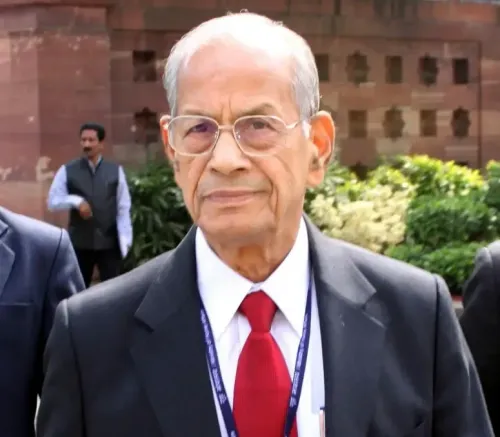
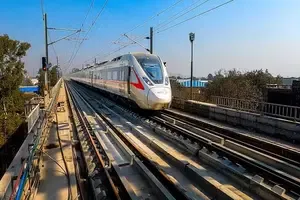
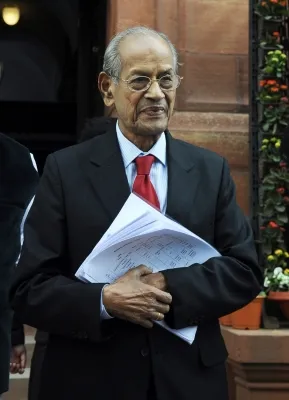
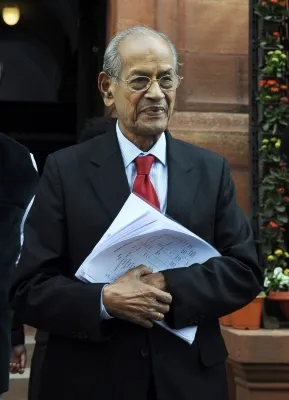
Thiruvananthapuram, Feb 24 (NationPress) Renowned technocrat and former head of Konkan Railway, E. Sreedharan, introduced a revamped blueprint for a semi high-speed rail corridor in Kerala on Tuesday. This new proposal pledges expedited implementation, reduced expenses, and minimal land acquisition compared to current plans.
The corridor, which spans from Thiruvananthapuram to Kannur, also integrates Pathanamthitta and Malappuram into the route.
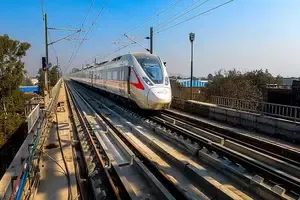
Sreedharan indicated that trains in this proposed system would reach speeds of up to 200 km/h, facilitating complete travel in just 3 hours and 20 minutes.
The estimated project expenditure stands at approximately Rs 56,500 crore. During a media briefing, Sreedharan mentioned that about one-third of the operational energy costs could be conserved, as the power will be generated internally.
“A high-speed railway operates as a service organization,” he remarked, emphasizing that ticket prices would be maintained at the lowest feasible rates, comparable to those of AC chair car services.
Prioritizing passenger comfort, safety, punctuality, and cleanliness will be essential.
The design proposes that trains stop for one minute at regular stations and for two minutes at major hubs.
The alignment is primarily designed to run through elevated viaducts and tunnels, minimizing the necessity for extensive land acquisition and addressing environmental concerns.
Sreedharan noted that this updated proposal was developed following limited progress on his previous submission and is set to be presented to the Union government shortly.
This announcement arrives as the Pinarayi Vijayan administration advances with its own Regional Rapid Transit Corridor (RRTC) initiative.
The state Cabinet has granted initial approval for the RRTC project, which aims to implement a rapid inter-city system, commencing from Thiruvananthapuram to Kasaragod in phases.
Budget allocations have also been earmarked for preliminary actions.
These concurrent proposals highlight contrasting strategies in tackling Kerala’s growing mobility issues.
While Sreedharan’s approach focuses on higher speeds and a mostly elevated framework to keep costs down, the RRTC plan by the state is designed as an integrated regional transit solution that connects major urban hubs.
As detailed project reports are yet to be finalized in either scenario, the upcoming months will likely reveal which model gains governmental support.
Point of View
Sreedharan's revised proposal for a semi high-speed rail corridor presents a critical advancement in Kerala's transportation infrastructure, emphasizing efficiency and cost-effectiveness. As the government also explores its own transit solutions, the competition between these initiatives will be pivotal in shaping the state's mobility landscape.
NationPress
6 Oct 2026
Frequently Asked Questions
What is the estimated cost of the new rail project?
The estimated cost of the new semi high-speed rail project is approximately Rs 56,500 crore.
What speed will the trains operate at?
The trains under the proposed system are expected to operate at speeds of up to 200 km/h.
How long will the end-to-end journey take?
The total travel time for the end-to-end journey will be around 3 hours and 20 minutes.
What are the environmental considerations of the project?
The alignment will primarily run through elevated viaducts and tunnels to minimize land acquisition and address environmental concerns.
How will ticket prices be managed?
Ticket fares will be kept at the lowest viable levels, comparable to AC chair car rates.