Is the RRTS Project a Waste of Resources? Metroman Sreedharan Critiques Kerala's Initiative
Synopsis
In a bold appraisal, Sreedharan condemns the RRTS project as a misuse of public funds, questioning its practicality and technical soundness. His remarks arrive amid political tensions, igniting a crucial debate over Kerala's transport initiatives. What does this mean for the future of public transit in the state?
Key Takeaways
Sreedharan's criticism of the RRTS project highlights significant concerns regarding practicality.
The project is deemed technically flawed and a potential misuse of public funds.
Feasibility issues arise from the requirement to reduce train speeds.
An alternative high-speed rail corridor has been proposed.
The political context adds complexity to the discussion surrounding these transport initiatives.
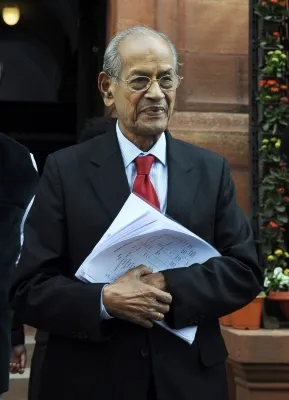
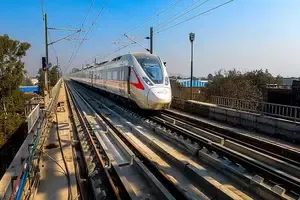
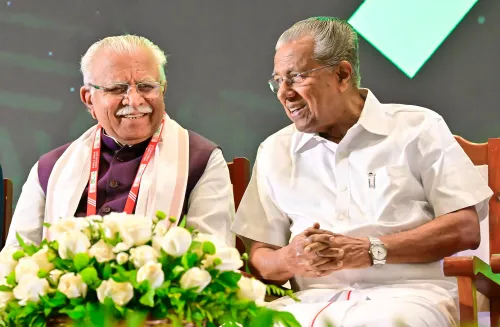
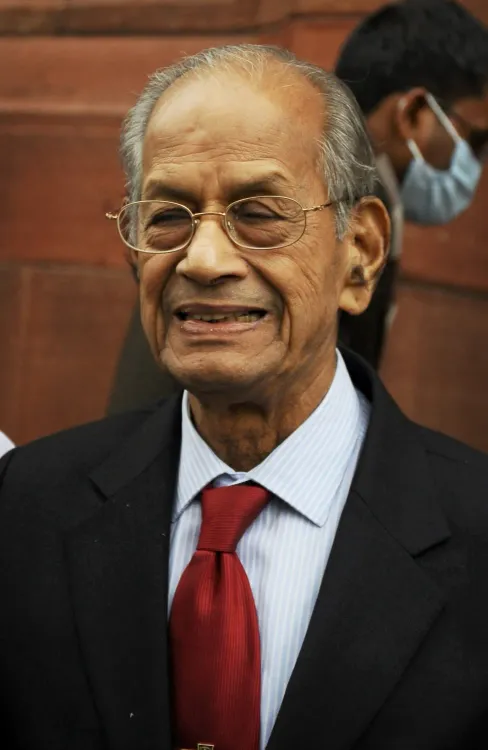
Thiruvananthapuram, Jan 30 (NationPress) Renowned technocrat E. Sreedharan on Friday delivered a sharp critique of the Kerala government’s recently unveiled Thiruvananthapuram–Kasaragod Regional Rapid Transit System (RRTS) project, labeling it impractical, technically deficient, and a blatant misuse of taxpayer funds, in direct response to Chief Minister Pinarayi Vijayan's comments made the previous day.
Sreedharan asserted that the RRTS plan lacked genuine utility for Kerala and was even subpar compared to a semi-high-speed rail initiative.
“The government has been misinformed. This is merely a tactic to distract the public,” he declared, stating that mere declarations would not equate to feasible projects.
He maintained that the RRTS could feasibly be established only on the Thiruvananthapuram–Chengannur segment, and extending it further would necessitate lowering train speeds, undermining the project's fundamental objective.
“If we have to reduce speeds, what purpose does this project serve?” he questioned.
Mentioning the previously shelved high-speed rail initiative, Sreedharan noted that he had previously discussed the project with the Chief Minister.
While CM Vijayan had initially shown interest and had assigned officials, the state government later hesitated to formally engage with the Centre.
“The Left administration had previously taken the lead. Why this abrupt change now?” he queried.
Sreedharan emphasized that while the state’s involvement is not essential for surveys, government backing is vital for land acquisition, which is critical for advancing any rail project.
He indicated that the transition from high-speed rail to RRTS illustrates a technical failure and a lack of coherent policy direction.
His statements were made in the wake of CM Vijayan's remarks at the Loka Kerala Sabha, where he noted that the Railway Ministry had rejected approval for Kerala’s proposed high-speed rail corridor, prompting the state to consider alternatives like RRTS.
Vijayan also indirectly criticized Sreedharan, linking the delays to his connections with “power centers at the Centre” and recalling his past affiliation with the BJP and his candidacy in the Assembly elections.
Interestingly, on January 23, Sreedharan revealed that the Centre has decided to pursue an alternative high-speed rail corridor for Kerala.
The planned 430-km corridor from Thiruvananthapuram to Kannur will be carried out by the Delhi Metro Rail Corporation, with Sreedharan serving as the chief consultant.
It aims to cover the distance in approximately three hours and 15 minutes, featuring 22 stations and linking all three major airports.
Crafted to minimize land acquisition through elevated and tunnel sections, the project’s DPR is anticipated within nine months.
Point of View
E. Sreedharan's critique of the RRTS project highlights essential concerns regarding infrastructure planning and public expenditure. His authority in engineering and transport projects lends credibility to his arguments, emphasizing the need for transparent and efficient utilization of resources. The ongoing political discourse surrounding this initiative reflects broader challenges in state governance and strategic planning.
NationPress
10 Oct 2026
Frequently Asked Questions
What is the RRTS project?
The RRTS project refers to the Thiruvananthapuram–Kasaragod Regional Rapid Transit System, aimed at enhancing public transport in Kerala.
Why did Sreedharan criticize the RRTS project?
Sreedharan criticized it as impractical and a misuse of public funds, suggesting it lacks real utility for the state.
What concerns were raised about the project's feasibility?
Concerns include its technical flaws and the necessity of reducing train speeds, which undermines its purpose.
What alternative was discussed for Kerala's transport?
An alternative high-speed rail corridor from Thiruvananthapuram to Kannur was mentioned, which is set to be developed by the Delhi Metro Rail Corporation.
How many stations will the high-speed rail corridor have?
The proposed corridor will feature 22 stations and connect all three major airports in Kerala.