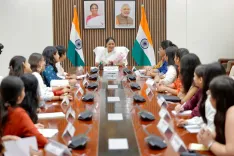
Kerala fishers demand climate protection, social security in NPOA-SSF meet
Synopsis
At a government-backed consultation in Kochi, over 50 representatives of Kerala's fishing communities demanded that India's upcoming National Plan of Action for Small-Scale Fisheries guarantee climate compensation, protect traditional rights, and formally recognise women fish workers — with the draft plan due for public release on 21 November.
Key Takeaways
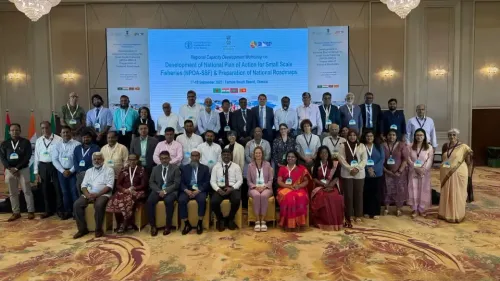
More than 50 representatives of Kerala fishing communities participated in a NPOA-SSF consultation at CIFT, Kochi on 12 October 2026 .
Fishers demanded compensation for fishing days lost to extreme weather and stronger social security coverage.
The meeting proposed mesh-size regulations and greater community control over marine resource management.
Women fish workers called for formal recognition and greater representation in fisheries policy bodies.
The National Task Force is expected to compile a draft plan by early November , with public consultation on 21 November .
The Union Fisheries Department is leading consultations across all coastal states and Union Territories, facilitated by BOBP-IGO .
Small-scale fishers in Kerala have called for stronger safeguards against extreme weather and expanded social security coverage, including compensation for fishing days lost to rough seas and adverse conditions. The demand was voiced at a community consultation held on 12 October 2026 at the ICAR-Central Institute of Fisheries Technology (CIFT) in Kochi, as part of a nationwide exercise to frame India's National Plan of Action for Small-Scale Fisheries (NPOA-SSF).
Key Demands from Fishing Communities
More than 50 representatives — drawn from fishing communities, women fish workers, fish vendors, fisher organisations, and researchers — participated in the consultation. Participants identified climate risk and severe weather events as the most pressing threats to fishing livelihoods. They urged that disaster preparedness and climate adaptation measures be explicitly embedded in the forthcoming national action plan.
The meeting also proposed comprehensive mesh-size regulations to encourage sustainable fishing practices, and called for protecting traditional fishing rights while giving local communities a greater role in managing marine resources.
Women Fish Workers Raise Concerns
Women engaged in fish processing, marketing, and other post-harvest activities used the platform to press for formal recognition as fish workers. They also demanded greater representation in fisheries policy and decision-making bodies — a long-standing gap in sector governance that the NPOA-SSF is expected to address.
Who Is Leading the Process
CIFT Director Dr George Ninan inaugurated the consultation, which was organised in association with the Federation of Indian Fisher Organisations (FIFO). Dr Nikita Gopal, head of CIFT's Extension, Information and Statistics Division, led the session. She confirmed that all inputs would be submitted to the National Task Force developing the NPOA-SSF.
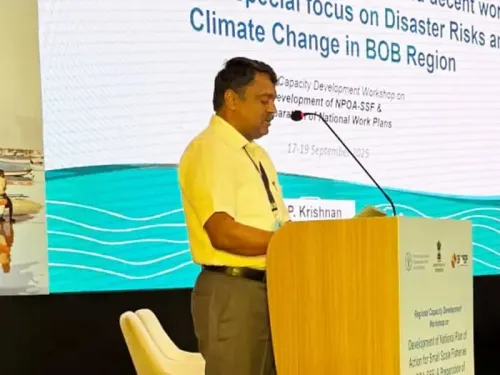
Bay of Bengal Programme Inter-Governmental Organisation (BOBP-IGO) Director Dr P. Krishnan said the proposed plan would cover access to fisheries resources, sustainable fishing, decent work, gender equality, climate change, and disaster risk reduction.
What Happens Next
The Union Fisheries Department is leading consultations across coastal states and Union Territories, with BOBP-IGO facilitating and coordinating the process. The National Task Force is expected to incorporate community inputs into a draft plan by early November. The draft is scheduled for public consultation release on 21 November, and will undergo further review before finalisation and official notification. The Kerala consultation feeds into a broader nationwide conversation that will shape how India governs its small-scale fishing sector for the years ahead.
Point of View
But its inclusion in a formal national action plan framework would mark a significant shift from ad hoc relief to rights-based entitlement. The push for women's formal recognition is equally telling — post-harvest work, dominated by women, has historically been invisible in fisheries data and budgets. Whether the NPOA-SSF translates these community demands into enforceable commitments, or remains an aspirational document, will depend on how robustly the National Task Force incorporates the consultation findings before the 21 November draft release.
NationPress
12 Oct 2026
Frequently Asked Questions
What is India's National Plan of Action for Small-Scale Fisheries (NPOA-SSF)?
The NPOA-SSF is a national policy framework being developed by the Union Fisheries Department to govern India's small-scale fishing sector. It is intended to cover access to fisheries resources, sustainable fishing practices, decent work conditions, gender equality, climate adaptation, and disaster risk reduction. A draft is scheduled for public consultation on 21 November 2026.
What did Kerala fishers demand at the Kochi consultation?
Fishers called for compensation for income lost when rough seas or bad weather prevent fishing, along with stronger social security. They also sought comprehensive mesh-size regulations, protection of traditional fishing rights, community management of marine resources, and formal recognition of women fish workers in policy bodies.
Who organised the Kochi NPOA-SSF consultation?
The consultation was held at ICAR-Central Institute of Fisheries Technology (CIFT) in Kochi, organised in association with the Federation of Indian Fisher Organisations (FIFO). CIFT Director Dr George Ninan inaugurated the meeting, and Dr Nikita Gopal led the session. The Bay of Bengal Programme Inter-Governmental Organisation (BOBP-IGO) is facilitating the nationwide process.
What is the timeline for finalising the NPOA-SSF?
The National Task Force is expected to incorporate community inputs into a draft plan by early November 2026. The draft will be released for public consultation on 21 November and will undergo further review before finalisation and official notification.
Why are women fish workers specifically raising concerns?
Women fish workers are primarily engaged in post-harvest activities such as fish processing, marketing, and vending, but have historically lacked formal recognition as fish workers and are underrepresented in fisheries policy bodies. At the Kochi consultation, they demanded that the NPOA-SSF formally acknowledge their role and ensure their inclusion in decision-making processes.