Kerala Knowledge Valley and Research Park to make state a global hub
Synopsis
Kerala is betting on a Knowledge Valley and Research Park to convert its underutilised research assets — spread across 47 institutions — into a knowledge-led growth engine. The state's ambition: link universities, industry and global partners on a single platform and deliver measurable economic outcomes within a decade.
Key Takeaways
Kerala will launch a Knowledge Valley and Research Park , announced by Higher Education Minister Roji M.
John on 18 September 2026 .
The initiative aims to link education, research, industry and international partnerships on a single integrated platform.
Kerala has approximately 47 research institutions in areas including space, agriculture and minerals that could join the knowledge network.
AI-assisted screening of postgraduate dissertations is proposed to identify underutilised research with commercial potential.
The project may be linked to the Centre's University Township programme for shared labs and infrastructure.
The government targets measurable outcomes within five to ten years , with private sector and international university partnerships under exploration.
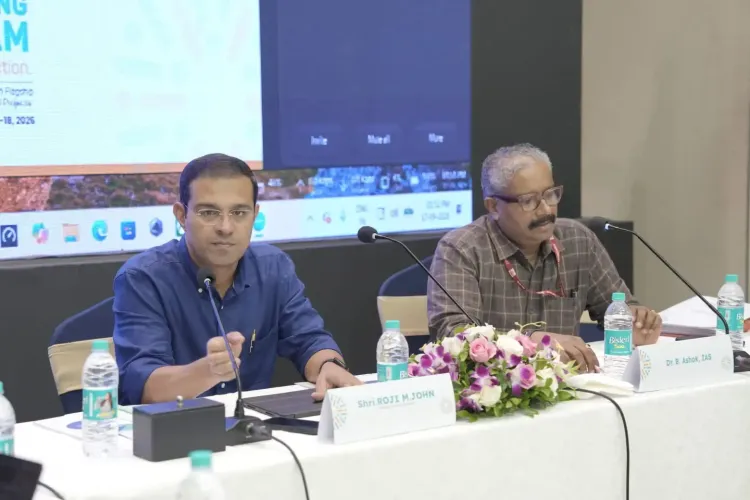
Kerala Higher Education Minister Roji M. John on 18 September 2026 announced that the state government will roll out a Knowledge Valley and Research Park, aiming to transform Kerala into a globally recognised knowledge and innovation hub. The announcement came on the concluding day of the three-day Reimagining Keralam event in Thiruvananthapuram, where the proposal was the centrepiece of a roundtable discussion.
What the Initiative Envisions
Minister John clarified that the Knowledge Valley would not function as a standalone institution but as an integrated platform linking education, research, industry and global partnerships. The aim, he said, is to generate measurable economic value and create expanded opportunities for young Keralaites over the next five to ten years.
Higher Education Principal Secretary B. Ashok, who co-led the roundtable, stressed that Kerala's research capabilities must be converted into practical applications and commercial opportunities — rather than remaining confined to academic circles.
Research Park: Infrastructure and Industry Links
The proposed Research Park is designed to feature shared advanced infrastructure, centres of excellence, and dedicated support for technology transfer, prototyping, and deep-tech development. Strong industry linkages are central to the model, with participants noting that healthcare research is one immediate area where such partnerships could produce products, services and commercial outcomes.
Participants at the roundtable also called for a fundamental rethink of PhD programmes, arguing that doctoral research should give greater weight to real-world and industry-linked problems rather than remaining largely dissertation-based.
Unlocking Underused Research Assets
A recurring concern at the roundtable was that a large volume of academic research in Kerala remains underutilised. Participants proposed a systematic review of postgraduate dissertations to identify commercially promising work, with artificial intelligence used for initial screening, followed by expert assessment. Retired professors could also be engaged in evaluating and developing research with potential.
A proposed knowledge audit would map Kerala's research institutions, expertise, infrastructure and intellectual assets. The state currently has approximately 47 research institutions operating in areas including space, agriculture and minerals — all of which could eventually be integrated into the proposed knowledge network.
National and International Dimensions
The Knowledge Valley could be linked to the Centre's University Township programme, bringing together domestic and international universities with shared laboratories and infrastructure. A global virtual classroom was also floated as a complementary initiative.
The government also intends to explore the use of underutilised spaces within existing colleges and universities, reducing the financial and logistical burden of building fresh physical infrastructure.
What Comes Next
The government has set a five-to-ten year horizon for the initiative to deliver measurable outcomes and establish a distinctive knowledge-led growth model for Kerala. Private sector participation and partnerships with international universities are being actively pursued as the project moves from concept to implementation. Formal structures, timelines and funding details are yet to be announced.
Point of View
No formal structure, no execution timeline. The state has genuine research assets: 47 institutions, strong higher-education density, and a literate workforce. The harder problem, as participants themselves acknowledged, is that much of this research never leaves the campus. Converting that latent capital into industry-linked outcomes requires not just a platform, but sustained state investment and a private sector willing to co-fund applied research — neither of which has been detailed. Until concrete implementation architecture is public, this risks being a well-intentioned roundtable outcome rather than a transformative policy shift.
NationPress
18 Sept 2026
Frequently Asked Questions
What is Kerala's Knowledge Valley and Research Park?
It is a proposed integrated platform announced by Higher Education Minister Roji M. John on 18 September 2026 that will link universities, research institutions, industry and global partners to turn Kerala into a knowledge-led economy. It is designed to support technology transfer, prototyping and deep-tech development rather than function as a standalone institution.
Why is Kerala launching this initiative?
A large share of academic research in Kerala is reportedly underutilised and does not translate into commercial or economic outcomes. The initiative aims to bridge the gap between academic output and industry application, creating jobs and economic value for young people over a five-to-ten year horizon.
How many research institutions does Kerala have?
Kerala has approximately 47 research institutions working in areas including space, agriculture and minerals, all of which could potentially be integrated into the proposed knowledge network.
How will underutilised research be identified and used?
Participants proposed a systematic review of postgraduate dissertations, with artificial intelligence used for initial screening and expert panels for deeper assessment. Retired professors could also be involved in evaluating and developing promising research for commercial application.
What is the connection to the Centre's University Township programme?
The Knowledge Valley could be linked to the Union government's University Township programme, enabling domestic and international universities to share laboratories and infrastructure. A global virtual classroom was also proposed as part of this broader integration.