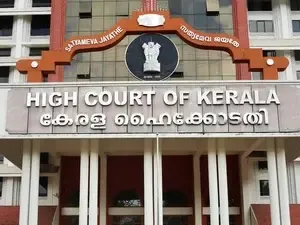
Kerala HC questions police use of 'DJ party' to curb hotel events until 3 am
Synopsis
The Kerala High Court has exposed a glaring definitional gap in how police regulate nightlife: by asking 'What is a DJ party?', the Division Bench has signalled that blanket bans built on undefined terms will not survive judicial scrutiny — and that the real fix lies in accountability and strict regulation, not prohibition.
Key Takeaways
The Kerala High Court on 13 November 2026 questioned the State's use of the undefined term 'DJ party' to restrict hotel entertainment.
A Division Bench of Justices Devan Ramachandran and Basant Balaji heard the State's appeal against a Single Judge order favouring Kochi's Radisson Blu hotel .
Police had banned DJ parties after 11 p.m. at a hotel licensed to serve liquor until 3 a.m.
The court observed that drug-related offences are not exclusive to DJ events and can occur at any hour.
The Bench distinguished blanket prohibition from strict regulation, suggesting licence holders be held personally accountable for illegal activity on their premises.
The matter is posted for further hearing on 16 November 2026 .
The Kerala High Court on Friday, 13 November 2026, questioned the State government over the police's reliance on the undefined term 'DJ party' to impose restrictions on entertainment events at bar hotels licensed to operate until 3 a.m., holding that any regulatory curb must rest on clear legal definitions.
What the Court Said
A Division Bench of Justices Devan Ramachandran and Basant Balaji made the observations while hearing the State's appeal against a Single Judge's order that had set aside police restrictions imposed on Kochi's Radisson Blu hotel. The earlier police action had curtailed the hotel's operating hours and prohibited DJ parties after 11 p.m.
The Bench pointedly asked, 'What is a DJ party?' — observing that DJ music, piped music, and other forms of entertainment cannot automatically be treated as equivalent. Without a legally defined term, the court noted, law enforcement cannot anchor enforceable restrictions to it.
The State's Argument
Additional Advocate General P.A. Mohammed Shah submitted before the court that narcotics transactions were allegedly taking place under the guise of DJ parties, and argued that the hotel's licence permitted it to serve liquor — not necessarily to host such events. The State maintained that the police restrictions were driven by genuine public order concerns.
Court's Key Observations
The Bench countered by questioning the internal logic of the restriction: if drug-related offences can occur at any hour, banning entertainment after 11 p.m. while permitting liquor service until 3 a.m. does not necessarily address the underlying concern. The judges acknowledged the practical challenges the police face during late-night hours, but suggested that hotel licence holders should be held personally accountable if illegal activities are detected under the cover of entertainment programmes.
The court drew a distinction between blanket prohibition and strict regulation, observing that the latter may often be more effective. It clarified that its interim order does not prevent the police from taking all legally permissible measures to maintain law and order, including vigilance against narcotics and substance abuse.
What Happens Next
Noting that the case raises a broader legal question — prohibition versus regulation — that warrants detailed examination, the Division Bench posted the matter for further hearing on 16 November 2026. The outcome could have implications for how entertainment venues across Kerala are regulated under existing licensing frameworks.
Point of View
The court is nudging the State toward a more precise regulatory architecture. The more consequential signal, however, is the court's preference for strict regulation over prohibition — a framework that shifts liability to venue operators rather than granting police discretionary power to shut events down. If that principle holds, it could redraw how entertainment venues in Kerala, and potentially other states, manage their compliance obligations.
NationPress
14 Nov 2026
Frequently Asked Questions
Why did the Kerala High Court question the police restrictions on hotel entertainment events?
The Kerala High Court questioned the restrictions because police used the term 'DJ party' — which has no clear legal definition — as the basis for curtailing entertainment at a hotel licensed to operate until 3 a.m. The court held that regulatory curbs must rest on legally defined terms to be enforceable.
What restrictions had the police imposed on the Radisson Blu hotel in Kochi?
Police had curtailed the hotel's operating hours and prohibited DJ parties after 11 p.m., even though the establishment held a licence permitting it to serve liquor until 3 a.m. A Single Judge had earlier set aside these restrictions, prompting the State to appeal.
What was the State government's argument before the High Court?
Additional Advocate General P.A. Mohammed Shah argued that narcotics transactions were allegedly taking place under the guise of DJ parties, and that the hotel's licence covered liquor service rather than entertainment events of this nature.
What is the broader legal question the Kerala HC is examining?
The court identified a broader question of prohibition versus regulation — whether outright banning entertainment is more appropriate than imposing strict regulatory conditions with accountability for venue operators. The matter has been posted for further hearing on 16 November 2026.
Can the police still act against illegal activity at hotel events during the interim period?
Yes. The court clarified that its interim order does not bar the police from taking all legally permissible measures to maintain law and order, including maintaining strict vigilance against narcotics and substance abuse at such venues.