Sabarimala SIT probe stalled by court delays, Kerala minister warns
Synopsis
Kerala's Devaswom Minister has sounded the alarm: the Sabarimala SIT probe — involving two FIRs and over a dozen arrests — is effectively frozen by court-monitored delays, all accused are out on bail, and no chargesheet has been filed. The minister's public push for executive autonomy over the judiciary-supervised process signals a deepening standoff over who controls one of India's most politically sensitive temple administrations.
Key Takeaways
Kerala Devaswom Minister K.
Muraleedharan on 13 July declared the Sabarimala SIT probe effectively stalled due to prolonged court-monitored proceedings.
The SIT has registered two FIRs and arrested over a dozen people , including senior Travancore Devaswom Board officials.
No chargesheet has been filed; all arrested persons have secured bail .
The minister warned that further delays risk evidence destruction and could allow the accused to escape punishment.
The Thazhamon Thantri , reportedly seeking to resign and nominate his son as successor, remains a flashpoint; the Board referred the matter to court rather than deciding itself.
Muraleedharan called for greater executive autonomy over TDB appointments, framing judicial oversight as a corrective rather than a primary governance mechanism.
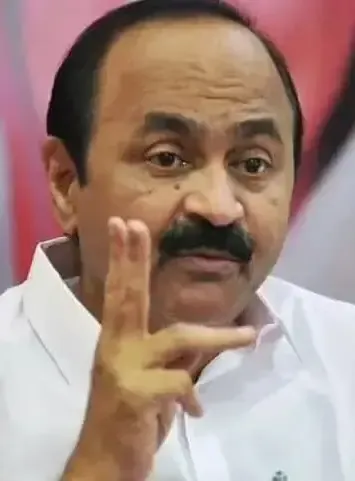
The Special Investigation Team (SIT) inquiry into alleged financial irregularities at Sabarimala has effectively ground to a halt due to prolonged court-monitored proceedings, Kerala Devaswom Minister K. Muraleedharan warned on Monday, 13 July. The minister called for greater administrative freedom for the state government to push the probe to its logical conclusion, even as he stressed that the government has no intention of undermining judicial authority.
Where the Investigation Stands
The SIT has registered two FIRs and arrested over a dozen people, including senior officials of the Travancore Devaswom Board (TDB). However, with no chargesheet filed so far, all those arrested have since secured bail. Muraleedharan cautioned that the continued failure to file a chargesheet risks weakening the prosecution's case and increases the possibility of the accused escaping punishment.
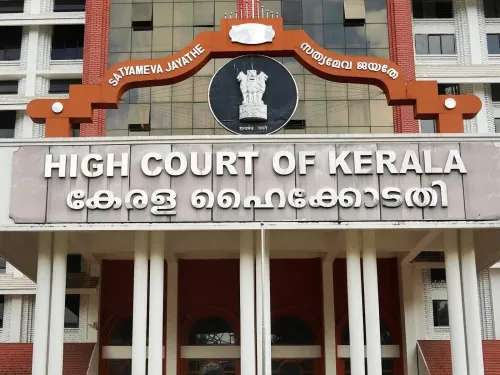
'The government should have the freedom to act. If there is any mistake on our part, the courts can always correct it,' the minister said, articulating a position that frames judicial oversight as a corrective mechanism rather than a substitute for executive decision-making.
Risk of Evidence Destruction
Beyond the bail concern, Muraleedharan flagged a more immediate threat: prolonged delays, he argued, raise the likelihood of crucial evidence being tampered with or destroyed. This is a standard prosecutorial concern in financial fraud cases, where documentary evidence and digital records are particularly vulnerable over time. The minister's remarks signal mounting frustration within the government over what it views as procedural paralysis.
Thazhamon Thantri Controversy
Muraleedharan also trained his criticism on the Travancore Devaswom Board over its handling of the controversy surrounding the Thazhamon Thantri, who has come under a cloud of suspicion in connection with the case. The Thantri had reportedly sought to step down and requested that his son be appointed in his place. Rather than taking a decision, the Board referred the matter to the court — a move the minister described as inappropriate, arguing that the Board should exercise its own administrative judgment.
Government's Broader Demand for Autonomy
The minister also sought greater autonomy for the government in matters relating to appointments within the Travancore Devaswom Board. Responding to questions about a recent meeting between Hindu Aikya Vedi leaders and Chief Minister V.D. Satheesan, Muraleedharan said anyone is free to meet the Chief Minister, deflecting suggestions of political significance. This comes amid a broader tension in Kerala between the executive's desire for administrative control over temple boards and the judiciary's expanded supervisory role — a fault line that has surfaced repeatedly in Devaswom-related disputes over the past decade.
With no chargesheet in sight and key accused out on bail, the coming weeks will be critical in determining whether the SIT probe gains fresh momentum or fades into procedural limbo.
Point of View
Even while disavowing any confrontation with the courts, is a politically delicate line to walk, especially on a matter as charged as Sabarimala. The deeper problem the minister has identified is real: SIT probes that cannot file chargesheets within a reasonable window routinely collapse under bail-default dynamics. But the solution — more executive freedom over a constitutionally sensitive religious institution — is unlikely to sail through without a legal challenge. The Travancore Devaswom Board's decision to outsource the Thantri succession question to the courts, rather than exercise its own statutory authority, illustrates exactly the administrative abdication the minister is decrying.
NationPress
13 Jul 2026
Frequently Asked Questions
What is the Sabarimala financial irregularities case?
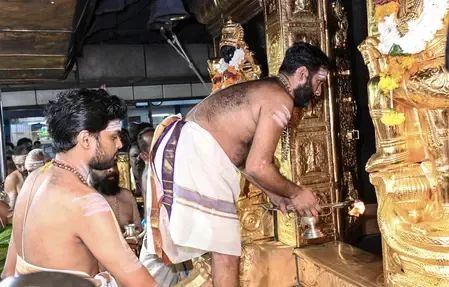
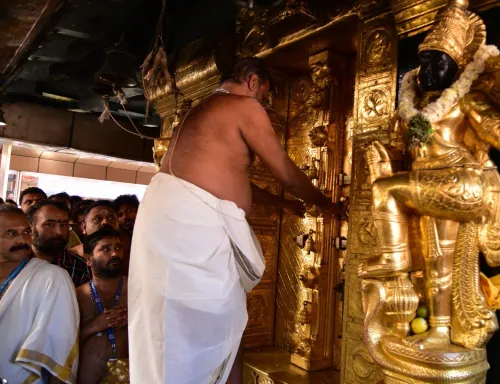
The case involves alleged financial irregularities at the Sabarimala temple, administered by the Travancore Devaswom Board in Kerala. An SIT was constituted to investigate the matter, resulting in two FIRs and the arrest of over a dozen individuals, including senior Board officials.
Why has the Sabarimala SIT probe stalled?
According to Devaswom Minister K. Muraleedharan, prolonged court-monitored proceedings have slowed the investigation to a standstill. No chargesheet has been filed, which has allowed all arrested accused to secure bail and has raised concerns about evidence preservation.
Who is the Thazhamon Thantri and why is he relevant?
The Thazhamon Thantri is the hereditary head priest associated with the Sabarimala temple who has reportedly come under suspicion in connection with the irregularities case. He reportedly sought to step down and have his son appointed in his place, but the Travancore Devaswom Board referred the matter to court rather than deciding it administratively.
What is the Kerala government demanding?
Minister Muraleedharan has called for greater administrative autonomy for the government in conducting the SIT probe and in making appointments to the Travancore Devaswom Board, arguing that judicial oversight should function as a corrective check rather than a primary decision-making authority.
What happens if a chargesheet is not filed soon?
The minister warned that continued delay in filing a chargesheet weakens the prosecution's case, increases the risk of crucial evidence being destroyed, and raises the probability that the accused will ultimately escape punishment.