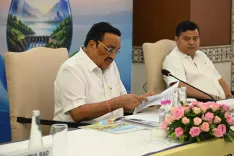
Giriraj Singh Backs Circular Economy Push in Textiles
Synopsis
Union Textiles Minister Giriraj Singh has publicly backed India's circular economy drive in the textiles sector, framing the conversion of textile waste into valuable resources as central to environmental protection, job creation, and the Viksit Bharat 2047 vision.
Key Takeaways
Giriraj Singh , Union Minister of Textiles, on 13 July 2026 endorsed the circular economy model for India's textiles sector via a post on X.
The minister stated that responsible resource use and environmental accountability are the 'strong foundation of future development.' India's textiles sector is being repositioned to convert textile waste into valuable raw material, reducing landfill burden and creating new value chains.
The initiative is framed as simultaneously advancing environmental protection , employment generation , and sustainable development .
The post was linked to the Viksit Bharat 2047 vision, elevating circular economy goals to a national development priority.
Key stakeholders include textile manufacturers and recycling units, with potential implications for extended producer responsibility norms and export competitiveness.
Union Textiles Minister Giriraj Singh on Monday, 13 July 2026 championed India's shift toward a circular economy in the textiles sector, asserting that responsible resource use and environmental accountability form the bedrock of future development. The minister made his remarks in a post on X, framing textile waste conversion as a convergence of environmental protection, job creation, and sustainable growth.
In his post, Singh wrote: 'संसाधनों का बेहतर उपयोग और पर्यावरण के प्रति जिम्मेदार सोच ही भविष्य के विकास की मजबूत नींव है' — 'Better use of resources and a responsible attitude toward the environment are the strong foundation of future development.' He added that India's textiles sector is today embracing the circular economy, transforming textile waste into a valuable resource, and advancing environmental protection, employment generation, and sustainable development simultaneously.
Context
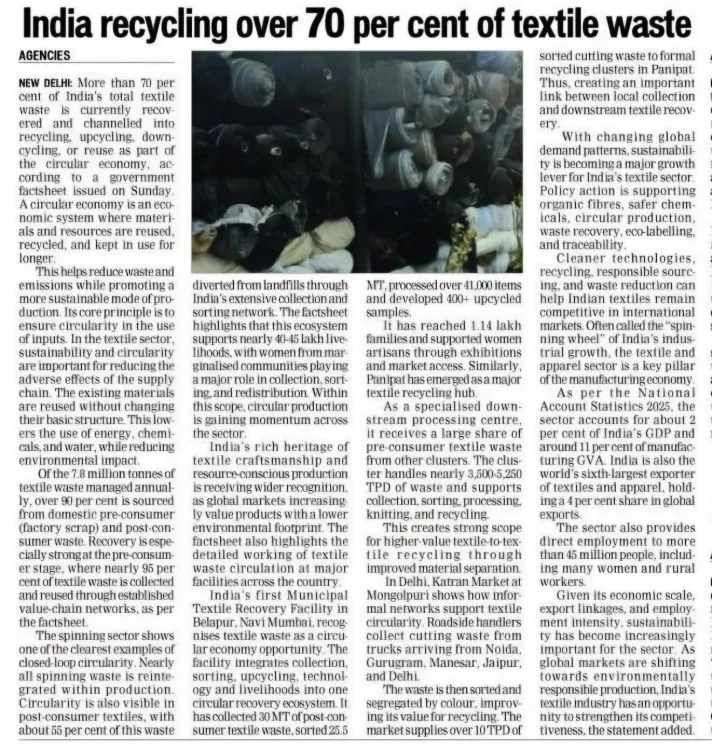
The circular economy model in textiles involves recapturing value from discarded fibres, fabric offcuts, and post-consumer garments rather than sending them to landfill. India is among the world's largest producers and exporters of textiles, and the sector employs tens of millions of workers, making it a strategic lever for both economic and environmental policy. Singh's remarks signal a ministerial push to align the industry's growth narrative with climate responsibility.
The post was tagged #ViksitBharat2047, the government's flagship vision to position India as a fully developed nation by the centenary of its independence. Embedding circular economy goals within that framework elevates textile-waste management from a niche environmental concern to a mainstream development priority.
Policy Backdrop
India has progressively woven circular economy principles into its manufacturing policy over recent years, driven by resource-efficiency commitments and international climate obligations. The textiles ministry has been exploring extended producer responsibility norms — rules that hold manufacturers accountable for the end-of-life disposal of their products — as one mechanism to formalise waste reduction targets.
Globally, the fashion and textiles industry is one of the largest contributors to industrial pollution and solid waste. Policymakers in New Delhi have pointed to this as both a reputational risk for Indian exports and an opportunity: countries importing Indian garments increasingly demand sustainability credentials, making circular practices a competitive advantage rather than merely a regulatory burden.
Stakeholders and Impact
Textile manufacturers and recycling units stand to be most directly affected by any policy framework that follows the minister's stated direction. Recyclers who process fibre waste into reusable raw material could see expanded demand, while large mills may face new compliance requirements around waste tracking and recovery rates.
For workers, the circular economy model holds a dual promise: preserving existing manufacturing jobs while potentially creating new roles in sorting, processing, and upcycling waste streams. Singh specifically cited employment generation alongside environmental protection, suggesting the government views these as complementary rather than competing outcomes.
What's Next
Observers will watch for concrete policy instruments — revised waste-management rules, extended producer responsibility notifications, or dedicated budget allocations — that translate the minister's stated vision into enforceable targets. Any such announcements are likely to be benchmarked against the Viksit Bharat 2047 roadmap, which provides a long-term scaffold for sustainability-linked industrial policy.
With India's textiles exports under growing scrutiny from European Union sustainability regulations, including incoming due-diligence and eco-design rules, the ministry's alignment with circular economy principles may also shape how Indian exporters position themselves in premium global markets in the years ahead.
Point of View
Folding waste management into the politically potent Viksit Bharat 2047 narrative. By coupling circular economy language with job creation, the minister pre-empts the argument that green regulation hurts employment — a recurring tension in Indian industrial policy. The timing is also strategically relevant: the European Union's tightening eco-design and due-diligence rules are raising the bar for Indian textile exporters, and ministerial endorsement of circularity signals that New Delhi is aware of this compliance horizon. Whether the rhetoric translates into binding policy instruments — waste norms, producer responsibility rules, or dedicated funding — will determine how substantive this shift proves to be.
NationPress
13 Jul 2026
Frequently Asked Questions
What did Giriraj Singh say about the circular economy in textiles?
On 13 July 2026, Union Textiles Minister Giriraj Singh said India's textiles sector is embracing the circular economy by converting textile waste into valuable resources, and that this approach advances environmental protection, employment generation, and sustainable development together.
What is the circular economy in the context of Indian textiles?
In the textiles context, a circular economy involves recovering and reusing fibre waste, fabric offcuts, and discarded garments rather than disposing of them, thereby reducing pollution and creating new raw-material supply chains within the industry.
How does the textiles circular economy connect to Viksit Bharat 2047?
The government has linked circular economy goals in textiles to the Viksit Bharat 2047 vision — India's plan to become a developed nation by its centenary of independence — framing sustainable industrial practices as central to long-term economic growth.
Which stakeholders are affected by India's textile circular economy push?
Textile manufacturers and recycling units are the primary stakeholders. Recyclers could see increased demand for their services, while manufacturers may eventually face extended producer responsibility norms requiring them to account for the end-of-life disposal of their products.
Will India introduce new textile waste rules following the minister's statement?
No specific rules have been announced alongside the minister's post. Observers are watching for extended producer responsibility notifications or budget allocations that would give the circular economy vision a concrete regulatory and financial framework.