Kerala forest insurance scheme for hilly residents, solar fencing to 3,000 km
Synopsis
Kerala is rolling out an insurance safety net for forest-fringe residents, tripling solar fencing ambitions, and ordering an urgent study on Wayanad's dangerously overcrowded tiger population — all within a 100-day government programme. With only 4 sq km of habitat per tiger against the required 20, Wayanad's wildlife pressure is a crisis hiding in plain sight.
Key Takeaways
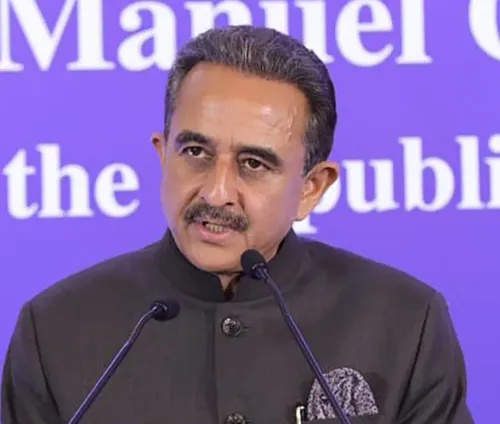
Kerala Forest Minister Shibu Baby John announced an insurance scheme for residents in hilly and forest areas, linked to local panchayats.
Discussions with public sector insurance companies are ongoing to implement the compensation framework.
Solar fencing will be extended from 2,000 km to 2,500 km initially and then to 3,000 km to curb human-animal conflict.
Wayanad has only around 4 sq km of habitat per tiger against the required 20 sq km , prompting a detailed population study.
A special wild boar drive is scheduled for 15 June , with a panchayat-wise census and empanelled shooters to be prepared locally.
A state-level consultative committee on human-wildlife conflict and grassland restoration plans are also in the pipeline.
Kerala Forest Minister Shibu Baby John announced on 5 June that the state's Forest Department will introduce an insurance scheme for residents living in forest and hilly areas, to be implemented in association with local panchayats. The initiative is part of the state government's 100-day programme and aims to provide direct compensation to those affected by wildlife incidents.
Insurance Scheme and Compensation
'The department will be responsible for providing compensation,' Minister John said. Discussions with public sector insurance companies are reportedly under way to finalise the scheme's structure. The Forest Department has committed to moving forward by taking farmers into confidence and ensuring active cooperation between forest officials and local communities.
Solar Fencing Expansion
As part of the same 100-day programme, the department plans to extend solar fencing across Kerala from the current 2,000 km to 2,500 km initially, and subsequently to 3,000 km. The expansion is aimed squarely at reducing human-animal conflicts, which have intensified along forest fringe areas in recent years.
Wayanad Tiger Density Crisis
Minister John also announced a detailed study on the rising tiger population in Wayanad. He noted that a tiger typically requires around 20 square kilometres of habitat, but Wayanad currently offers only approximately 4 square kilometres per tiger — a stark mismatch that has contributed to frequent tiger-related incidents in the district. The number of Rapid Response Teams (RRTs) is to be increased, as the present strength is considered inadequate for handling wildlife emergencies effectively.
Wild Boar Threat and Grassland Restoration
With wild boar attacks on the rise, the Forest Department will conduct a special drive on 15 June. A panchayat-wise census of wild boars will be carried out, and a list of empanelled shooters will be prepared at the local level. A state-level consultative committee will also be set up to address human-wildlife conflict issues. Action plans for the restoration of grasslands and the removal of invasive plant species are additionally on the agenda.
Balancing Conservation and Community Concerns
Minister John, who is serving his second term as a state minister and is the son of veteran leader Baby John, emphasised that the Forest Department's overarching focus would be on balancing wildlife conservation with the legitimate concerns of farmers and communities living near forests. This comes amid mounting pressure on Kerala's forest-fringe populations, who have long demanded structured state support in the face of escalating wildlife encounters.
Point of View
But its credibility hinges entirely on execution — Kerala has a long history of promising compensation frameworks for wildlife-affected communities that stall at the inter-departmental stage. The Wayanad tiger data is the more urgent signal: a habitat deficit of this scale is not a wildlife management problem, it is a land-use crisis that no number of RRTs can fix without structural forest corridor policy. The wild boar census and empanelled-shooter model is pragmatic, but without a clear legal and accountability framework, it risks devolving into ad hoc culling. The 100-day programme framing gives these initiatives political urgency — the test will be whether that urgency survives the 101st day.
NationPress
21 Sept 2026
Frequently Asked Questions
What is the Kerala forest insurance scheme announced by Minister Shibu Baby John?
It is a proposed insurance cover for residents living in forest and hilly areas of Kerala, to be implemented in partnership with local panchayats. The Forest Department has said it will be responsible for compensation, and talks with public sector insurers are ongoing.
Why is the Wayanad tiger population a concern?
Wayanad currently has only around 4 square kilometres of habitat available per tiger, far below the roughly 20 square kilometres a tiger requires. This mismatch has led to frequent tiger-related incidents in the district, prompting the government to order a detailed population study.
How far will Kerala expand its solar fencing?
The Forest Department plans to extend solar fencing from the current 2,000 km to 2,500 km in the first phase and eventually to 3,000 km across Kerala, primarily to reduce human-animal conflict in forest fringe areas.
What steps is Kerala taking against wild boar attacks?
A special drive is scheduled for 15 June, along with a panchayat-wise census of wild boars. A list of empanelled shooters will be prepared at the local level to respond to the threat in a structured manner.
Are these measures part of a broader government plan?
Yes, all the announced initiatives — insurance scheme, solar fencing expansion, tiger study, and wild boar drive — are part of the Kerala state government's 100-day programme, signalling a coordinated push to address human-wildlife conflict.