Why Does Kerala Experience Shutdowns More Than Others?
Synopsis
The recent nationwide strike has sparked a renewed debate in Kerala regarding the state's unique culture of shutdowns. Leader of the Opposition, V.D. Satheesan, questions the rationale behind this practice, highlighting its impact on daily life and advocating for modern protest methods. Join us as we delve into this ongoing issue affecting Kerala's public life.
Key Takeaways
Shutdowns in Kerala: A contentious issue affecting daily life.
Satheesan's concerns: Questions the rationale behind total shutdowns.
Need for modern protests: Calls for a shift in strategies to reduce public disruption.
Trade unions' role: Advocating for workers' rights and raising awareness on critical issues.
Engaging the public: The UDF emphasizes outreach over disruption.
Kozhikode, Feb 12 (NationPress) The 24-hour national strike initiated by central trade unions on Thursday has reignited a longstanding discussion in Kerala, where the culture of shutdowns is increasingly criticized for disrupting public life.
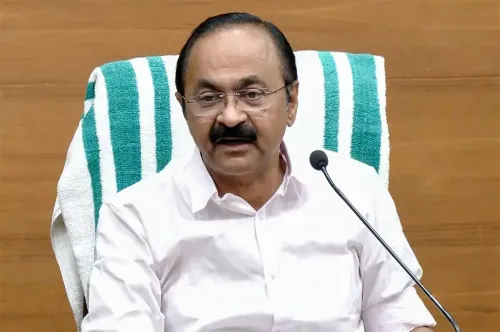
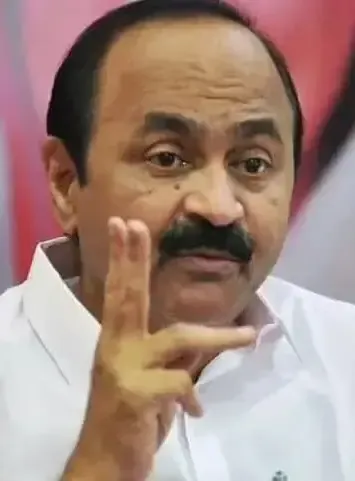
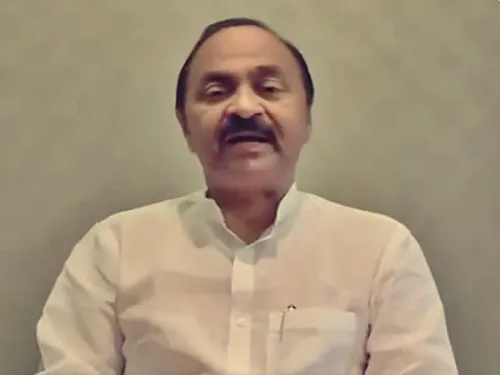
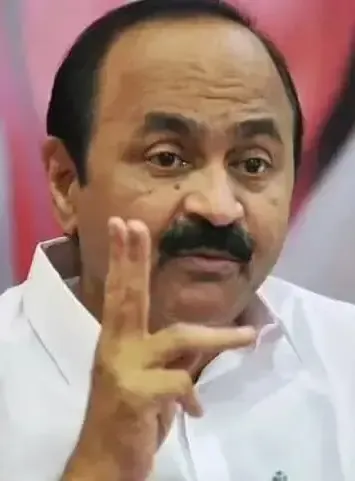
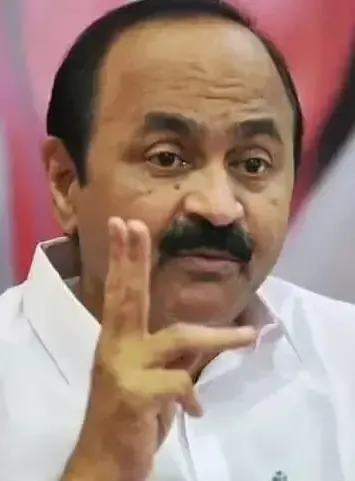
During a media interaction in Kozhikode as part of the UDF’s 'Puthuyuga Yathra', the Leader of the Opposition, V.D. Satheesan, raised the question of why national strikes seem to manifest as total shutdowns only in Kerala, while daily activities remain largely uninterrupted in other parts of the country.
Interestingly, as Satheesan's yatra proceeds, the three yataras of the Left are paused on Thursday.
Satheesan pointed out that while the Congress party endorses the broader objectives presented by trade unions, the approach of imposing strikes in Kerala is outdated.
"In neighboring Tamil Nadu, one would hardly notice a strike in action. In Karnataka, Maharashtra, or even Delhi, public life does not come to a halt. Why must Kerala be the exception, functioning under the guise of a bandh?" he questioned.
The Congress leader advocated for a more extensive public dialogue regarding the enforcement of total shutdowns justified by national strikes.
He accused the ruling CPI-M, which supports the strike in Kerala, of not utilizing such tactics during its tenure in West Bengal and Tripura.
According to him, protest methods that hinder daily life without effectively conveying the demands to the public have lost their significance.
The UDF, Satheesan argued, prefers to address issues directly with the populace through outreach initiatives rather than disrupting essential services.
This strike, led by central trade unions including the CITU, has been framed as a warning to the Narendra Modi administration over what the organizers label as pro-corporate and anti-people policies.
The movement has seen participation from both Central and state government employees, as well as workers from the banking, insurance, coal, electricity, and defense sectors.
Additionally, farmers’ and agricultural labor organizations have joined the cause.
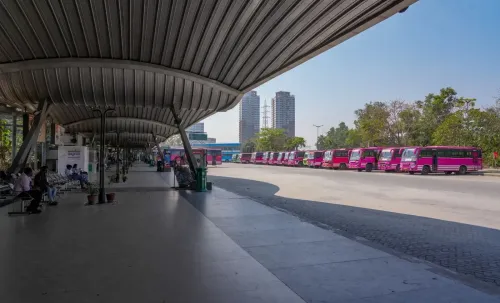
While the organizers of the strike assert it could signify a new chapter in India’s protest narrative, the pronounced impact in Kerala has once again drawn attention to the state's political culture of shutdowns.
Point of View
It is crucial to recognize that the ongoing debate surrounding shutdowns in Kerala reflects a broader discourse on the effectiveness of protest strategies. While the concerns raised by trade unions warrant attention, the impact on daily life cannot be overlooked. It is imperative for both political and civil society to engage in constructive dialogue to find a balanced approach that respects the right to protest while minimizing disruption to the public.
NationPress
22 Sept 2026
Frequently Asked Questions
What is the main issue with shutdowns in Kerala?
The primary concern is that shutdowns disrupt daily life significantly, unlike in other states where strikes have less impact.
Who is leading the opposition against this culture?
V.D. Satheesan, the Leader of the Opposition, is vocal in questioning the necessity of total shutdowns during national strikes.
What do trade unions aim to achieve with strikes?
Trade unions aim to highlight issues they perceive as detrimental to workers and the public, advocating for change.
How do shutdowns affect public services?
Shutdowns can paralyze essential services, leading to significant inconveniences for the public.
What alternative does the UDF propose?
The UDF suggests engaging the public directly through outreach programs rather than imposing shutdowns.