Arunachal CM Khandu pitches yak economy roadmap at Tawang summit
Synopsis
At a summit held in the border district of Tawang, Arunachal Pradesh CM Pema Khandu linked yak herding to national security, called for a new cooperative society, a Brokpa-friendly tax regime, and a February roadmap bringing together the Army, ICAR, and state agencies — framing pastoral welfare as a strategic imperative, not just a rural development concern.
Key Takeaways
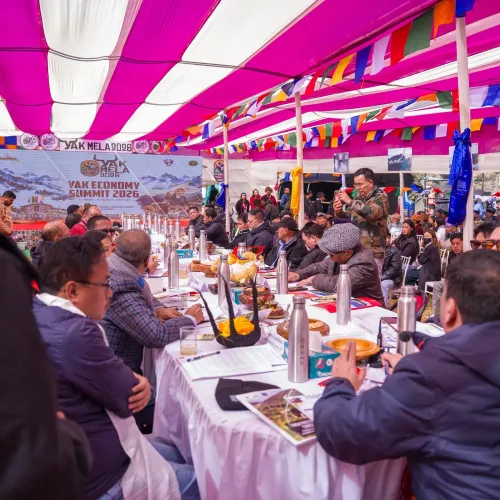
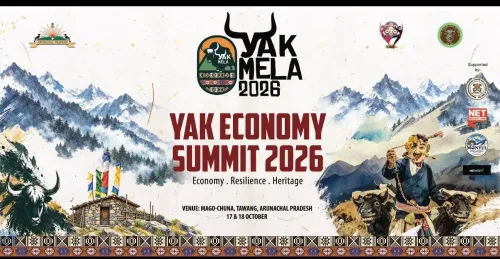
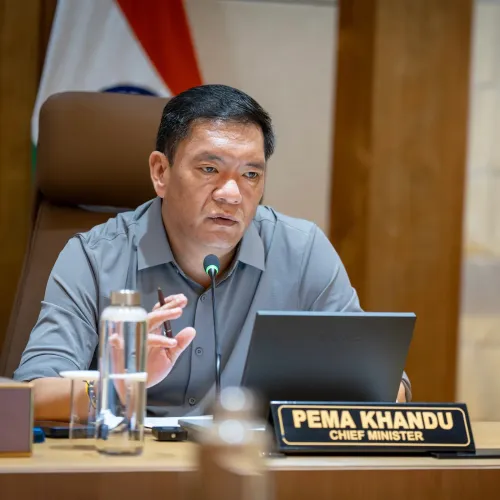
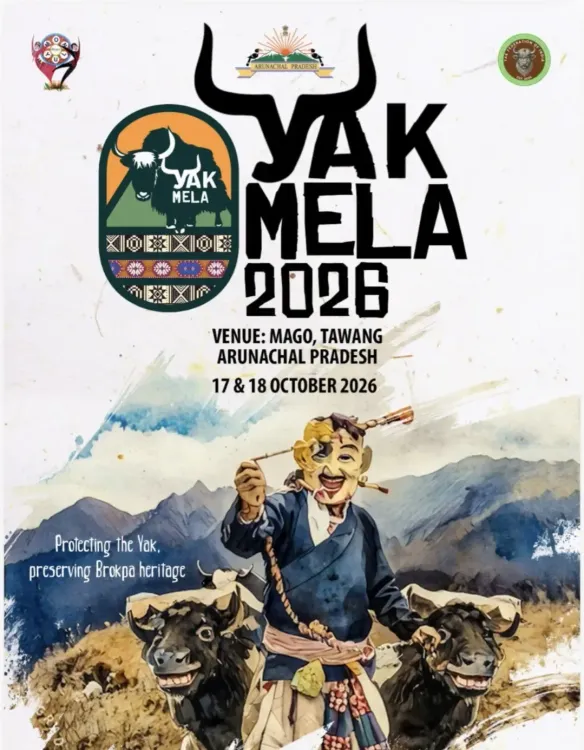
Arunachal Pradesh CM Pema Khandu addressed the Yak Economy Summit 2026 at Mago, Tawang district on 17 October 2026 .
He called for formation of the Arunachal Pradesh Yak Herders and Products Development Cooperative Society to improve herder market access.
Yak associations from Arunachal Pradesh, Sikkim, Ladakh , and Himachal Pradesh are now united under the Yak Federation of India .
A follow-up roadmap meeting is scheduled for February 2027 , involving the Army , ICAR-NRCY , and government departments.
Khandu linked Brokpa community support to national security, citing their presence in strategically sensitive border areas.
Special-category recognition for Brokpa and Puroik communities was raised for consideration at the summit.
Arunachal Pradesh Chief Minister Pema Khandu on Saturday, 17 October 2026, called for a comprehensive roadmap to strengthen yak conservation, uplift yak herder livelihoods, and unlock the commercial potential of yak-based products, addressing the Yak Economy Summit 2026 and Yak Mela at Mago in Tawang district. He stressed the urgent need for targeted policy interventions from both the Arunachal Pradesh government and the Centre for traditional yak-rearing communities across the Himalayan belt.
Strategic and Cultural Stakes
Khandu underscored that yak rearing is far more than a pastoral livelihood — it is deeply woven into the social, cultural, and strategic fabric of the Himalayan region, stretching from Jammu and Kashmir to Arunachal Pradesh. He pointed to the national security dimension of supporting Brokpa communities, who inhabit some of India's most remote and strategically significant border zones. 'From the perspective of national security, it is our duty to support our Brokpa communities and yak herders through appropriate policy interventions,' Khandu said at the summit.
This framing — linking pastoral welfare to border security — reflects a growing policy consensus that frontier communities are a critical first line of strategic presence in sensitive Himalayan territories.
Yak Federation and Regional Cooperation
The Chief Minister noted that yak associations have now been established in Arunachal Pradesh, Sikkim, Ladakh, and Himachal Pradesh, with these regional bodies now federated under the Yak Federation of India. Khandu recalled participating virtually in the Federation's inaugural programme in Ladakh, describing the deliberations at Mago as significant for the entire country, not just Arunachal Pradesh.
A follow-up meeting has been scheduled for February — within three months — to review progress and present a formal roadmap for advancing the initiative.
Key Policy Proposals
Khandu outlined several concrete measures that the roadmap is expected to address. Comprehensive mapping of yak populations, herders, and their seasonal migration routes — covering both summer and winter grazing camps — was identified as a prerequisite for infrastructure planning and sustainable herd management.
The Chief Minister called for the establishment of the Arunachal Pradesh Yak Herders and Products Development Cooperative Society, arguing that a cooperative model would strengthen herders' market access, bargaining power, and ability to build viable businesses. He also advocated for a Brokpa-friendly grazing tax regime, particularly for winter grazing grounds, and for basic amenities at satellite stations used by herding communities.
The proposed roadmap is expected to draw in the Indian Army, the ICAR-National Research Centre on Yak (ICAR-NRCY), and relevant government departments for a coordinated, sustainable approach. Khandu also called for adoption of the semi-intensive yak-rearing model developed by ICAR-NRCY.
Commercial Potential of Yak Products
Highlighting the economic upside, Khandu expressed confidence that yak dairy products — particularly yak cheese and yak ghee — could establish a strong commercial presence if developed and marketed effectively, potentially competing with established brands. He called for stronger value chains for yak milk products and fibre, and urged investors and entrepreneurs to improve processing and market access.
Livelihood diversification was also highlighted: yak-based income could extend to cottage stays, guiding services, and the sale of local crafts, broadening the economic base for herding communities beyond animal husbandry alone.
Social Inclusion and What Comes Next
The summit additionally flagged the need to explore education-linked proposals for yak herders under the National Livelihood Mission framework. The possibility of extending special-category recognition to Brokpa and Puroik communities was also raised for consideration.
With a follow-up meeting set for February and a multi-stakeholder roadmap in the works, the initiative could mark a turning point in how India's border pastoral economy is governed — provided political momentum translates into durable policy.
Point of View
But cooperatives in remote Himalayan terrain have historically struggled with cold-chain infrastructure and connectivity. The real test will be whether the Army-ICAR-state triangle produces a funded, time-bound action plan, or another well-intentioned declaration.
NationPress
18 Oct 2026
Frequently Asked Questions
What is the Yak Economy Summit 2026?
The Yak Economy Summit 2026 is a policy gathering held at Mago in Tawang district, Arunachal Pradesh, focused on yak conservation, the livelihoods of yak herding communities, and the commercial development of yak-based products. It brought together government officials, herder associations, and stakeholders from across the Himalayan states.
What did CM Pema Khandu announce at the Yak Economy Summit?
Khandu called for a comprehensive roadmap covering yak population mapping, herder cooperatives, value chains for yak dairy products and fibre, and a Brokpa-friendly grazing tax regime. He announced a follow-up meeting in February to finalise and present the roadmap.
What is the Yak Federation of India?
The Yak Federation of India is a national body formed by bringing together state-level yak associations from Arunachal Pradesh, Sikkim, Ladakh, and Himachal Pradesh. Its first programme was held in Ladakh, with the Mago summit being a significant early gathering under its umbrella.
Who are the Brokpa communities and why are they relevant?
Brokpas are traditional pastoral communities in the Himalayan region who rely on yak herding for their livelihoods and inhabit strategically sensitive border areas. CM Khandu argued that supporting them through policy interventions is a national security imperative, not just a rural development issue.
What is the commercial potential of yak products highlighted at the summit?
The summit highlighted yak cheese, yak ghee, yak milk, and yak fibre as products with strong market potential. Khandu expressed confidence that, with better processing, marketing, and value chains, yak dairy products could compete with established commercial brands.