Khattar Chairs Power Ministry Panel on Electricity Reforms
Synopsis
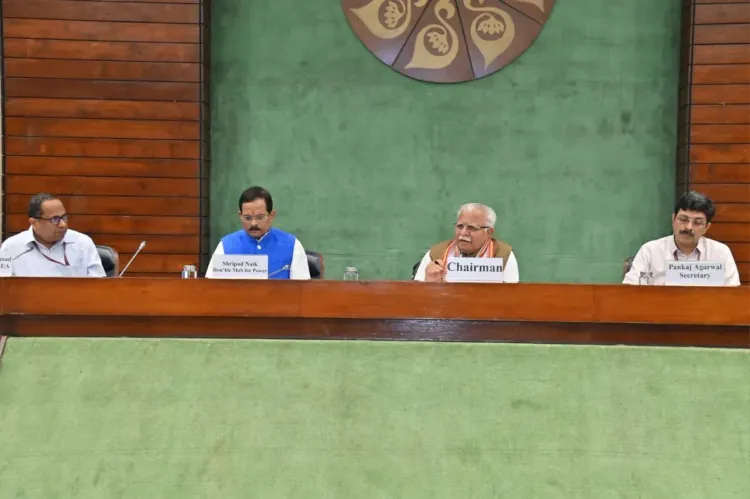
Union Power Minister Manohar Lal Khattar chaired a Parliamentary Consultative Committee meeting on 23 July 2026 to deliberate on the Draft Electricity (Amendment) Bill, 2025 and the Draft National Electricity Policy, 2026, with discussions centred on a 'Shared Network, Multiple Licensees' framework to introduce competition in power distribution.
Key Takeaways
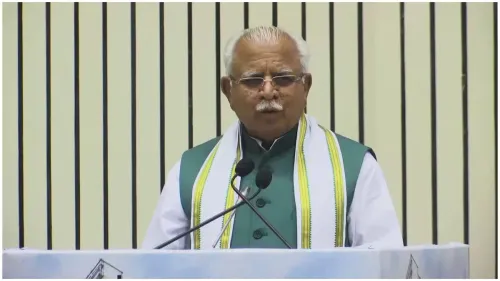
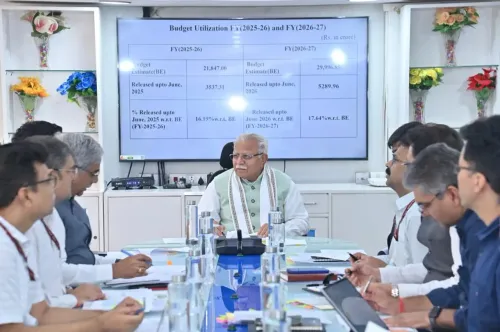
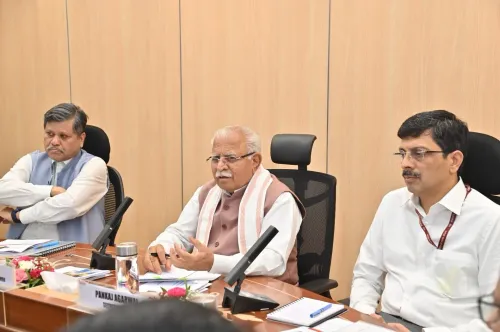
Union Power Minister Manohar Lal Khattar chaired the Parliamentary Consultative Committee meeting of the Ministry of Power on 23 July 2026 .
MPs reviewed the Draft Electricity (Amendment) Bill, 2025 and the Draft National Electricity Policy, 2026 .
The proposed 'Shared Network, Multiple Licensees' framework would allow multiple suppliers to compete over a shared distribution network, expanding consumer choice.
The approach revives the concept from the Electricity (Amendment) Bill, 2021 , which lapsed with the dissolution of the 17th Lok Sabha .
State discoms and state electricity regulators are key stakeholders who would face significant structural changes under the proposed model.
The next steps include tabling the bill in Parliament and conducting state-level consultations on the draft national electricity policy.
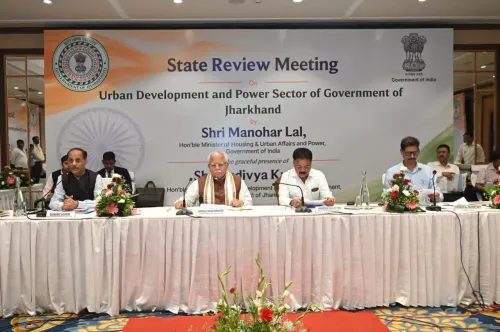
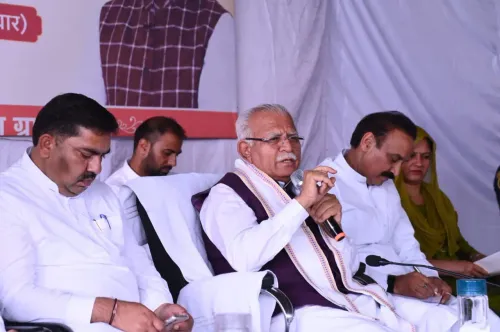
Union Power Minister Manohar Lal Khattar chaired a Parliamentary Consultative Committee meeting of the Ministry of Power on Thursday, 23 July 2026, focused on proposed reforms to India's electricity distribution sector. Members of Parliament reviewed the Draft Electricity (Amendment) Bill, 2025 and the Draft National Electricity Policy, 2026, offering suggestions on a framework that could fundamentally reshape how power reaches consumers.
Context
The meeting centred on a proposed 'Shared Network, Multiple Licensees' framework, under which the physical distribution network would remain a common infrastructure layer while multiple service providers compete to supply power over it. Minister Khattar said discussions aimed at expanding consumer choice, improving service delivery, strengthening competition, and building a 'more efficient, reliable, and future-ready power distribution sector.'
The Parliamentary Consultative Committee is a statutory body of Members of Parliament that deliberates on ministry-specific policies and legislative proposals before they advance further in the legislative process. Input gathered at such meetings typically informs revisions to draft legislation.
Policy Backdrop
The proposed amendments build on a reform lineage stretching back to the Electricity Act, 2003, which unbundled state electricity boards, introduced open access, and established state electricity regulatory commissions. A National Electricity Policy followed in 2005, setting targets for universal access, rural electrification, and financial viability of distribution utilities.
An earlier Electricity (Amendment) Bill, 2021 had similarly sought to separate the carriage and content functions in distribution — a concept mirroring the telecom sector's shared-infrastructure model — but lapsed when the 17th Lok Sabha was dissolved. The Draft Electricity (Amendment) Bill, 2025 revives and refines that approach, with the 'Shared Network, Multiple Licensees' framework as its centrepiece.
Successive governments have pursued incremental reforms to address chronic financial losses and operational inefficiencies in power distribution, which remains predominantly under state government control through state distribution companies, known as discoms. The broader modernisation agenda also encompasses renewable energy integration and smart-grid upgrades.
Stakeholders and Impact
If enacted, the framework would most directly affect electricity consumers across India, who could gain the ability to choose their power supplier — a right currently unavailable to most households and small businesses. State discoms, many of which carry substantial debt, would face new competitive pressure on their retail supply businesses while potentially retaining roles as network operators.
State electricity regulators would need to design and enforce rules governing shared access to distribution infrastructure, a technically and commercially complex undertaking. Industry observers note that the model's success would depend heavily on how states implement the framework, given that distribution remains a concurrent subject with significant state-level discretion.
What's Next
The immediate next step is the tabling of the Draft Electricity (Amendment) Bill, 2025 in Parliament, followed by broader legislative debate. The Draft National Electricity Policy, 2026 will also require state-level consultations before finalisation, given the federal dimensions of power distribution governance.
The pace and outcome of those consultations will determine whether India's long-pending distribution reforms move from draft to statute — and whether the 'Shared Network, Multiple Licensees' model avoids the fate of its 2021 predecessor.
Point of View
2025 — a procedural step designed to pre-empt the opposition that stalled the 2021 version. The 'Shared Network, Multiple Licensees' model represents the central government's most ambitious attempt yet to inject competition into the last mile of power delivery, a segment that has resisted reform for two decades. However, the federal structure of electricity governance means state buy-in is not guaranteed, and discoms in financially stressed states may resist a framework that threatens their captive consumer base. The outcome will test whether the current political moment offers more legislative durability than previous reform cycles.
NationPress
24 Jul 2026
Frequently Asked Questions
What is the Draft Electricity Amendment Bill 2025?
The Draft Electricity (Amendment) Bill, 2025 is a proposed central legislation that seeks to reform India's power distribution sector, primarily through a 'Shared Network, Multiple Licensees' framework that would allow multiple suppliers to compete over a common distribution network, giving consumers the ability to choose their electricity provider.
What is the 'Shared Network, Multiple Licensees' model in electricity?
Under the 'Shared Network, Multiple Licensees' model, the physical distribution infrastructure — wires and cables — remains a shared common layer, while multiple licensed companies compete to supply electricity to consumers over that network. The concept mirrors how telecom companies share tower infrastructure while competing on services.
What is the Parliamentary Consultative Committee for the Ministry of Power?
The Parliamentary Consultative Committee is a statutory body comprising Members of Parliament that meets to discuss ministry-specific policies and legislative proposals. Its deliberations provide MPs an opportunity to offer inputs before bills are formally tabled in Parliament.
What happened to the Electricity Amendment Bill 2021?
The Electricity (Amendment) Bill, 2021 sought to separate the carriage and supply functions in power distribution but lapsed when the 17th Lok Sabha was dissolved ahead of the 2024 general elections. The 2025 draft bill revives and refines that earlier reform effort.
How will electricity distribution reforms affect consumers in India?
If the proposed framework is enacted, most Indian households and small businesses could gain the ability to choose their electricity supplier for the first time, potentially driving improvements in service quality, pricing, and reliability as licensed providers compete over a shared network.