Khattar expresses grief over Teesta-VI tunnel accident in Sikkim

Synopsis
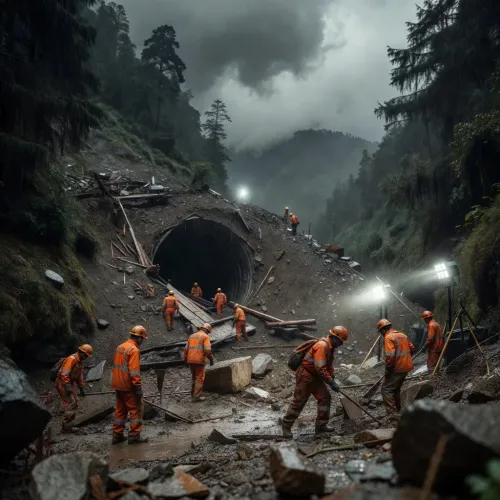
Union Power Minister Manohar Lal Khattar on 21 July 2026 expressed deep grief over a tragic accident at the Teesta-VI Hydroelectric Project in Namchi, South Sikkim, confirming war-footing rescue operations for workers trapped in a tunnel and offering condolences to bereaved families.
Key Takeaways
Union Power Minister Manohar Lal Khattar expressed condolences over a tragic incident at the Teesta-VI Hydroelectric Project in Namchi, South Sikkim on 21 July 2026 .
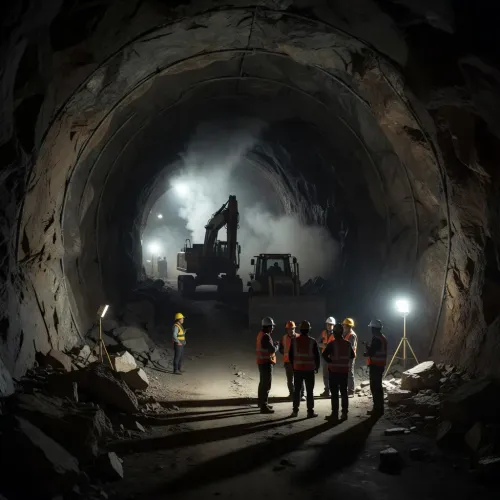
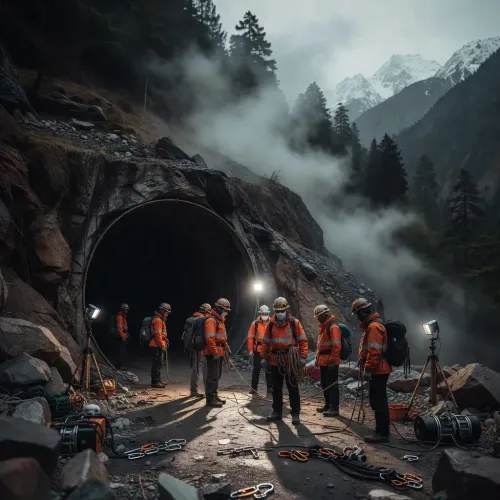
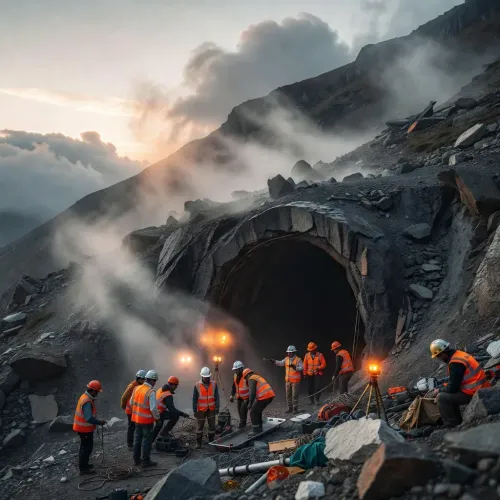
Workers are reported to be trapped inside a tunnel at the under-construction project site.
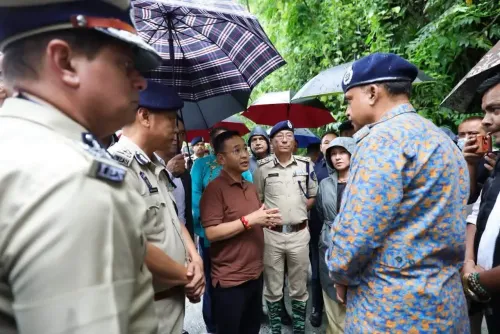
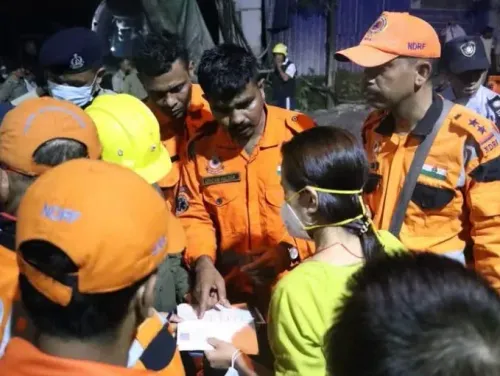
Rescue and relief operations are underway 'on a war footing,' according to Khattar's post.
The local administration and Sikkim state government are providing all possible assistance to the rescue effort.
The Teesta-VI project is a run-of-the-river hydroelectric scheme on the Teesta river , part of India's northeastern hydropower development strategy.
A cause investigation and safety audit are expected once the rescue phase concludes.
Union Power Minister Manohar Lal Khattar on Tuesday, 21 July 2026 expressed deep anguish over a tragic incident at the under-construction Teesta-VI Hydroelectric Project in Namchi, South Sikkim, offering condolences to the families of those who lost their lives and calling for prayers for the safe rescue of workers trapped inside a tunnel.
In a post on X, Khattar wrote — 'दक्षिणी सिक्किम के नामची में निर्माणाधीन तीस्ता-VI जलविद्युत परियोजना में हुई दुःखद घटना से मन अत्यंत व्यथित है' — ('My heart is deeply pained by the tragic incident at the under-construction Teesta-VI Hydroelectric Project in Namchi, South Sikkim'). He conveyed his 'deepest condolences to the families of those who lost their lives in this accident.'
Context
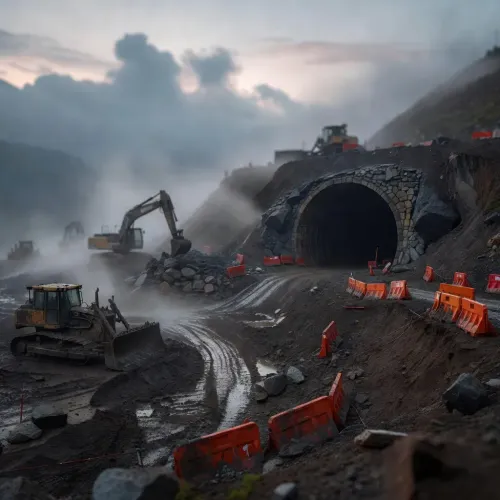
The incident occurred at the construction site of the Teesta-VI Hydroelectric Project, a run-of-the-river scheme on the Teesta river in South Sikkim. The project is part of a cascade of hydroelectric developments in the Teesta basin that India has been pursuing since the early 2000s to expand renewable power capacity in the northeast. Khattar confirmed that rescue and relief operations were underway 'on a war footing' (yuddh star par) to bring out those trapped in the tunnel.
The minister stated that 'all possible assistance is being provided by the local administration and the state government,' signalling active coordination between central and state authorities. He concluded by praying for the safe rescue of all trapped individuals and for strength to be granted to the bereaved families.
Policy Backdrop
The Teesta river basin in Sikkim hosts several cascading hydroelectric projects that form a critical pillar of India's northeastern power development strategy. Tunnel and underground excavation works in the region's steep Himalayan terrain have historically presented significant geological and safety challenges for contractors and regulatory bodies.
The Teesta-VI project, like others in the cascade, is designed to harness the river's flow without large impoundment, making underground civil works — including tunnels — a central and high-risk component of construction. Safety protocols for such projects fall under the purview of both central power sector regulators and state-level agencies.
Stakeholders and Impact
The immediate victims of the incident are construction workers employed at the Teesta-VI site, whose families now face uncertainty. The broader community of Sikkim residents, particularly in South Sikkim, is also affected given the project's proximity to Namchi, the district headquarters.
For India's hydropower ambitions in the northeast, incidents of this nature draw renewed scrutiny to worker safety standards, geological risk assessments, and the pace of underground construction in fragile Himalayan zones. State and local administrations are currently leading on-ground rescue efforts, consistent with standard protocol for such emergencies.
What's Next
Official updates on the outcome of the ongoing rescue operation, the cause of the accident, and the number of workers affected are expected from Sikkim state authorities and the project's executing agency in the coming hours and days. A formal cause investigation and safety audit of the Teesta-VI site are likely to follow once the immediate rescue phase concludes.
The incident may also prompt a broader review of safety norms across under-construction hydroelectric tunnel projects in India's Himalayan states, where similar geological vulnerabilities have triggered accidents in the past. The trajectory of the Teesta-VI project's construction timeline will depend significantly on the findings of any such audit.
Point of View
Where the government has staked significant political and policy capital on accelerating Himalayan river projects as part of its clean energy transition. Repeated tunnel accidents across Himalayan construction sites have intensified pressure on regulators to enforce stricter geological risk protocols before works commence. How swiftly a formal safety review follows this incident will be a telling indicator of whether the sector is moving toward systemic reform or treating each accident as an isolated tragedy.
NationPress
21 Jul 2026
Frequently Asked Questions
What happened at the Teesta-VI Hydroelectric Project in Sikkim?
A tragic accident occurred at the under-construction Teesta-VI Hydroelectric Project in Namchi, South Sikkim , with workers reported trapped inside a tunnel. Rescue operations were confirmed to be underway on a war footing as of 21 July 2026 .
Where is the Teesta-VI project located?
The Teesta-VI Hydroelectric Project is located in Namchi , the headquarters of South Sikkim district, on the Teesta river in the Himalayan state of Sikkim.
What did Manohar Lal Khattar say about the Sikkim tunnel accident?
Union Power Minister Manohar Lal Khattar said his heart was 'deeply pained' by the incident, offered condolences to families of those who lost their lives, and confirmed that rescue operations were underway 'on a war footing' with full support from local administration and the Sikkim state government.
Who is carrying out the rescue at the Teesta-VI tunnel accident?
According to Khattar 's statement, the local administration and Sikkim state government are leading rescue and relief operations at the Teesta-VI site, with all possible assistance being provided.
What is the Teesta-VI Hydroelectric Project?
The Teesta-VI Hydroelectric Project is an under-construction run-of-the-river hydroelectric scheme on the Teesta river in South Sikkim , part of a cascade of hydro projects in the Teesta basin developed to expand India's renewable power capacity in the northeast.