Khattar Hails India-New Zealand FTA on Vijayadashami
Synopsis
Union Power Minister Manohar Lal Khattar announced the India-New Zealand FTA on Vijayadashami, heralding expanded market access for Indian farmers, MSMEs, and exporters under PM Modi's Indo-Pacific trade diplomacy push.
Key Takeaways
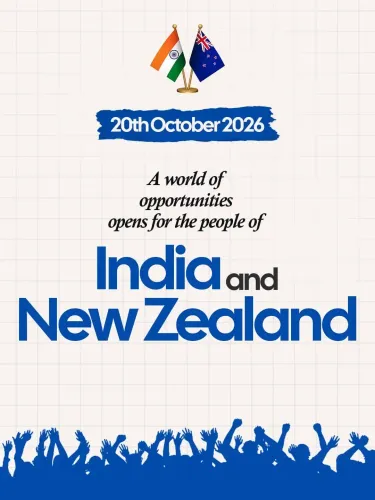
Union Minister Manohar Lal Khattar announced the India-New Zealand FTA on 19 October 2026 , the eve of Vijayadashami.
Negotiations for the agreement were first launched in 2010 , making it a sixteen-year diplomatic effort.
The deal aims to expand market access for Indian farmers, MSMEs, and exporters in New Zealand.
India previously concluded FTAs with the UAE and Australia , both in 2022 , as part of its Indo-Pacific trade strategy.
Key next steps include formal signing, parliamentary ratification, and finalisation of sector-specific tariff schedules.
The announcement aligns with India's stated policy of 'mutually beneficial global engagement' under PM Narendra Modi .
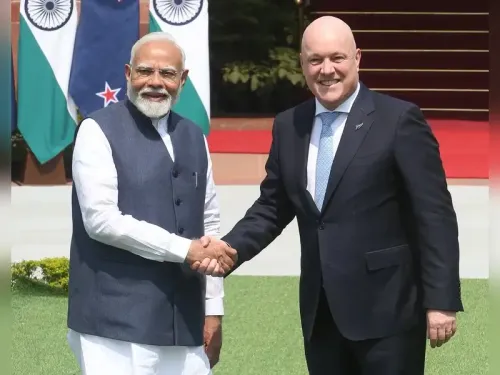
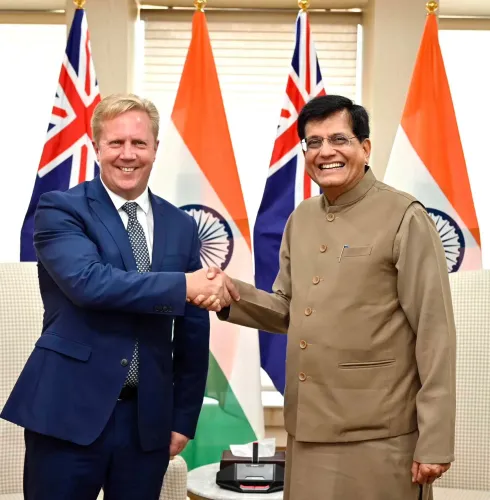
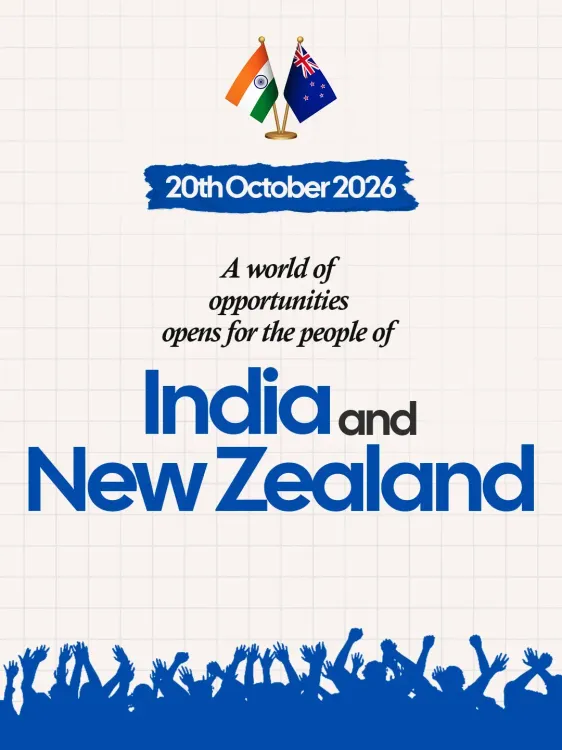
On the eve of Vijayadashami, Union Power Minister Manohar Lal Khattar announced that a new chapter in the India-New Zealand partnership is opening — one that promises expanded market access for Indian farmers, MSMEs, and exporters, and deepened trade and investment ties between the two nations.
A deal sixteen years in the making
Negotiations for an India-New Zealand Free Trade Agreement were first launched in 2010 — making any conclusion a sixteen-year diplomatic marathon. The agreement, if signed and ratified, would open New Zealand's markets to Indian agricultural produce, services, and manufactured goods, while giving Indian consumers and industry access to New Zealand's high-value exports. Khattar credited the push to 'the visionary leadership of Prime Minister Narendra Modi.'
The timing is deliberate. Vijayadashami — the festival marking the triumph of good over evil — carries symbolic weight as a launch point for major national announcements in Indian political tradition. Framing an FTA milestone on this day signals intent as much as it signals timing.
Where the India-New Zealand FTA fits in Modi's Indo-Pacific trade push
This deal slots into a clear pattern. Under the current government, India concluded a landmark trade agreement with the UAE in 2022 and an interim economic cooperation pact with Australia in 2022 — both aimed at diversifying export destinations and reducing dependence on a single trade corridor. The New Zealand FTA extends that Indo-Pacific arc further south and east.
The sectors most in focus are agriculture, services, and manufacturing — precisely the domains where Indian MSMEs and exporters have historically faced tariff and non-tariff barriers in developed-economy markets. New Zealand's relatively small but high-income consumer base makes it a valuable quality-market signal rather than a volume play for Indian goods.
What comes next for farmers, MSMEs, and exporters
The political announcement is only the opening move. The real stakes lie in the fine print: sector-specific tariff schedules, rules-of-origin norms, and sanitary and phytosanitary standards that will determine whether Indian agricultural exporters and small manufacturers actually gain shelf space in New Zealand. Parliamentary ratification in both countries follows any formal signing.
For now, the minister's post frames the FTA as a 'forward-looking partnership that advances mutual growth' — language that places the deal squarely within India's stated doctrine of 'mutually beneficial global engagement,' a phrase that has become a cornerstone of New Delhi's economic diplomacy vocabulary.
Sixteen years after the first handshake at the negotiating table, the clock on delivering concrete gains for India's farmers and small businesses has officially started ticking again.
Point of View
New Zealand extends the arc southward and gives India a high-income market reference point for agricultural and MSME exports. The sixteen-year negotiation timeline also underscores how politically and technically complex even 'smaller' FTAs are, meaning the devil will be in the tariff schedules and rules-of-origin yet to be disclosed. Khattar's Vijayadashami framing is classic BJP political communication — anchoring an economic milestone in cultural symbolism to maximise domestic resonance.
NationPress
19 Oct 2026
Frequently Asked Questions
What is the India-New Zealand Free Trade Agreement?
The India-New Zealand FTA is a bilateral trade agreement aimed at expanding market access, boosting trade and investment, and creating new opportunities for Indian farmers, MSMEs, and exporters in New Zealand. Negotiations were first launched in 2010.
When was the India-New Zealand FTA announced?
Union Minister Manohar Lal Khattar announced the India-New Zealand FTA on 19 October 2026 , the eve of Vijayadashami.
How does the India-New Zealand FTA benefit Indian farmers and MSMEs?
The agreement is expected to expand market access for Indian agricultural produce, manufactured goods, and services in New Zealand, reducing tariff and non-tariff barriers that have historically limited Indian exports.
What other FTAs has India signed under the Modi government?
India concluded free trade agreements with the UAE and Australia, both in 2022, as part of a broader Indo-Pacific trade diversification strategy.
What are the next steps for the India-New Zealand FTA?
The key next steps include a formal signing ceremony, parliamentary ratification in both countries, and the finalisation of sector-specific tariff schedules and rules-of-origin norms.