Khattar Hails Pune Metro Line-3 Launch, Hinjewadi IT Hub Link
Synopsis
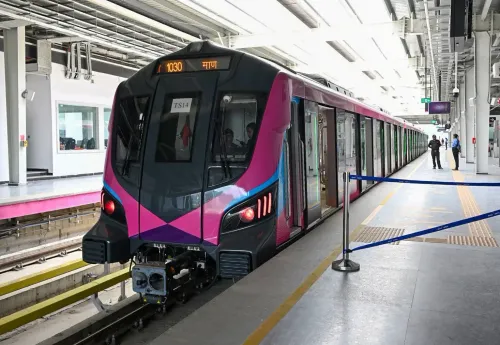
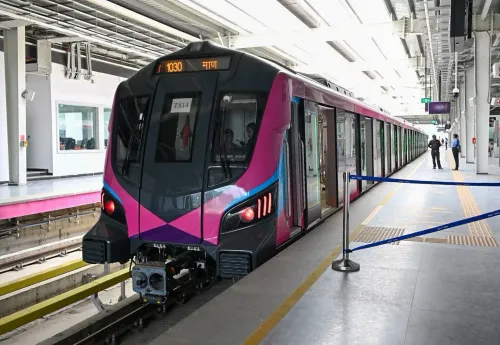
Union Minister Manohar Lal Khattar welcomed the inauguration of Pune Metro Line-3, a ₹8,300-crore rail corridor connecting the Hinjewadi IT hub to Shivajinagar, promising faster commutes, reduced congestion, and stronger urban productivity for thousands of daily travellers.
Key Takeaways
Pune Metro Line-3 has been inaugurated, linking Hinjewadi IT hub to Shivajinagar in Pune.
The project cost exceeds ₹8,300 crore , making it a major capital investment in Maharashtra's urban transport.
The corridor is expected to benefit thousands of IT professionals and daily commuters with safer, faster travel.
The project aligns with India's Metro Rail Policy 2017 and the central government's tier-2 city metro expansion drive.
Union Minister Manohar Lal Khattar framed the launch under PM Modi's 'Ease of Living' mandate for urban citizens.
Remaining Pune Metro phases are still under development, with more city-level metro launches expected nationally.
A city of millions of daily commuters just got a critical new artery. Union Minister for Housing and Urban Affairs Manohar Lal Khattar on Tuesday, November 3, 2026, celebrated the inauguration of Pune Metro Line-3, calling it a landmark step in India's mission to build world-class, citizen-first urban transport infrastructure under Prime Minister Narendra Modi.
Hinjewadi to Shivajinagar: The Corridor That Connects Pune's IT Heartland
At the core of this launch is a corridor that thousands of software engineers, tech workers, and daily commuters have long needed. The new line links Hinjewadi — Pune's sprawling IT and technology hub on the city's outskirts — directly to Shivajinagar, one of its busiest central nodes. The project has been developed at a cost of over ₹8,300 crore, making it one of the more capital-intensive metro additions in Maharashtra's urban transport network.
Khattar's post, written in Hindi, underlined the immediate benefits: 'हजारों आईटी पेशेवरों एवं अन्य यात्रियों को सुगम, सुरक्षित और सुविधाजनक आवागमन की सुविधा मिलेगी' — 'thousands of IT professionals and other commuters will get smooth, safe, and convenient travel.' Beyond individual convenience, he pointed to time savings, reduced road congestion, and a boost to the city's overall economic productivity.
Metro Rail Policy 2017 and the Tier-2 City Push
Pune Metro Line-3 does not arrive in isolation. India's Metro Rail Policy 2017 established a structured framework for expanding urban rail in cities with populations exceeding one million, and the Ministry of Housing and Urban Affairs has since rolled metro projects into multiple tier-2 and tier-3 cities. Hinjewadi, home to some of India's largest IT campuses, has been a pressure point for Pune's road network for years — a fast-growing employment zone with infrastructure that lagged its own growth.
This inauguration fits a larger federal pattern. Since 2014, the central government has prioritised metro connectivity not just in megacities but in economic centres where congestion directly constrains productivity. A metro corridor into an IT hub is, in effect, economic infrastructure as much as transport infrastructure.
Ease of Living: The Policy Frame Behind the Steel and Concrete
Khattar closed his post by anchoring the project to the BJP government's 'Ease of Living' mandate — a broader policy commitment to improving the quality of daily life for urban citizens. 'Under the guidance of the honourable Prime Minister, we are fully committed to ensuring Ease of Living for citizens,' he wrote.
It is a deliberate choice of language. 'Ease of Doing Business' has long measured India's economic reform story; 'Ease of Living' is its urban counterpart — metros, clean water, smart roads, affordable housing — and the Pune line is being positioned squarely within that narrative.
With remaining Pune Metro phases still in various stages of completion, and parallel metro inaugurations planned in other cities, Tuesday's launch is a chapter, not the conclusion. Ridership numbers in the coming months will tell us how powerfully this steel corridor can reshape how Pune moves.
Point of View
Khattar is tying a concrete infrastructure win directly to a BJP governance narrative ahead of what remains a competitive urban-policy landscape. The Hinjewadi corridor is particularly telling: linking an IT employment hub via mass transit is an implicit acknowledgement that road-based infrastructure has hit its ceiling in India's fastest-growing tech clusters. The larger test will be ridership adoption and whether subsequent Pune Metro phases can maintain the political and financial momentum this inauguration signals.
NationPress
3 Nov 2026
Frequently Asked Questions
What is Pune Metro Line-3 and which areas does it connect?
Pune Metro Line-3 is a new urban rail corridor that connects Hinjewadi, Pune's major IT and technology hub, to Shivajinagar in the city centre. It has been developed at a cost of over ₹8,300 crore.
What is the cost of Pune Metro Line-3?
The Pune Metro Line-3 corridor has been developed at a cost of more than ₹8,300 crore, as stated by Union Minister Manohar Lal Khattar.
Who inaugurated Pune Metro Line-3?
The inauguration of Pune Metro Line-3 was highlighted by Union Minister for Housing and Urban Affairs Manohar Lal Khattar in the context of the Modi government's urban infrastructure push, with the project developed under central metro rail initiatives.
How will Pune Metro Line-3 benefit commuters?
The new line will provide thousands of IT professionals and other daily commuters with faster, safer, and more convenient travel between Hinjewadi and Shivajinagar, reducing road congestion and improving the city's economic productivity.
What is India's Metro Rail Policy 2017?
India's Metro Rail Policy 2017 is a government framework that set guidelines and standards for expanding metro rail networks in Indian cities with populations above one million, enabling structured metro growth in tier-2 and larger cities.