Khattar honours DIAL Project winners, champions youth-led green innovation
Synopsis
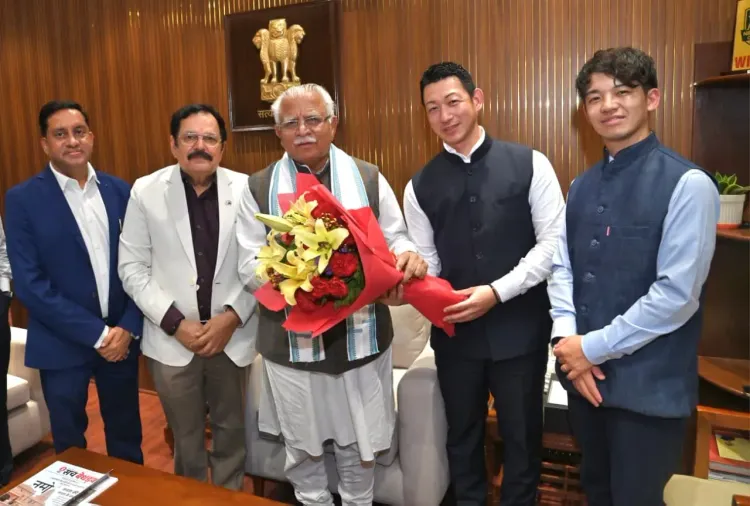
Union Power Minister Manohar Lal Khattar on 28 July 2026 honoured winners of Daiki Axis India's DIAL Project, a programme offering students financial support, expert mentorship, and Japan study visits to advance environmental innovation and conservation research.
Key Takeaways
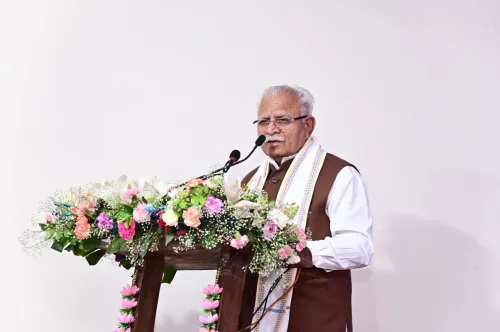
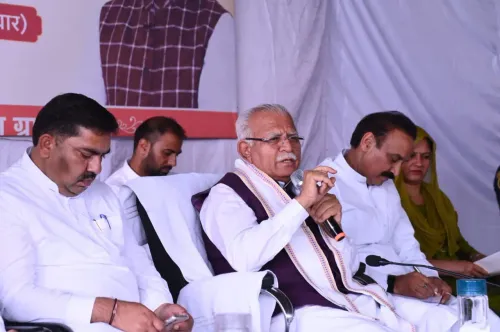
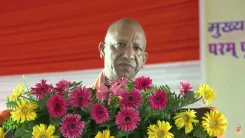
Union Power Minister Manohar Lal Khattar felicitated winning participants of the DIAL Project by Daiki Axis India on 28 July 2026 .
The DIAL Project provides student innovators with financial support, expert mentorship, guidance, and a Japan study tour focused on environmental conservation.
Daiki Axis India is the Indian arm of a Japanese firm specialising in decentralised wastewater treatment and environmental technologies.
Khattar called nature conservation 'not merely an obligation but our collective responsibility,' emphasising the role of youth.
The minister's participation reflects India's cross-sectoral push to integrate sustainability education into youth development programmes.
Progress on funded student projects and future editions of the DIAL scheme are the key developments to watch.
India's next generation of environmental leaders got a moment in the spotlight on Tuesday, 28 July 2026, when Union Power Minister Manohar Lal Khattar personally felicitated the winning participants of Daiki Axis India's DIAL Project — a corporate-backed programme that pairs student innovators with financial support, expert mentorship, and a coveted study visit to Japan.
Sharing the occasion on X, Khattar described the DIAL initiative as 'ek atyant sarahniya pehel' — 'an extremely commendable initiative' — through which students are being equipped to advance innovations and research in environmental conservation. He offered his congratulations to all winning students and wished them a bright future.
What the DIAL Project offers student innovators
Daiki Axis India, the Indian arm of a Japanese firm specialising in decentralised wastewater treatment and environmental technologies, runs the DIAL Project as a structured mentorship pipeline. Winners receive guidance, financial support, access to domain experts, and a Japan study tour — giving young researchers direct exposure to one of Asia's most advanced green-technology ecosystems.
The Japan component is no accident. India and Japan share established bilateral cooperation on green technologies and water management, and study visits of this kind have become a recurring feature of youth-focused environmental programmes that cross both governments' desks.
Why a Power Minister at an environment award ceremony
Khattar's presence signals something deliberate. As the minister overseeing India's power sector — a sector at the centre of the country's energy transition — his participation in a youth environmental programme underlines the cross-sectoral push to weave sustainability thinking into the next generation early. His message was pointed: 'Prakriti ka sanrakshan keval ek dayitva nahin, balki hamari samuhik jimmedari hai' — 'Conservation of nature is not merely an obligation, but our collective responsibility.'
He added that if every citizen, especially the youth, treats this as a personal duty, a 'safe, balanced, and prosperous environment' for future generations can be secured.
India's ministries have increasingly partnered with or participated in corporate-backed environmental awareness programmes, recognising that state capacity alone cannot drive the behavioural and innovation shifts the country's climate commitments demand. The DIAL Project sits squarely in that trend.
The real test will come in the months ahead — whether the student projects funded through this cycle produce measurable outcomes, and whether Daiki Axis India scales the programme further. For now, one minister's afternoon with a room full of young environmentalists sent a message that is bigger than the ceremony itself: India's green future is being built in classrooms and labs, one student project at a time.
Point of View
It also threads a useful needle — associating the party's energy-sector stewardship with environmental responsibility at a time when the power sector's coal dependence draws scrutiny. The Japan connection in the DIAL Project quietly reinforces India-Japan bilateral green-tech ties at the grassroots level, a form of soft diplomacy that rarely makes headlines but builds durable institutional links. Whether such ceremonial participation translates into sustained policy support for youth-led environmental innovation, or remains a photo opportunity, is the question the next programme cycle will begin to answer.
NationPress
28 Jul 2026
Frequently Asked Questions
What is the DIAL Project by Daiki Axis India?
The DIAL Project is a corporate programme run by Daiki Axis India that supports student innovators working on environmental conservation through financial assistance, expert mentorship, guidance, and a study visit to Japan.
Who is Manohar Lal Khattar and why did he attend the DIAL Project event?
Manohar Lal Khattar is India's Union Minister of Power and Housing and Urban Affairs and a senior BJP leader and former Chief Minister of Haryana. He attended to felicitate the winning student participants and highlight the importance of youth-led environmental action.
What does the DIAL Project Japan study visit involve?
Winners of the DIAL Project receive a study tour to Japan, giving them direct exposure to Japan's advanced green-technology and environmental management ecosystem, in line with established India-Japan bilateral cooperation on sustainability.
What did Khattar say about environmental conservation at the DIAL event?
Khattar said that conservation of nature is not merely an obligation but a collective responsibility, and that if every citizen — especially the youth — treats it as a personal duty, a safe, balanced, and prosperous environment for future generations can be secured.
What is Daiki Axis India?
Daiki Axis India is the Indian subsidiary of a Japanese firm specialising in decentralised wastewater treatment and environmental technologies, which also runs youth-focused environmental innovation programmes such as DIAL.