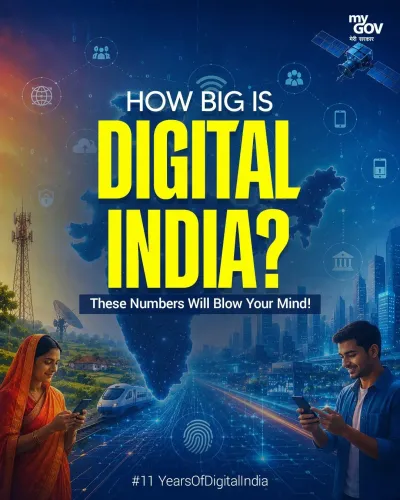
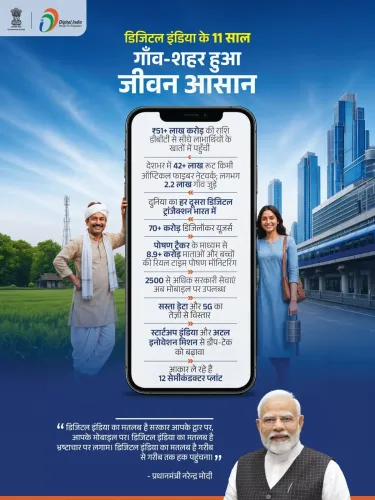
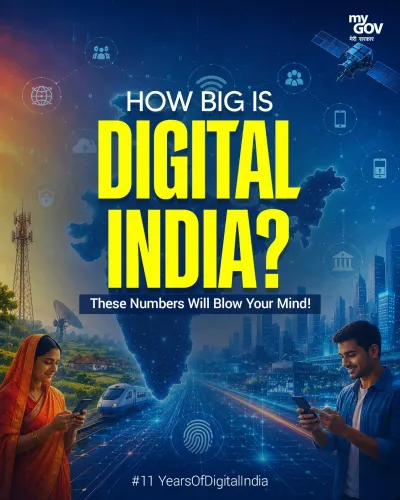
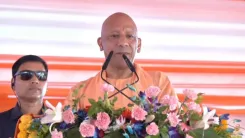
Khattar Marks 11 Years of Digital India, Hails Modi's Vision
Synopsis
Union Power Minister Manohar Lal Khattar marked the 11th anniversary of the Digital India programme on 1 July 2026, crediting PM Narendra Modi's leadership for expanding optical fibre networks and digital payments to empower marginalised citizens and raise India's global digital standing.
Key Takeaways
Union Power Minister Manohar Lal Khattar posted on X on 1 July 2026 to mark 11 years of Digital India .
The Digital India programme was launched on 1 July 2015 by Prime Minister Narendra Modi .
Khattar highlighted expansion of the optical fibre network and India's world-class digital payments record as key achievements.
The programme is credited with improving governance delivery for rural, poor and marginalised citizens through Aadhaar-linked services and UPI.
BharatNet Phase-III completion and integration of 5G and AI into citizen services are the next milestones to watch.
Khattar stated Digital India has 'made the world acknowledge India's digital capability at a global level.'
Union Power Minister Manohar Lal Khattar on Wednesday, 1 July 2026 marked the 11th anniversary of the Digital India programme, crediting Prime Minister Narendra Modi's leadership for transforming digital access across the country and empowering citizens at the margins of society.
Posting in Hindi on X, Khattar wrote: 'Digital India aaj viksit aur aatmanirbhar Bharat ki mazboot aadharshila bankar ubhra hai' — 'Digital India has today emerged as a strong cornerstone of a developed and self-reliant India.' He added that over the past 11 years, the initiative has delivered opportunities, services and conveniences to the poor, the marginalised and citizens in the last row, empowering them in the process.
Context
The Digital India programme was formally launched on 1 July 2015 by Prime Minister Narendra Modi with the stated goal of transforming India into a digitally empowered society and knowledge economy. The anniversary on 1 July 2026 marks 11 years of the initiative, which has since grown into one of the central government's most prominent flagship schemes. Khattar's post is among a wave of tributes from senior BJP leaders marking the occasion.
In his post, Khattar specifically highlighted two pillars of the programme's progress: the widespread expansion of the optical fibre network across the country, and India's world-class achievements in digital payments. He noted that the campaign has lent fresh momentum to good governance while making everyday life simpler and more transparent for ordinary citizens.
Policy Backdrop
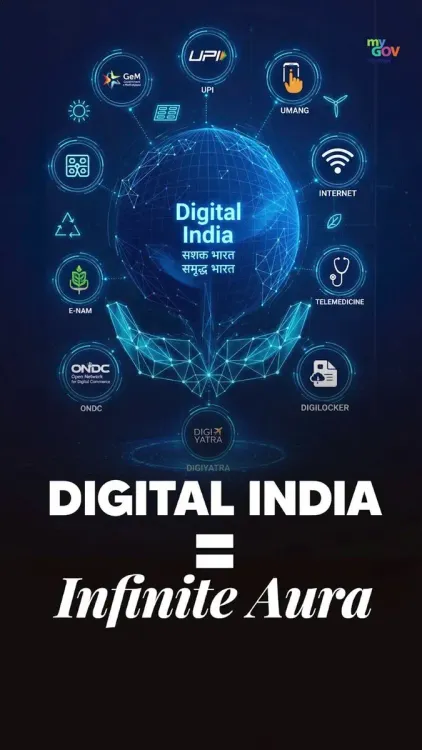
BharatNet, the rural optical fibre network project, has been a critical vehicle for Digital India's infrastructure goals, aimed at connecting gram panchayats across the country with broadband connectivity. The programme has also anchored the rapid rise of the Unified Payments Interface (UPI), which has made India a globally cited example of real-time retail digital payments at scale.
Beyond payments and connectivity, Digital India has served as the scaffolding for a broader ecosystem of Aadhaar-linked services, direct benefit transfers and e-governance platforms. These have collectively been positioned by the central government as instruments for reducing leakages in welfare delivery and improving transparency in public administration.
Stakeholders and Impact
The programme's stated beneficiaries are rural citizens, low-income households and populations previously excluded from formal financial and governance systems. Khattar's post underscores the government's framing that digital infrastructure is not merely a technological upgrade but a social equity intervention — one that reaches, in his words, 'the citizen in the last row.'
India's digital payments ecosystem has drawn international attention, with multilateral institutions and foreign governments studying the UPI model for potential replication. Khattar noted that Digital India has 'made the world acknowledge India's digital capability at a global level,' reflecting the government's consistent effort to project the programme as a soft-power asset alongside its domestic utility.
What's Next
The immediate policy focus within the Digital India framework is expected to remain on completing BharatNet Phase-III and deepening last-mile broadband penetration in remote and underserved regions. Integration of emerging technologies — including 5G networks and artificial intelligence — into citizen-facing services is also on the government's stated agenda as the programme enters its second decade.
As Digital India turns 11, the anniversary presents both a moment of stock-taking and a political opportunity for the ruling dispensation to reinforce its governance narrative ahead of the programme's next phase. How effectively the infrastructure built over the past decade translates into measurable improvements in service delivery for the most marginalised citizens will be the defining test of the initiative's next chapter.
Point of View
The messaging attempts to bridge the party's aspirational and welfare-voter bases simultaneously. The explicit reference to 'self-reliant India' (Aatmanirbhar Bharat) ties Digital India into a larger ideological frame that has defined the government's second and third terms. The real political stakes, however, lie in whether the programme's next phase — rural broadband completion and AI integration — can deliver visible gains before the next electoral cycle.
NationPress
1 Jul 2026
Frequently Asked Questions
When was Digital India launched and by whom?
Digital India was launched on 1 July 2015 by Prime Minister Narendra Modi to transform India into a digitally empowered society and knowledge economy. It has now completed 11 years as of 1 July 2026.
What did Manohar Lal Khattar say about Digital India?
Khattar said Digital India has emerged as a 'strong cornerstone of a developed and self-reliant India,' crediting PM Modi's leadership over 11 years for empowering marginalised citizens through digital services, optical fibre expansion and world-class digital payments.
What is BharatNet and how does it relate to Digital India?
BharatNet is a rural optical fibre network project that is a key infrastructure pillar of Digital India, aimed at connecting gram panchayats across India with broadband internet to improve last-mile service delivery.
What are India's achievements in digital payments under Digital India?
India's Unified Payments Interface (UPI) , developed under the Digital India framework, has become a globally recognised real-time retail payments system, with multiple countries studying it for replication.
What is next for the Digital India programme?
The government's focus is on completing BharatNet Phase-III for deeper rural broadband coverage and integrating 5G and artificial intelligence technologies into citizen-facing government services.