Power Minister Khattar Meets NCBC Chief Sadhvi Niranjan Jyoti
Synopsis
Union Power Minister Manohar Lal Khattar held a courtesy meeting with NCBC Chairperson Sadhvi Niranjan Jyoti on June 8, 2026, discussing contemporary issues. The NCBC is a constitutional body safeguarding OBC interests under the 102nd Constitutional Amendment Act, 2018.
Key Takeaways
Union Power Minister Manohar Lal Khattar met NCBC Chairperson Sadhvi Niranjan Jyoti on June 8, 2026 in New Delhi.
The meeting was described as a courtesy call with discussion on 'various contemporary issues.' The National Commission for Backward Classes gained constitutional status under the 102nd Constitutional Amendment Act, 2018 .
The NCBC advises the central government on reservation and welfare matters for OBC communities .
Central ministers routinely engage with constitutional commission heads to align administrative and social justice priorities.
Follow-up policy recommendations from the NCBC and possible parliamentary references to OBC welfare are being watched.
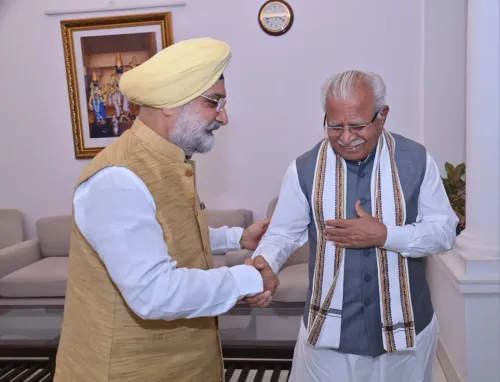
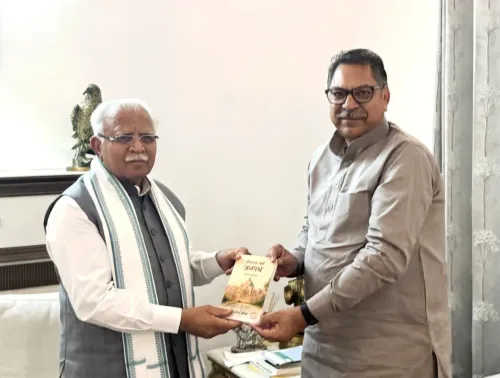
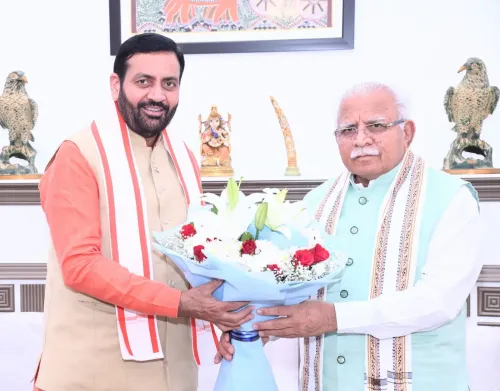
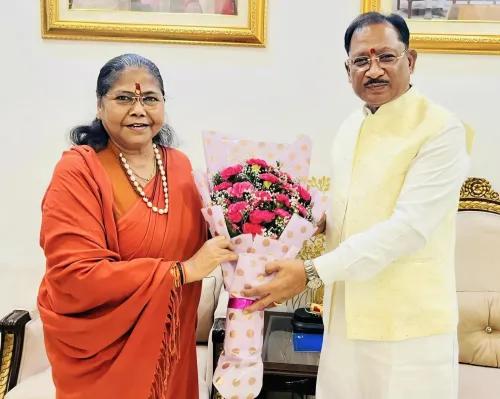
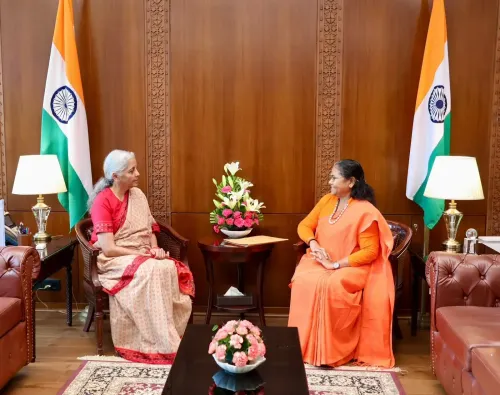
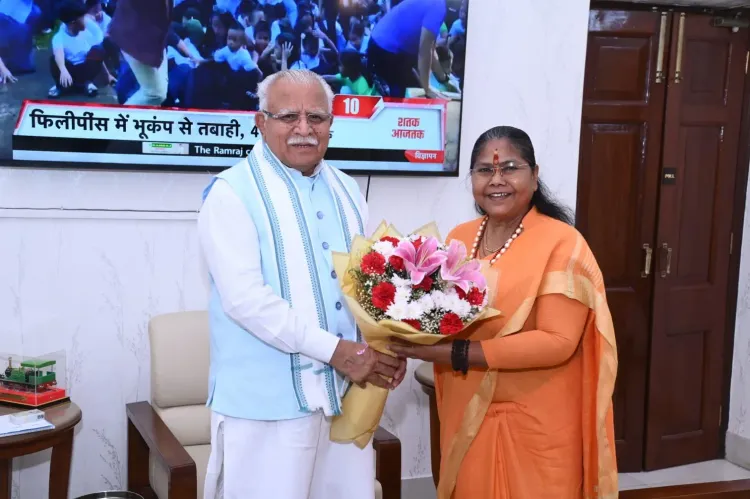
Union Power Minister Manohar Lal Khattar held a courtesy meeting with Sadhvi Niranjan Jyoti, Chairperson of the National Commission for Backward Classes (NCBC), on Monday, June 8, 2026, in New Delhi. The minister described the interaction as an occasion for meaningful discussion on various contemporary issues.
Posting on X, Khattar wrote: 'राष्ट्रीय पिछड़ा वर्ग आयोग की माननीय अध्यक्ष, बहन Sadhvi Niranjan जी से आज शिष्टाचार भेंट हुई। इस अवसर पर विभिन्न समसामयिक विषयों पर सार्थक चर्चा हुई।' [Translation: 'Today I had a courtesy meeting with the honourable Chairperson of the National Commission for Backward Classes, sister Sadhvi Niranjan ji. On this occasion, a meaningful discussion took place on various contemporary issues.']
Context
The National Commission for Backward Classes is a constitutional body established under the 102nd Constitutional Amendment Act, 2018, which gave it an expanded mandate to safeguard the interests of socially and educationally backward classes and advise the central government on reservation and welfare matters. Sadhvi Niranjan Jyoti, a senior BJP leader, heads the commission in its current term.
Central ministers periodically hold such courtesy calls with heads of constitutional commissions as a routine mechanism for aligning administrative priorities with the commissions' advisory functions. The practice has continued across successive governments.
Policy Backdrop
The meeting comes against the backdrop of the central government's ongoing engagement with Other Backward Classes (OBC) welfare issues, including sub-categorisation debates and data-collection exercises that have gained momentum in recent years. The NCBC's advisory role becomes particularly significant ahead of parliamentary sessions when backward-class welfare legislation and reservation-related matters are likely to feature in legislative business.
The Mandal Commission era laid the groundwork for institutionalised OBC representation, and successive administrations — including the current BJP-led government — have built upon that framework. Constitutional status conferred on the NCBC in 2018 strengthened its ability to make binding recommendations to the government.
Stakeholders and Impact
OBC communities and backward-class welfare groups across India are the primary stakeholders in the NCBC's work. Any policy signals emerging from high-level ministerial consultations with the commission can influence the direction of welfare schemes, reservation policy, and social justice programming that directly affects these communities.
For Khattar, the meeting also reflects a broader political outreach. As a former Chief Minister of Haryana and a senior leader with a base in north India, engagement with backward-class institutions carries significance in states where OBC voters form a substantial electoral constituency.
What's Next
Observers will watch for any follow-up statements from the NCBC on policy recommendations that may have been discussed during the meeting. With a parliamentary session on the horizon, references to backward-class welfare — particularly around sub-categorisation and data collection — could emerge in legislative or executive actions in the weeks ahead.
Point of View
Particularly as sub-categorisation of reservations remains a live political and judicial issue. For Khattar, whose political career is rooted in Haryana where OBC consolidation is electorally critical, such engagements reinforce his social-justice credentials at the national level. The timing, ahead of a likely parliamentary session, suggests the government may be preparing the ground for legislative or policy moves on backward-class matters. Without details of what was discussed, however, the meeting reads primarily as a routine courtesy call that maintains inter-institutional communication.
NationPress
29 Jul 2026
Frequently Asked Questions
Who is Sadhvi Niranjan Jyoti and what is her role in NCBC?
Sadhvi Niranjan Jyoti is a senior BJP leader who serves as Chairperson of the National Commission for Backward Classes , a constitutional body that safeguards OBC interests and advises the government on reservation and welfare policy.
What is the National Commission for Backward Classes?
The National Commission for Backward Classes (NCBC) is a constitutional body established under the 102nd Constitutional Amendment Act, 2018 , mandated to protect the interests of socially and educationally backward classes and make recommendations on reservation matters to the central government.
Why did Manohar Lal Khattar meet the NCBC chairperson?
Manohar Lal Khattar described the meeting as a courtesy call during which 'meaningful discussion on various contemporary issues' took place. Central ministers routinely hold such meetings with heads of constitutional commissions to exchange views on policy implementation.
What issues may have been discussed at the Khattar-NCBC meeting?
The post does not specify the topics discussed. However, ongoing policy areas under the NCBC's purview include OBC sub-categorisation, reservation data collection, and backward-class welfare schemes — all of which are active areas of government focus.
What is the significance of the 102nd Constitutional Amendment for OBC communities?
The 102nd Constitutional Amendment Act, 2018 conferred constitutional status on the NCBC, significantly expanding its mandate and giving its recommendations greater legal and institutional weight in matters affecting OBC communities across India.