Khattar pays tribute to Raja Ram Mohan Roy on death anniversary
Synopsis
Union Power Minister Manohar Lal Khattar marked the death anniversary of Raja Ram Mohan Roy on 27 September 2026, honouring the 19th-century reformer's unmatched work in education, women's empowerment, and the fight against superstition and social evils.
Key Takeaways
Manohar Lal Khattar , Union Minister of Power and Housing & Urban Affairs, paid tribute to Raja Ram Mohan Roy on his death anniversary on 27 September 2026 .
Khattar called Roy the 'harbinger of the Indian Renaissance' and praised his work on education and women's empowerment as 'incomparable'.
Raja Ram Mohan Roy founded the Brahmo Samaj in 1828 , a reformist movement advocating monotheism and social equality.
Roy's campaign against sati led directly to the Bengal Sati Regulation of 1829 , one of the subcontinent's earliest major social-reform laws.
Tributes to Roy are observed across party lines by Indian political leaders on his death anniversary each year.
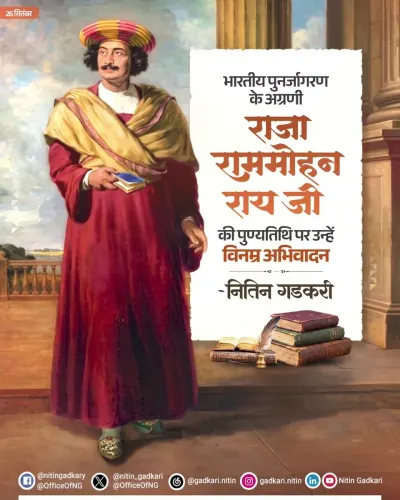
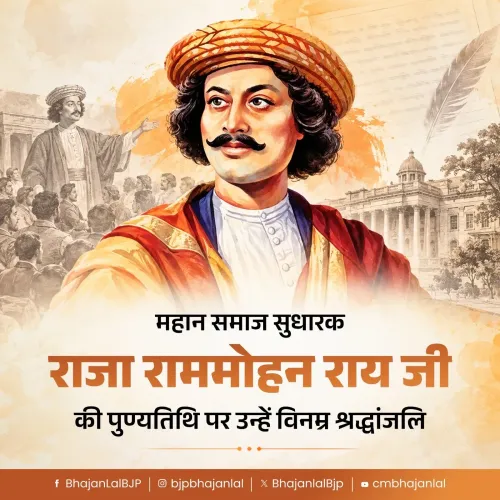
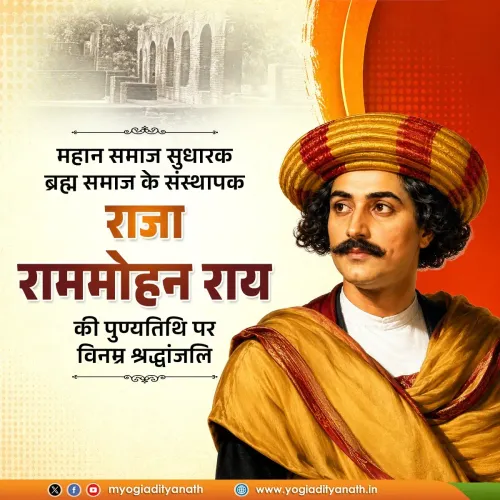
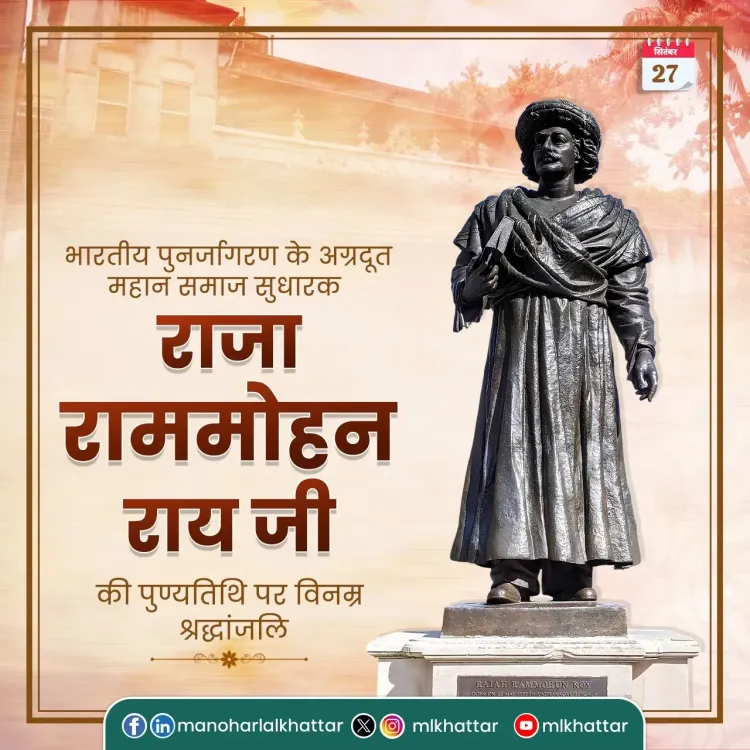
On the death anniversary of Raja Ram Mohan Roy, Union Power Minister Manohar Lal Khattar on Sunday, 27 September 2026 offered his homage to the 19th-century reformer he called the 'harbinger of the Indian Renaissance' — a man who reshaped a society from within.
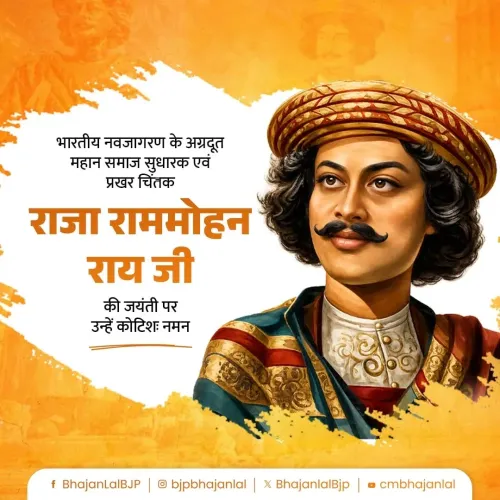
Posting in Hindi on X, Khattar wrote: 'भारतीय पुनर्जागरण के अग्रदूत, महान समाज सुधारक, शिक्षाविद एवं ब्रह्म समाज के संस्थापक राजा राममोहन राय जी की पुण्यतिथि पर विनम्र श्रद्धांजलि।' ('Humble tribute on the death anniversary of Raja Ram Mohan Roy — harbinger of the Indian Renaissance, great social reformer, educationist, and founder of Brahmo Samaj.') He added that Roy's contributions to education and women's empowerment were 'incomparable', and that his visionary ideas in freeing society from superstition and social evils would remain 'eternally inspiring'.
The reformer who rewired 19th-century India
Raja Ram Mohan Roy, born in 1772 in Bengal, stands as one of the most consequential figures in modern Indian history. He waged a relentless campaign against the practice of sati — the immolation of widows on their husbands' funeral pyres — a crusade that directly led to the Bengal Sati Regulation of 1829, which banned the practice under British India law. It was among the first major legislative victories for social reform on the subcontinent.
Roy founded the Brahmo Samaj in 1828, a reformist socio-religious movement that advocated monotheism, rejected idol worship, and pushed fiercely for the equality of women within Hindu society. He championed widow remarriage and girls' education at a time when both were radical propositions. He also embraced Western education, seeing it as a tool of liberation rather than colonisation.
Why political leaders mark this anniversary
Tributes to Roy on his death anniversary are a recurring ritual across India's political landscape, offered by leaders of all parties and ideological stripes. The themes Roy embodied — rational thought, education, women's rights, rejection of blind superstition — carry a timeless, cross-partisan appeal that makes such observances routine yet genuinely felt. Khattar's message carries no direct link to his power or urban affairs portfolios; this is the minister speaking as a citizen paying his respects to a founding voice of modern India.
Point of View
A figure who combined rational inquiry with social activism, signals a careful alignment with modernist, reformist values that sit comfortably within mainstream nationalist discourse. Across the political spectrum, Roy's anniversary functions as a low-risk, high-resonance moment for leaders to publicly associate themselves with India's progressive intellectual inheritance. The tribute carries no policy implication but reinforces the BJP's broader cultural narrative of celebrating indigenous social reform movements.
NationPress
27 Sept 2026
Frequently Asked Questions
When is Raja Ram Mohan Roy's death anniversary?
Raja Ram Mohan Roy passed away on 27 September 1833 in Bristol, England. His death anniversary is therefore observed on 27 September each year.
Who was Raja Ram Mohan Roy?
Raja Ram Mohan Roy was a 19th-century Bengali social reformer, educationist, and the founder of Brahmo Samaj . He is widely regarded as the 'Father of the Indian Renaissance' for his campaigns against sati , his advocacy for women's education, and his promotion of rational, modern thought in India.
What is the Brahmo Samaj and who founded it?
The Brahmo Samaj was a reformist socio-religious movement founded by Raja Ram Mohan Roy in 1828 . It advocated monotheism, rejected idol worship and caste discrimination, and championed women's rights and education within Hindu society.
What did Manohar Lal Khattar say about Raja Ram Mohan Roy?
Manohar Lal Khattar called Roy the 'harbinger of the Indian Renaissance' and said his contributions to education and women's empowerment were 'incomparable'. He also praised Roy's vision in freeing society from superstition and social evils as 'eternally inspiring'.
What law did Raja Ram Mohan Roy's campaign against sati lead to?
Roy's persistent campaign against the practice of sati directly contributed to the passage of the Bengal Sati Regulation of 1829 , which banned the practice across British India — one of the subcontinent's landmark early social-reform laws.