Khattar Reviews C&AG Audit on Hydro CPSE Capacity Expansion
Synopsis
Union Power Minister Manohar Lal Khattar reviewed the C&AG Performance Audit on hydroelectric CPSE capacity expansion on 8 August 2026, directing time-bound corrective action across project planning, contract management, monitoring, and disaster preparedness — critical for India's 500 GW clean-energy target.
Key Takeaways
Union Power Minister Manohar Lal Khattar reviewed the C&AG Performance Audit on hydro CPSE capacity expansion on 8 August 2026 .
The Ministry emphasised four corrective priorities: stronger project planning and supervision , transparent contract management , closer project monitoring , and enhanced disaster preparedness .
Hydro CPSEs under scrutiny include NHPC , SJVN , and THDC , which are central to India's hydropower capacity addition programme.
C&AG audits of power-sector CPSEs have repeatedly flagged delays, cost overruns, and contract irregularities in hydro projects since the 2010s .
Hydropower is a key pillar of India's target to achieve 500 GW of non-fossil fuel capacity by 2030 .
Ministry notifications on formal, time-bound action plans responding to the audit will be the next critical benchmark.
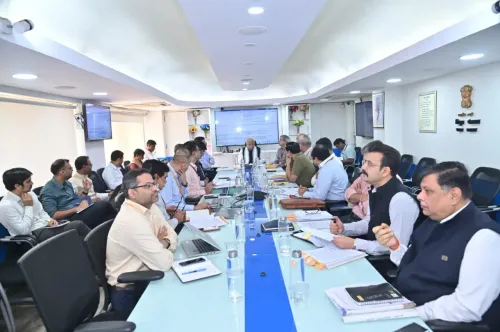
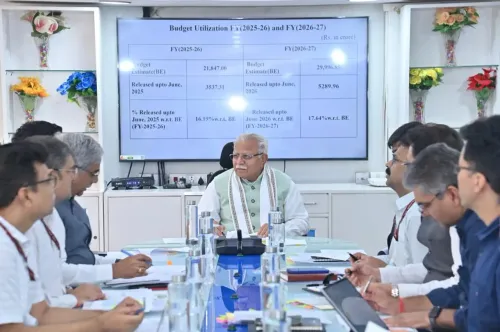
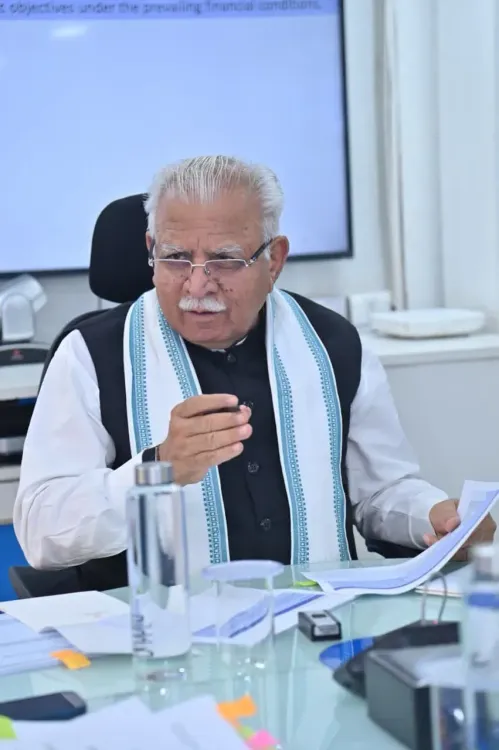
A performance audit from India's Supreme Audit Institution has landed on the desk of Union Power Minister Manohar Lal Khattar — and his response is a directive for accountability, not a filing cabinet. On Saturday, 8 August 2026, the Minister reviewed the Comptroller and Auditor General (C&AG) Performance Audit on capacity expansion by hydroelectric Central Public Sector Enterprises, and made clear that the observations will be met with time-bound corrective action.
What the Review Put on the Table
Khattar's post identified four specific areas of concern drawn from the audit: stronger project planning and supervision, transparent contract management, closer project monitoring, and enhanced disaster preparedness. Each of these directly maps to a persistent pressure point in India's hydropower infrastructure story. The emphasis on 'time-bound' action signals that the Ministry is not treating this as a routine compliance exercise — it is a performance signal directed at the Hydro CPSEs, which include major state-owned players such as NHPC, SJVN, and THDC.A Pattern the C&AG Has Flagged for Years
This is not the first time India's hydro sector has come under the auditor's lens. Since the 2010s, successive C&AG reports on power-sector CPSEs have flagged delays, cost overruns, and contract irregularities in hydroelectric projects — particularly those located in the ecologically sensitive and logistically demanding Himalayan region. The Ministry of Power's 2018 guidelines had already stressed improved monitoring and disaster preparedness for Himalayan schemes, yet implementation gaps have persisted across project cycles.Hydropower's Role in India's 500 GW Target
The stakes extend beyond audit compliance. India has committed to achieving 500 GW of non-fossil fuel-based electricity capacity by 2030, and hydropower — with its dispatchable, round-the-clock generation capability — is a cornerstone of that target. Every delayed dam or stalled turbine is not just a line item in an audit report; it is a gap in the country's clean-energy arithmetic. Tighter planning and supervision at the CPSE level are, in that sense, a national energy security imperative. The Ministry's next move — formal notifications on time-bound action plans responding to the audit observations — will be the real test of whether Saturday's review translates into measurable change on the ground, or remains a well-intentioned boardroom conversation.Point of View
Rather than treating them as bureaucratic inconveniences. Whether the Ministry follows through with formal action-taken reports will determine if this review is a turning point or a talking point.
NationPress
8 Aug 2026
Frequently Asked Questions
What is the C&AG Performance Audit on hydro CPSEs about?
The C&AG Performance Audit examines the capacity expansion activities of hydroelectric Central Public Sector Enterprises such as NHPC, SJVN, and THDC, assessing project planning, contract management, monitoring, and execution timelines.
Which hydro CPSEs are covered under this audit review?
The audit covers Central Public Sector Enterprises engaged in hydroelectric development, primarily NHPC, SJVN, and THDC, which are the main state-owned entities responsible for hydropower capacity addition in India.
What corrective actions did Khattar direct after reviewing the C&AG audit?
Khattar directed time-bound corrective actions across four areas: stronger project planning and supervision, transparent contract management, closer project monitoring, and enhanced disaster preparedness.
Why does hydropower matter for India's energy targets?
Hydropower is a dispatchable, round-the-clock clean energy source and a key component of India's target to achieve 500 GW of non-fossil fuel-based electricity capacity by 2030.
Has the C&AG flagged hydro project issues before?
Yes. Since the 2010s, successive C&AG reports on power-sector CPSEs have highlighted delays, cost overruns, and contract irregularities in hydroelectric projects, particularly in the Himalayan region.