Rijiju backs SAD's push for Women's Bill and fair Delimitation
Synopsis
Union Parliamentary Affairs Minister Kiren Rijiju backed Shiromani Akali Dal's twin demands — immediate operationalisation of the Women's Reservation Bill and a uniform 50% seat increase in the upcoming delimitation — calling it a positive step in the national interest.
Key Takeaways
Union Parliamentary Affairs Minister Kiren Rijiju publicly endorsed Shiromani Akali Dal's position on the Women's Reservation Bill and delimitation on August 8, 2026 .
SAD is pressing for a uniform 50% increase in parliamentary and assembly seats across all states as part of the delimitation exercise.
The Nari Shakti Vandan Adhiniyam 2023 reserves 33% seats for women but cannot be operationalised without a fresh delimitation and census.
Delimitation is constitutionally frozen until after the first census post- 2026 , making the upcoming exercise one of the most politically sensitive in decades.
Rijiju's endorsement signals cross-party momentum for a seat-expansion formula that protects slower-growing states from losing parliamentary representation.
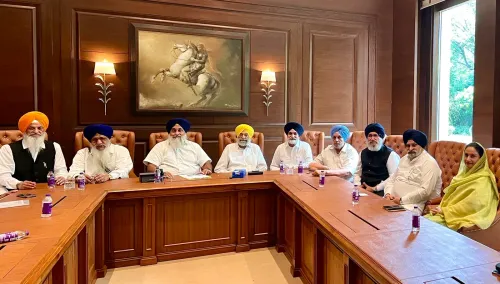
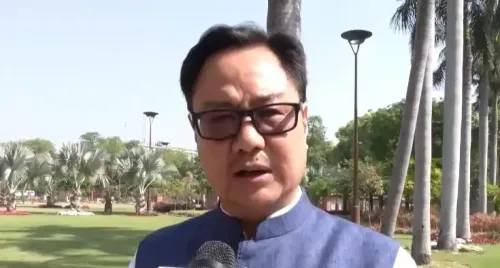
When a Punjab-based regional party and a senior Union minister find common ground on two of India's most contested constitutional questions, it signals something worth watching. Union Parliamentary Affairs Minister Kiren Rijiju on Saturday, August 8, 2026 publicly endorsed Shiromani Akali Dal's call for the immediate implementation of the Women's Reservation Bill and a delimitation framework that guarantees equitable representation for all states.
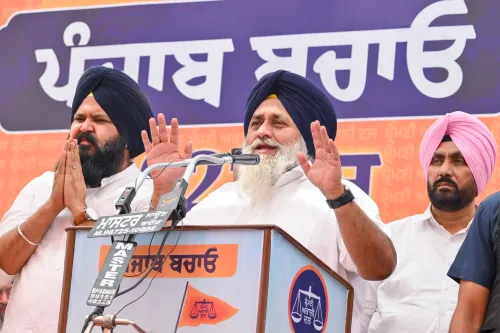
Rijiju, responding to a post by SGPC Amritsar and tagging SAD president Sukhbir Singh Badal, described the party's twin demands as 'a positive approach in the larger national interest.' He specifically backed the proposal for 'a uniform 50% increase in seats across all States' as 'a constructive step towards wider representation.'
The two demands SAD is pressing — and why they are linked
The Nari Shakti Vandan Adhiniyam, passed by Parliament in September 2023, reserves one-third of seats in the Lok Sabha and state assemblies for women. The catch: the law cannot come into force until after a fresh delimitation exercise, which itself is constitutionally frozen until the first census conducted after 2026. The two issues are therefore legally inseparable — you cannot operationalise the women's quota without redrawing constituencies, and you cannot redraw constituencies without the census. SAD's position, as endorsed by Rijiju, threads this needle with a specific formula: expand the total number of seats uniformly by 50% across every state, rather than redistributing existing seats purely on population. That distinction matters enormously to states in the south and east that have controlled population growth — under strict proportionality, their seat share would shrink relative to high-growth Hindi-heartland states.Why regional parties are nervous about the next Delimitation
The Constitution (Eighty-fourth Amendment) Act, 2001 froze constituency boundaries precisely because population-based reallocation threatened to concentrate parliamentary power in a handful of large states. That freeze expires after the post-2026 census, making the next delimitation exercise one of the most consequential political events in decades. Regional parties across the spectrum — from Tamil Nadu to Punjab — have demanded that any new formula protect their states' existing seat counts. A uniform percentage increase in total seats is one mechanism to achieve this: every state grows its representation, even if relative weights shift marginally. Rijiju's public backing of this approach from a BJP platform gives the idea cross-party momentum at a critical juncture.A cross-party signal before the census clock runs out
The timing of this exchange is deliberate. With the post-2026 census window approaching, parties are staking out positions on what a fair delimitation looks like before the process formally begins. Rijiju's endorsement of SAD's stance — framing it as being 'in the larger national interest' — is a signal that the ruling establishment is open to a consensus formula that addresses both women's representation and state-level equity simultaneously. For SAD, a party navigating its relationship with the BJP after years as a former NDA ally, the public appreciation from a senior Union minister is a moment of political rehabilitation. For the women's reservation movement, every cross-party signal of urgency keeps pressure on the government to move the census and delimitation process forward without further delay. The real test will come when Parliament is asked to link the women's reservation trigger to a specific seat-expansion formula — and whether that consensus survives contact with the arithmetic.Point of View
' the BJP signals it is aware of the southern and peripheral states' anxieties about population-based seat redistribution. The Women's Reservation Bill remains the political sweetener that keeps diverse parties at the table — but the real negotiation is about who gains and who loses seats in the next delimitation. Rijiju's intervention suggests the government wants a consensus blueprint in place well before that arithmetic becomes a crisis.
NationPress
8 Aug 2026
Frequently Asked Questions
What is the Women's Reservation Bill and when was it passed?
The Women's Reservation Bill, officially the Nari Shakti Vandan Adhiniyam, was passed by Parliament in September 2023. It reserves one-third of seats in the Lok Sabha and state assemblies for women, but requires a fresh delimitation and census before it can come into force.
Why has the Women's Reservation Bill not been implemented yet?
Implementation is legally linked to a fresh delimitation of constituencies, which is constitutionally frozen until after the first census conducted post-2026. Without the census and delimitation, the reserved seats cannot be identified or operationalised.
What is Delimitation and why does it matter in 2026?
Delimitation is the constitutional process of redrawing parliamentary and assembly constituencies, typically based on updated census data. The current freeze expires after the post-2026 census, making the next exercise critical as it will determine seat distribution among states for decades.
What is Shiromani Akali Dal's proposal on Delimitation?
Shiromani Akali Dal has called for a uniform 50% increase in the total number of seats across all states, rather than redistributing existing seats on population proportionality alone. This would protect states with slower population growth from losing parliamentary representation.
Why did Kiren Rijiju support Shiromani Akali Dal's position?
Rijiju described SAD's stance as a positive approach in the larger national interest, signalling that the ruling establishment is open to a consensus delimitation formula that addresses both women's representation and equitable state-level seat distribution before the census process begins.