Bihar CM Office Launches Naya Savera 3.0 to Fight Human Trafficking
Synopsis
The Chief Minister's Office of Bihar has announced Naya Savera 3.0, the third phase of the state's human trafficking prevention and victim rehabilitation programme, pledging to make the effort broader, more effective, and more impactful than its predecessors.
Key Takeaways
Bihar's Chief Minister's Office announced Naya Savera 3.0 on August 8, 2026 .
The programme focuses on human trafficking prevention and victim rehabilitation .
It is the third successive phase, following Naya Savera 1.0 and Naya Savera 2.0 .
The stated aim is to make efforts 'broader, more effective, and more result-oriented.' Specific funding, components, and partnerships under Phase 3.0 are yet to be officially detailed.
Bihar is doubling down on one of its most stubborn social crises. The Chief Minister's Office of Bihar announced on Saturday, August 8, 2026, that Naya Savera 3.0 — the third phase of the state's flagship anti-human trafficking programme — is now under way, with a stated goal of making prevention and victim rehabilitation 'broader, more effective, and more result-oriented.'
The post, shared from the official CMO Bihar account, stated: 'Naya Savera 1.0' aur 'Naya Savera 2.0' ke baad ab 'Naya Savera 3.0' ke madhyam se maanav taskari ki roktham tatha peedon ke punarvas ke prayason ko aur adhik vyapak, prabhavi evam parinamdayi banaya ja raha hai — ('After Naya Savera 1.0 and Naya Savera 2.0, efforts to prevent human trafficking and rehabilitate victims are now being made even more comprehensive, effective, and impactful through Naya Savera 3.0.')
Bihar's Trafficking Crisis and the Naya Savera Arc
Human trafficking is not a peripheral problem in Bihar — it is woven into the state's migration economy and its pockets of deep socio-economic vulnerability. Traffickers have long exploited the gap between rural distress and the promise of urban or cross-border work, preying particularly on women and children from marginalised communities.
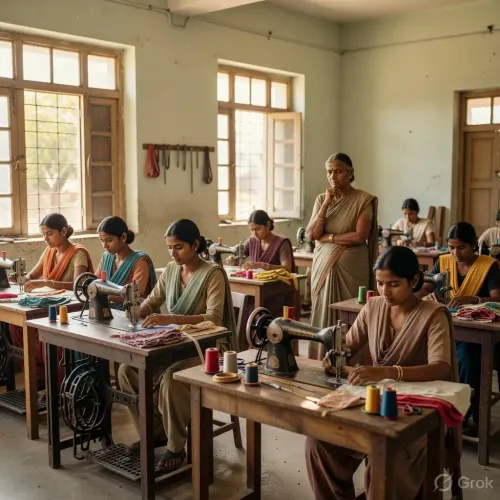
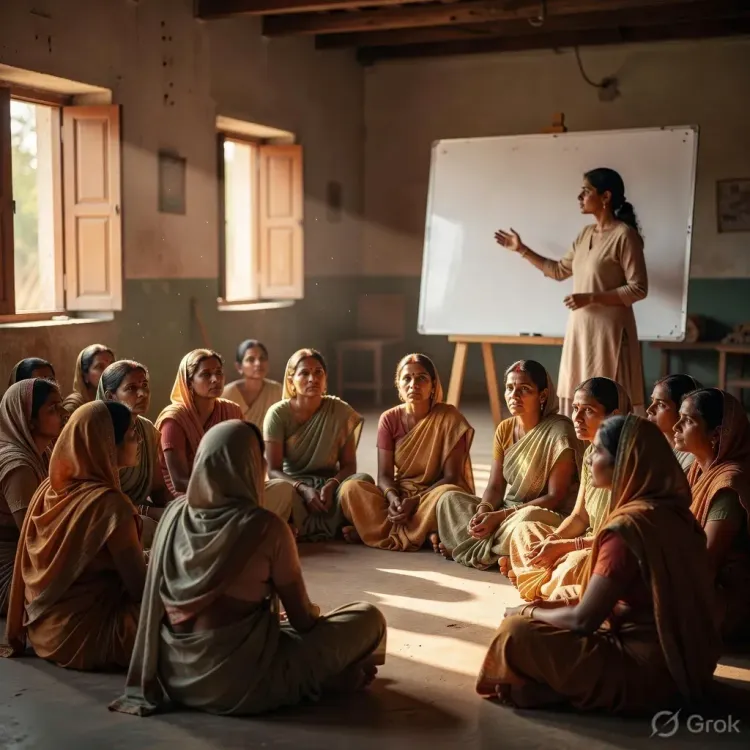
The Naya Savera ('New Dawn') programme was conceived as a phased state response to this challenge — spanning prevention at the community level, rescue coordination, and structured rehabilitation for survivors. The progression from Phase 1.0 to 2.0 to 3.0 signals a government intent to build on prior implementation rather than restart with each political cycle.
What the Third Phase Signals
Phased social-protection programmes in India typically use each successive iteration to widen geographic reach, plug administrative gaps identified in earlier rounds, and deepen convergence with central schemes. The CMO's framing — 'broader, more effective, more result-oriented' — suggests Naya Savera 3.0 is positioned as a consolidation and scale-up, not a course correction.
Specific components, funding allocations, and implementation partners for Naya Savera 3.0 have not yet been officially detailed. Those announcements, when they come, will determine whether the third phase represents a meaningful operational leap or a rebranding of existing machinery.
For the trafficking survivors and at-risk communities across Bihar's districts, the measure of any 'new dawn' will be simple and unsparing: fewer victims, faster rescues, and lives genuinely rebuilt.
Point of View
Branded social-protection programmes to demonstrate administrative continuity on difficult structural issues. Human trafficking — deeply tied to Bihar's migration economy — is a politically sensitive subject where visible state action matters as much as outcomes. The CMO's framing emphasises scale and effectiveness, but without published data from Phases 1.0 and 2.0, the claim of incremental progress cannot be independently assessed. The real test will come when implementation details and outcome metrics are made public.
NationPress
8 Aug 2026
Frequently Asked Questions
What is Naya Savera 3.0 in Bihar?
Naya Savera 3.0 is the third phase of a Bihar government programme aimed at preventing human trafficking and rehabilitating survivors, announced by the Chief Minister's Office on August 8, 2026.
What were Naya Savera 1.0 and 2.0?
Naya Savera 1.0 and 2.0 were the earlier phases of the same Bihar state initiative focused on combating human trafficking and supporting victims. Naya Savera 3.0 builds on these previous phases.
Why is human trafficking a major issue in Bihar?
Bihar's high rates of economic migration and socio-economic vulnerability in rural areas make it a significant source state for human trafficking, with women and children from marginalised communities being particularly at risk.
What will Naya Savera 3.0 do differently from previous phases?
The Bihar CMO has stated that Naya Savera 3.0 will make anti-trafficking and rehabilitation efforts 'broader, more effective, and more result-oriented,' though specific new components and funding have not yet been announced.
Who benefits from the Naya Savera programme?
The programme is designed to benefit human trafficking victims and at-risk communities across Bihar, focusing on both prevention at the community level and structured rehabilitation for survivors.