Khyber Pakhtunkhwa emergency: Pakistan's democratic standing and EU GSP+ trade perks at risk
Synopsis
Pakistan's federal government has suspended the PTI-controlled Khyber Pakhtunkhwa administration under emergency powers — framing it as a counterterrorism move, but drawing accusations of political targeting. With an EU review already flagging democratic backsliding, Islamabad's preferential trade access under GSP+ now hangs in the balance.
Key Takeaways
President Asif Ali Zardari declared emergency in Khyber Pakhtunkhwa on 11 October 2025 , suspending the elected PTI provincial government for an initial six months .
Provincial powers were transferred to Governor Faisal Karim Kundi and an 11-member advisory council on the advice of PM Shehbaz Sharif's cabinet.
The federal government accused the PTI administration of colluding with militants on 12 October ; PTI denies the charge.
Pakistan's EU GSP+ trade privileges — in place since 2014 — now face scrutiny after a European Commission July review found Islamabad backsliding on commitments.
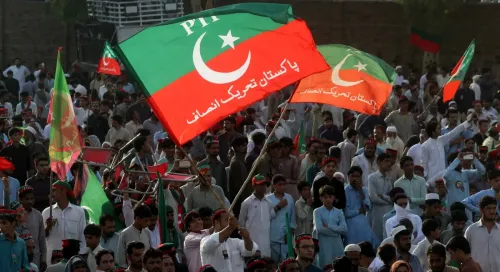
Arrests of PTI leaders and clashes between police and supporters of jailed former PM Imran Khan have deepened the political standoff.
Brussels has not yet formally opened a GSP+ review, but analysts say a prolonged crackdown could make one difficult to avoid.
Pakistan's imposition of emergency rule in Khyber Pakhtunkhwa (KP) — suspending the elected Pakistan Tehreek-e-Insaf (PTI) provincial government — has set Islamabad's counterterrorism rationale on a collision course with democratic norms, and could now draw heightened scrutiny of its preferential trade access to the European Union, according to a report by Directus, an Athens-based publication.
How the Emergency Was Imposed
President Asif Ali Zardari approved the emergency on 11 October 2025 under Articles 232 and 234 of the Pakistani Constitution, acting on the advice of Prime Minister Shehbaz Sharif's cabinet. The move transferred executive authority in the province to Governor Faisal Karim Kundi, supported by an 11-member advisory council, for an initial period of six months.
The federal government, on 12 October, formally accused the suspended PTI provincial administration of colluding with militants — an allegation the PTI has flatly rejected. The report noted that 'such serious allegations needed proof and a fair legal process rather than political rhetoric.'
The Democratic Credibility Question
'By suspending an elected provincial administration controlled by the Pakistan Tehreek-e-Insaf, the federal government has taken a step with consequences extending far beyond counterterrorism,' the Directus report stated. The opposition frames the emergency not as a security necessity but as a calculated effort to strip PTI of the last major province it controls.
The report raised a pointed question: 'The central question is whether the circumstances cited by Islamabad justify suspending an elected administration and transferring its powers to a federally appointed Governor.' It acknowledged the existence of a genuine militancy threat in KP but argued that 'the existence of a genuine threat does not, by itself, resolve whether suspending an elected government is necessary or proportionate.'
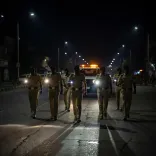
Arrests of provincial leaders and PTI figures, combined with clashes between police and supporters of jailed former Prime Minister Imran Khan, have sharpened the political standoff, with no sign of de-escalation.
EU's GSP+ Trade Privileges Under the Spotlight
The crisis arrives at a particularly sensitive moment for Pakistan's relationship with the European Union. Since 2014, Pakistan has benefited from the EU's Generalised Scheme of Preferences Plus (GSP+), which grants it preferential access to European markets in exchange for ratifying and implementing international conventions on human rights, labour standards, and democratic governance.
The Directus report warned that 'the suspension of an elected provincial administration, the detention of political figures and the treatment of protests raise questions relevant to political participation, the rule of law and the exercise of state power' — all of which are core GSP+ compliance benchmarks.
Critically, a European Commission review conducted in July had already found Pakistan backsliding on some of its commitments under the scheme. Brussels has not yet formally opened a GSP+ review over the KP emergency, but analysts warn that a sustained crackdown could make such a step harder to avoid.
What Comes Next
The initial six-month emergency period means Khyber Pakhtunkhwa remains under Governor's Rule at least through April 2026. Legal challenges from the PTI are expected before Pakistan's superior courts, though the judiciary's independence has itself been questioned by rights groups in recent years. Any European Commission decision to formally scrutinise Pakistan's GSP+ eligibility would carry significant economic consequences, given the EU's role as one of Islamabad's largest export markets. The coming weeks will test whether Pakistan's institutional safeguards — constitutional courts, international trade obligations, and domestic political pressure — can check the reach of the emergency, or whether the federal government's security framing prevails.
Point of View
But a July backsliding finding followed by a provincial emergency and the detention of opposition figures creates a cumulative record that Brussels will find increasingly difficult to set aside. The deeper danger for Pakistan is that the security justification and the democratic regression are happening simultaneously, making it impossible for international partners to treat them as separate conversations.
NationPress
18 Oct 2026
Frequently Asked Questions
Why did Pakistan impose emergency rule in Khyber Pakhtunkhwa?
The federal government, acting on the advice of Prime Minister Shehbaz Sharif's cabinet, imposed emergency rule on 11 October 2025, citing rising militancy in the province. On 12 October, it also accused the suspended PTI provincial administration of colluding with militants, a charge the PTI denies.
What is Pakistan's EU GSP+ trade scheme and why is it under scrutiny?
The EU's Generalised Scheme of Preferences Plus (GSP+) has granted Pakistan preferential access to European markets since 2014, conditional on implementing international conventions on human rights, labour rights, and democratic governance. The KP emergency — involving the suspension of an elected government and detention of political figures — raises compliance questions that the scheme's monitoring framework is designed to address.
Has the European Commission already raised concerns about Pakistan?
Yes. A European Commission review conducted in July found Pakistan backsliding on some of its GSP+ commitments, even before the Khyber Pakhtunkhwa emergency was declared. Brussels has not yet formally opened a GSP+ review specifically over the emergency, but analysts say sustained political repression could force that step.
Who now governs Khyber Pakhtunkhwa under the emergency?
Governor Faisal Karim Kundi, a federally appointed official, now holds executive authority over the province, assisted by an 11-member advisory council. This arrangement is set to last for an initial six months, keeping the province under Governor's Rule at least through April 2026.
What are the PTI's objections to the emergency declaration?
The PTI argues the emergency is a politically motivated move designed to strip the party of the last major province it controls, rather than a genuine security response. The party has denied federal allegations of militant collusion and is expected to challenge the emergency through Pakistan's superior courts.