Kishan Reddy Backs Chhattisgarh's 24-Hour Grain ATM Launch
Synopsis
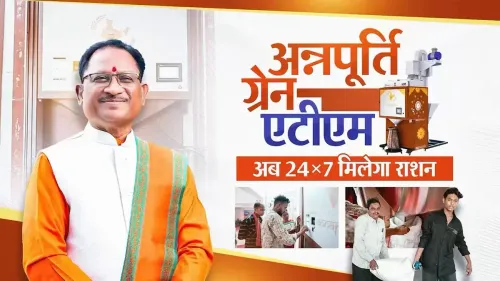
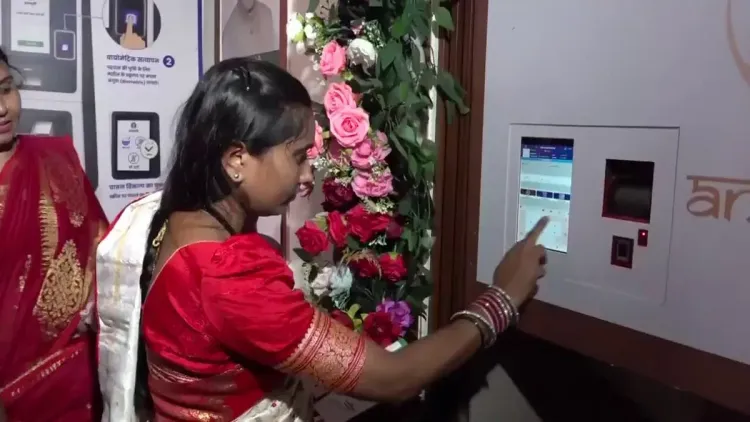
Union Minister G. Kishan Reddy backed the launch of the Annapurti Grain ATM in Chhattisgarh — a 24-hour biometric grain dispenser under the One Nation One Ration Card framework — calling it a step towards a smarter, more transparent PDS that especially benefits working women and migrants.
Key Takeaways
Union Coal and Mines Minister G.
Kishan Reddy endorsed the Annapurti Grain ATM launched in Chhattisgarh on August 11, 2026 .
The machine operates 24 hours using biometric authentication and automated dispensing, removing dependence on shop hours.
It functions within the One Nation, One Ration Card framework, enabling inter-state portability for migrant beneficiaries.
The initiative is aimed particularly at working women, migrants , and other underserved PDS beneficiaries.
India's PDS covers over 80 crore beneficiaries under the National Food Security Act 2013 .
The Grain ATM extends a decade-long central government push to digitise and automate PDS delivery under the Antyodaya principle.
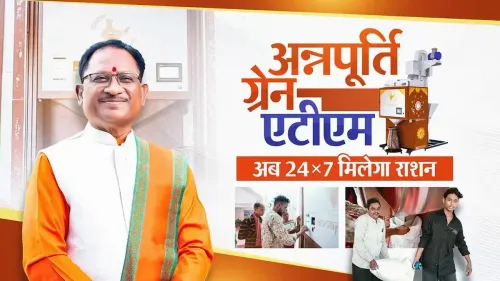
A grain ATM that never sleeps — that is the promise of the Annapurti Grain ATM, a 24-hour automated grain dispensing machine launched in Chhattisgarh, which Union Coal and Mines Minister G. Kishan Reddy hailed on Tuesday, August 11, 2026 as a defining leap for India's food security architecture.
Reddy called the initiative 'a significant step towards a smarter, more accessible and transparent Public Distribution System,' framing it as a realisation of Prime Minister Narendra Modi's vision of technology-driven welfare delivery. The machine uses biometric authentication to verify beneficiaries and dispenses subsidised foodgrains automatically — no queue, no shop-hour constraint, no human intermediary.
Why Working Women and Migrants Stand to Gain Most
The timing of access has always been the silent barrier inside the Public Distribution System (PDS). A daily-wage worker who cannot leave a construction site before sunset, or a migrant woman balancing factory shifts, routinely misses the narrow window of a fair price shop. The Grain ATM breaks that wall. Operating around the clock, it targets precisely the groups Reddy named — working women, migrants, and other beneficiaries — who have historically been the most disadvantaged by rigid shop hours and geographic constraints. This matters at scale. The PDS, underpinned by the National Food Security Act 2013, serves over 80 crore beneficiaries across India, making it one of the largest food security programmes on the planet. Even marginal improvements in last-mile access translate into millions of households reached more reliably.One Nation, One Ration Card — The Portability Backbone
The Grain ATM does not stand alone. It plugs into the One Nation, One Ration Card (ONORC) framework, the nationwide portability scheme rolled out progressively from 2019 that allows any PDS beneficiary to draw subsidised grain from any fair price shop anywhere in India using Aadhaar authentication. For Chhattisgarh — a state with a large tribal and rural population and a steady stream of inter-state migrant workers — ONORC portability combined with round-the-clock automated dispensing is a meaningful operational upgrade. The broader trajectory is consistent: successive central governments have pursued Aadhaar seeding, biometric e-PoS devices, and now full automation to squeeze leakages out of the PDS supply chain. The Grain ATM is the latest node in that decade-long digitisation drive, anchored in the Antyodaya principle — ensuring the deepest benefits reach the last person in the queue. Whether Chhattisgarh's rollout becomes a template for other states will depend on integration reviews by the Food Ministry and the pace of machine deployment across districts. The infrastructure proof-of-concept is live; the scale test is next.Point of View
A state with high tribal and migrant labour density, the 24-hour access model addresses a structural gap that biometric e-PoS devices alone could not close. Politically, the initiative allows the BJP to demonstrate welfare-technology convergence ahead of any state electoral cycle, reinforcing the Antyodaya framing that has anchored its social policy messaging. The real test will be whether the machine density scales fast enough to reach rural and forest-fringe habitations where PDS dependence is highest.
NationPress
25 Sept 2026
Frequently Asked Questions
What is the Annapurti Grain ATM launched in Chhattisgarh?
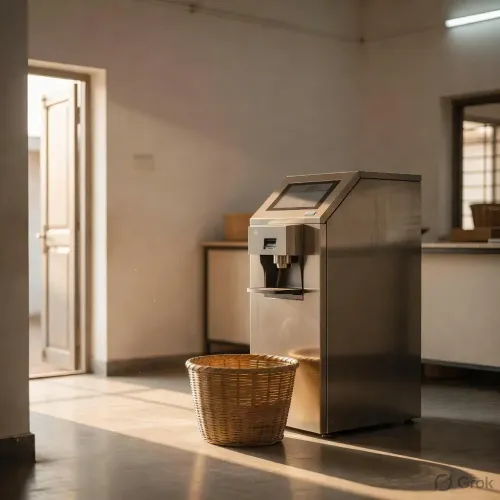
The Annapurti Grain ATM is a 24-hour automated machine that dispenses subsidised foodgrains to PDS beneficiaries using biometric authentication, removing the need to visit a fair price shop during fixed hours.
How does the Grain ATM work under One Nation One Ration Card?
The machine is integrated with the One Nation One Ration Card framework, which uses Aadhaar-based biometric verification, allowing any registered PDS beneficiary — including inter-state migrants — to draw their entitled grain from the ATM.
Who benefits most from the 24-hour Grain ATM?
Working women, migrant labourers, and other beneficiaries who cannot access fair price shops during regular hours stand to gain the most from the round-the-clock automated dispensing system.
What is the One Nation One Ration Card scheme?
Launched progressively from 2019, the One Nation One Ration Card scheme enables PDS beneficiaries to collect subsidised foodgrains from any fair price shop across India, using Aadhaar-linked biometric authentication for portability.
What is the Antyodaya principle in India's food security policy?
Antyodaya — meaning 'uplift of the last person' — is the governing principle of the Antyodaya Anna Yojana sub-scheme under the National Food Security Act, targeting the poorest households with the highest foodgrain entitlements and guiding last-mile delivery efforts.