Kishan Reddy backs Skyroot's Vikram-1 orbital launch bid
Synopsis
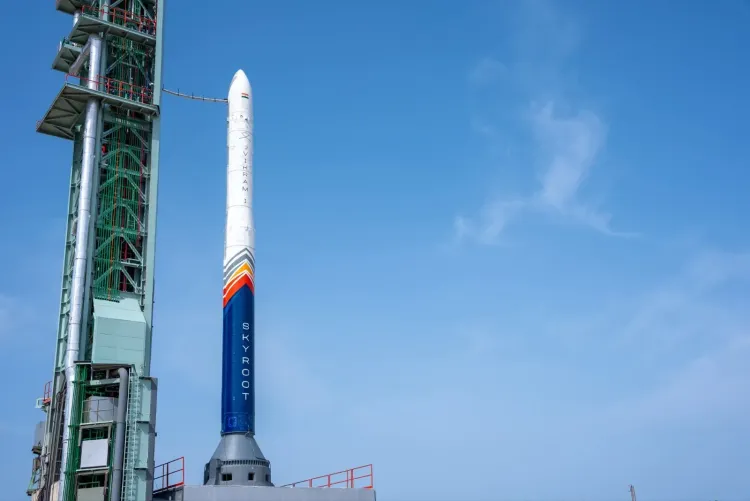
Union Minister G. Kishan Reddy has extended best wishes to Hyderabad-based Skyroot Aerospace for Mission Aagaman, the scheduled 18 July test flight of Vikram-1 — India's first privately developed orbital launch vehicle — from Sriharikota, calling it a proud moment for Telangana and the nation.
Key Takeaways
Kishan Reddy , Union Minister of Coal and Mines and BJP Telangana president, publicly backed Skyroot Aerospace's Mission Aagaman on 17 July 2026.
Vikram-1 is described as India's first privately developed orbital launch vehicle, scheduled for test flight on 18 July 2026 at 11:30 AM IST .
The launch is set to take place from the First Launch Pad at SDSC-SHAR, Sriharikota — ISRO's primary launch complex.
India's 2020 space-sector liberalisation and the creation of IN-SPACe enabled private firms like Skyroot to access national launch infrastructure.
Skyroot Aerospace previously conducted India's first private sub-orbital rocket launch with Vikram-S in November 2022.
A successful orbital test would mark a historic milestone for Telangana's aerospace ecosystem and India's commercial space ambitions.
Union Coal and Mines Minister G. Kishan Reddy on Friday, 17 July 2026, extended his best wishes to Hyderabad-based private space startup Skyroot Aerospace ahead of its landmark Mission Aagaman — the scheduled test flight of Vikram-1, billed as India's first privately developed orbital launch vehicle, set for 18 July at 11:30 AM IST from the First Launch Pad at SDSC-SHAR, Sriharikota.
Context
Kishan Reddy, who also serves as BJP Telangana state president, called the mission 'a proud moment for Telangana and the nation.' In his post on X, he described Vikram-1 as a milestone that reflects 'the transformative reforms introduced under the leadership of Prime Minister Narendra Modi.' The minister's endorsement draws attention to Hyderabad's growing stature as a hub for deep-tech and aerospace startups.
Skyroot Aerospace, founded in 2018 and headquartered in Hyderabad, has been developing the Vikram series of launch vehicles. The company previously conducted a sub-orbital test flight of Vikram-S in November 2022 — the first rocket launched by an Indian private firm — making it a pioneer in the country's nascent commercial space sector.
Policy Backdrop
The mission is a direct product of India's 2020 space-sector liberalisation, when the government opened launch infrastructure and satellite operations to private players for the first time. As part of that reform, the Indian National Space Promotion and Authorisation Centre (IN-SPACe) was established to regulate and facilitate non-government space activities, including granting private firms access to ISRO facilities such as the launch pad at Sriharikota.
The policy shift was framed as a pillar of the broader Atmanirbhar Bharat initiative, aimed at reducing dependence on foreign launch services and building domestic capability across the space value chain. Telangana has actively courted aerospace startups, positioning the state alongside Karnataka as a preferred destination for space-tech investment.
Stakeholders and Impact
A successful orbital test flight by Skyroot Aerospace would mark a historic first for India's private sector, demonstrating that a homegrown startup can independently design, build, and launch an orbital-class rocket. This would significantly boost investor confidence in India's commercial space ecosystem, which has attracted growing venture funding over the past four years.
For Telangana, the mission carries economic and reputational weight. The state government has made aerospace and defence manufacturing a priority sector, and a successful launch by a Hyderabad-based firm would reinforce that positioning. Broader stakeholders include IN-SPACe, ISRO, and the network of component suppliers and engineers that support Skyroot's operations.
What's Next
All eyes will be on the outcome of the Vikram-1 Test Flight-1 under Mission Aagaman. A successful mission would open the door for Skyroot Aerospace to pursue commercial launch contracts, both domestic and international. Analysts will also watch for further IN-SPACe clearances and any policy updates governing private access to national launch infrastructure as India's commercial space calendar grows busier.
Kishan Reddy's public backing underscores the political weight being placed on India's private space ambitions as the country seeks to capture a larger share of the global commercial launch market in the years ahead.
Point of View
The minister frames the Vikram-1 mission as a dividend of the 2020 liberalisation policy, reinforcing the ruling party's Atmanirbhar Bharat narrative ahead of any potential electoral messaging in Telangana. The timing is deliberate: a successful orbital launch by a Hyderabad startup gives the BJP a concrete, apolitical achievement to champion in a state where it is seeking to expand its footprint. Should the mission succeed, expect the Centre to amplify it as validation of its private-sector-first approach to strategic technology sectors.
NationPress
18 Jul 2026
Frequently Asked Questions
What is Vikram-1 and who built it?
Vikram-1 is India's first privately developed orbital launch vehicle, built by Hyderabad-based startup Skyroot Aerospace . It is part of the company's Vikram series of rockets and is designed to carry payloads to low-Earth orbit.
When and where is the Vikram-1 test flight scheduled?
The Vikram-1 Test Flight-1 under Mission Aagaman is scheduled for 18 July 2026 at 11:30 AM IST , launching from the First Launch Pad at SDSC-SHAR, Sriharikota .
What is Mission Aagaman?
Mission Aagaman is the name given to Skyroot Aerospace's first orbital launch attempt using the Vikram-1 rocket. The mission name signals the arrival of a new era in India's private space sector.
Why did Kishan Reddy comment on the Skyroot launch?
G. Kishan Reddy , as Union Minister and BJP Telangana state president , extended best wishes to highlight the mission as a proud moment for Telangana and to credit Prime Minister Modi's 2020 space-sector reforms for enabling private launch capability.
How did India allow private companies to launch rockets?
In 2020 , the Indian government liberalised the space sector, permitting private firms to build rockets and satellites and access ISRO facilities. It also created IN-SPACe (Indian National Space Promotion and Authorisation Centre) to regulate and promote non-government space activities.