Kishan Reddy: Cabinet clears ₹14,500-cr energy storage scheme
Synopsis
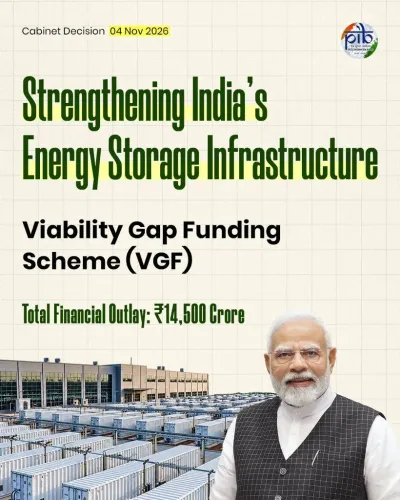
The Union Cabinet has approved a ₹14,500-crore Viability Gap Funding scheme to develop 92 GWh of grid-scale energy storage capacity between FY 2026-27 and FY 2030-31, aiming to stabilise India's renewable-heavy power grid and accelerate its clean-energy transition.
Key Takeaways
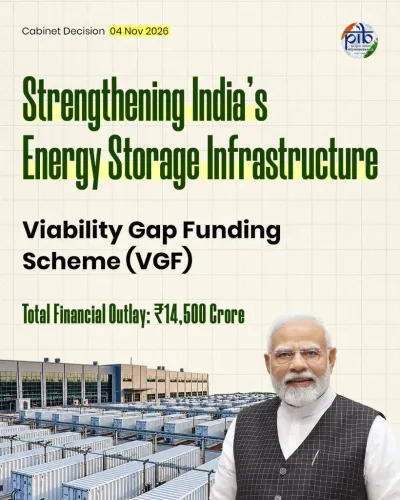
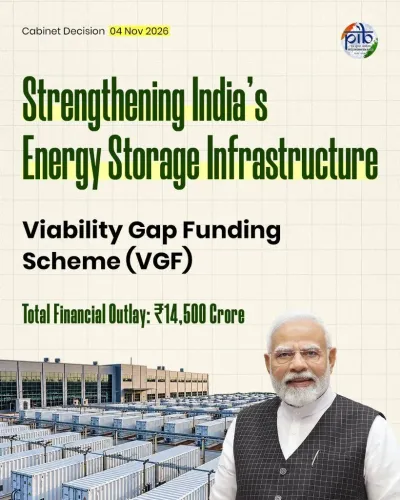
The Union Cabinet, chaired by PM Narendra Modi , approved the VGF Scheme for Grid-Scale Energy Storage Systems on 4 November 2026 .
Total outlay is ₹14,500 crore spread across FY 2026-27 to FY 2030-31 .
The scheme targets development of 92 GWh of new energy storage capacity nationwide.
VGF provides capital grants to make storage projects commercially viable for private developers and state utilities.
The move supports India's renewable energy integration goals and its commitment to net-zero by 2070 .
Next milestones include issuance of scheme guidelines and the first round of project tenders by central or state agencies.
India's clean-energy ambition just got a critical missing piece. The Union Cabinet, chaired by Prime Minister Narendra Modi, on Wednesday, 4 November 2026 approved a ₹14,500-crore Viability Gap Funding (VGF) Scheme for Grid-Scale Energy Storage Systems — a five-year programme designed to unlock 92 GWh of new storage capacity and finally give India's booming renewable grid a place to put its surplus power.
Union Coal and Mines Minister G. Kishan Reddy announced the decision on X, noting the scheme runs from FY 2026-27 through FY 2030-31 and will 'strengthen India's energy storage infrastructure, support the integration of renewable energy, improve grid stability and reliability, and accelerate the country's clean energy transition.'
Why 92 GWh is the number that matters
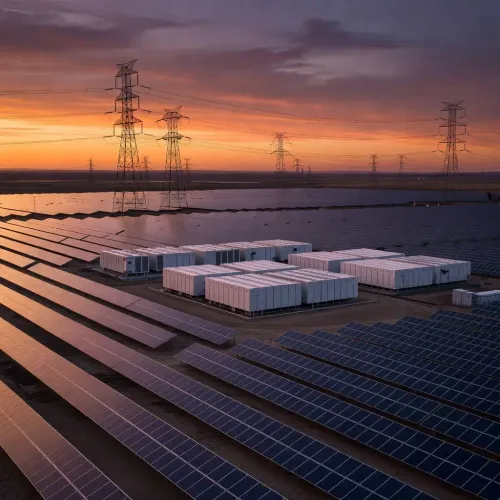
Renewable energy's fundamental problem is timing: the sun doesn't shine at peak evening demand, and the wind doesn't blow on command. India has sprinted to add solar and wind capacity since 2014 — chasing a target that has been revised upward from 450 GW by 2030 — but storage to absorb and release that generation on cue has lagged badly. Without it, grid operators either curtail clean power or lean on coal plants to fill gaps. The 92 GWh target the Cabinet has now backed is meant to close that gap.
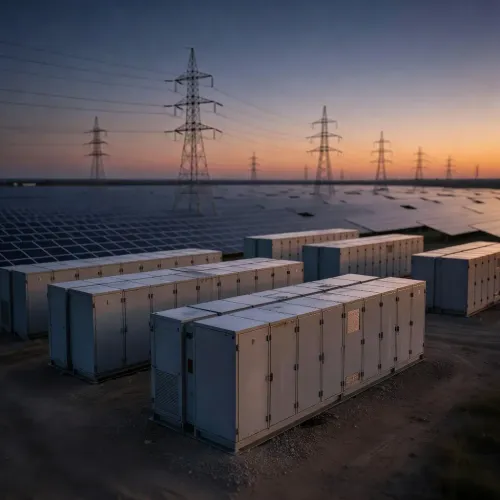
The VGF model is a proven government lever: rather than building projects itself, the Centre offers capital grants to make storage projects commercially bankable, drawing in private developers and state utilities who would otherwise find the economics too uncertain. India has used VGF successfully in highways, ports, and earlier renewable tenders. Applying it to grid-scale storage — batteries, pumped hydro, and allied technologies — signals that the government now treats storage as infrastructure, not a luxury add-on.
The policy lineage behind today's approval
The road to this ₹14,500-crore commitment stretches back through several policy milestones. The National Energy Storage Mission and successive Union Budget documents identified viability-gap support as the instrument of choice for jumpstarting a storage market that private capital alone would not seed. India's pledge of net-zero by 2070 — and near-term grid reliability obligations — made the case impossible to defer further.
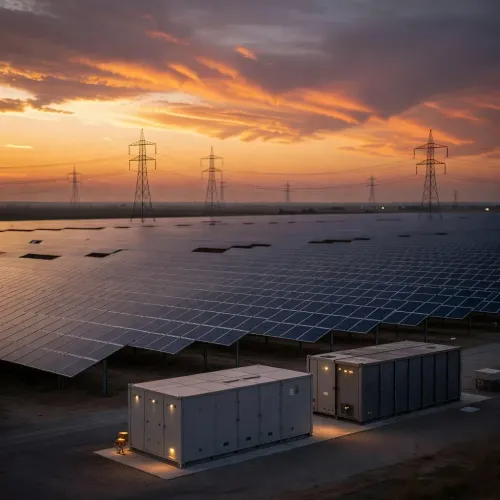
Renewable energy developers and state power utilities are the immediate beneficiaries: they now have a funded, time-bound programme to bid into, reducing the financial risk that has kept large storage projects on drawing boards. For the national grid, every gigawatt-hour of storage added is a gigawatt-hour of coal-backup capacity that becomes less necessary at the margin.
What comes next for the scheme
Approval is the starting gun, not the finish line. Scheme guidelines, tender documents, and implementing-agency designations must follow before a single battery bank breaks ground. Tracking the pace of those first project tenders — issued by central or state agencies — will show whether the ₹14,500-crore commitment translates into commissioned megawatt-hours on schedule by 2031.
India has the ambition, the policy architecture, and now the funding. The question is execution speed. Ninety-two gigawatt-hours won't happen on a government order alone — they'll happen project by project, tender by tender, in substations and hillsides across the country. The clock, as of today, is running.
Point of View
500-crore commitment is a structural acknowledgement that India's renewable energy surge has outrun its storage infrastructure — a gap that threatens both grid reliability and the country's climate credibility. By deploying the VGF instrument, the government is essentially de-risking an entire asset class rather than waiting for the market to mature on its own. For the BJP, the approval also shores up a flagship clean-energy narrative ahead of a period when India's 2030 capacity targets come under increasing international scrutiny. The real test will be whether scheme guidelines and tenders move fast enough to convert budgetary approval into operational gigawatt-hours before the energy-transition window narrows.
NationPress
4 Nov 2026
Frequently Asked Questions
What is the VGF Scheme for Grid-Scale Energy Storage Systems?
It is a Central government programme approved in November 2026 that offers Viability Gap Funding — capital grants — to developers building large-scale battery, pumped-hydro, and other storage projects, making them financially viable so private and state-owned players will invest in them.
How much money has the Cabinet approved for energy storage?
The Union Cabinet has approved an outlay of ₹14,500 crore for the scheme, to be deployed between FY 2026-27 and FY 2030-31 .
What is the 92 GWh energy storage target in India?
The scheme aims to develop 92 GWh of new grid-scale energy storage capacity across India by 2031 — enough to absorb surplus renewable generation and release it during peak demand, reducing reliance on coal-fired backup power.
Why does India need grid-scale energy storage?
Solar and wind power are intermittent — they generate most when demand may be low, and go quiet when demand peaks. Without storage, grid operators must curtail clean power or fire up fossil-fuel plants. Storage bridges that gap, stabilising the grid as renewables grow.
Who benefits from the new energy storage VGF scheme?
Renewable energy developers, state power distribution and transmission utilities, and ultimately electricity consumers all benefit — developers get a bankable revenue model, utilities get grid stability tools, and consumers benefit from a more reliable, cleaner power supply.