Kishan Reddy Chairs Mines Ministry Review on Critical Minerals
Synopsis
Union Mines Minister G. Kishan Reddy chaired a senior-level review at the Ministry of Mines in New Delhi on 18 November 2026, focusing on mineral exploration, critical mineral block auctions and the National Critical Mineral Mission as India pushes to reduce import dependence on strategic raw materials.
Key Takeaways
Kishan Reddy chaired a Ministry of Mines review meeting in New Delhi on 18 November 2026 .
Discussions centred on mineral exploration, critical mineral block auctions, and the National Critical Mineral Mission .
The Mines and Minerals (Development and Regulation) Amendment Act, 2023 opened 12 critical minerals to private-sector auctions for the first time.
The Ministry of Mines notified a list of 30 critical minerals in 2022 to guide exploration and policy priorities.
India's broader reform drive since 2021 targets reduced import dependence — particularly on China — for minerals critical to EVs, renewables and electronics.
The pace of upcoming block auction tranches will be a key indicator of whether the National Critical Mineral Mission meets its targets.
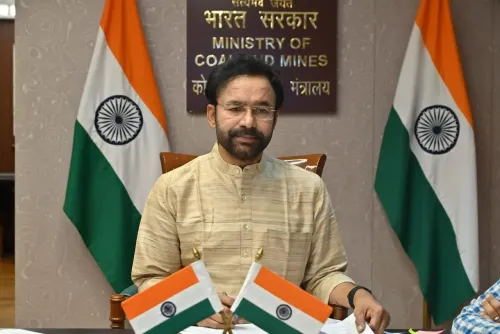
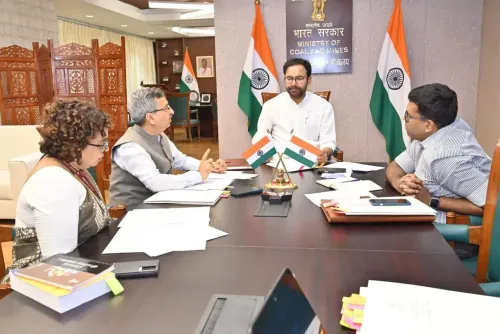
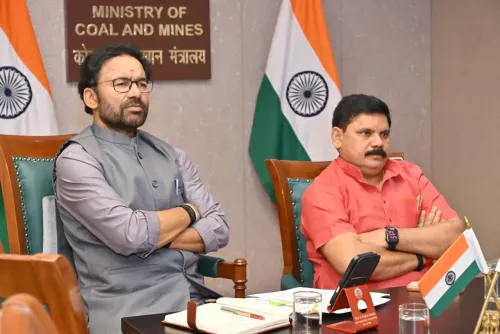
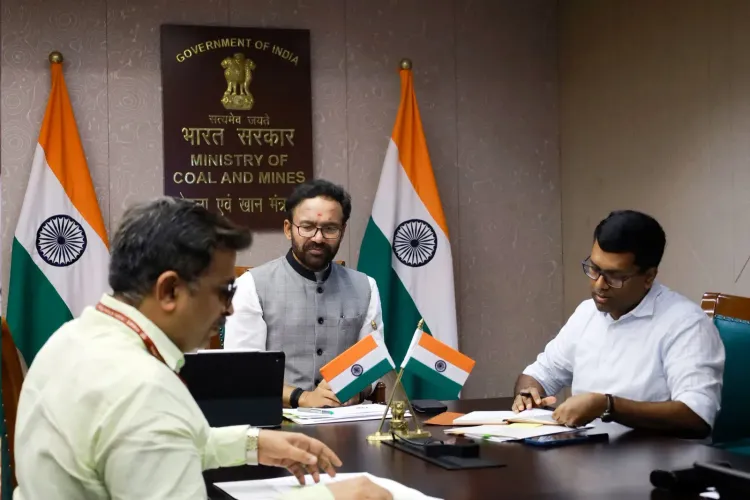
India's race to secure the raw materials of the clean-energy future moved to a conference room in New Delhi on Wednesday, 18 November 2026, as Union Coal and Mines Minister G. Kishan Reddy chaired a high-level review meeting with senior officials of the Ministry of Mines to assess the sector's progress and chart the road forward.
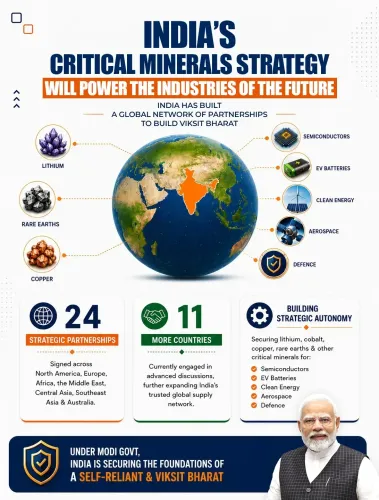
The minister confirmed that discussions covered three priority areas: mineral exploration, the auction of critical mineral blocks, and the National Critical Mineral Mission — the government's flagship programme targeting minerals such as lithium, cobalt and rare earths that underpin electric vehicles, renewable energy systems and advanced electronics. 'Our focus remains on making India self-reliant in minerals and driving Viksit Bharat through sustainable, transparent and investment-friendly mining,' Reddy stated in his post.
Why Critical Minerals Are at the Centre of India's Resource Strategy
The urgency behind a ministerial-level review is easy to understand once you trace the supply chain. India currently imports a significant share of critical minerals, much of it from China — a vulnerability that sits at the heart of the government's Atmanirbhar Bharat resource-security agenda. Since 2021, successive reforms have sought to change that arithmetic: shorter lease periods, a composite licence regime, and liberalised auction rules have all been designed to attract private capital into exploration. The landmark Mines and Minerals (Development and Regulation) Amendment Act, 2023, took the reform a step further by opening 12 critical minerals — previously ring-fenced for public-sector undertakings — to private-sector auctions. And a year before that, the ministry notified a list of 30 critical minerals to anchor policy and guide exploration priorities across the country.National Critical Mineral Mission and the Auction Pipeline
The National Critical Mineral Mission is the institutional vehicle meant to translate these policy choices into actual tonnes of domestic output. It aims to accelerate exploration, mining and processing, reducing the import exposure that leaves India exposed to global supply disruptions and price shocks. With block auctions emerging as a central tool, the pace and outcome of upcoming tranches will be a direct test of whether the mission's targets are achievable. Wednesday's review — attended by senior ministry officials — signals that the minister is keeping close personal oversight on execution, not just legislation. That distinction matters: policy frameworks are in place; the gap to close now is between notified blocks and operational mines.Telangana Dimension and BJP's Mineral Politics
Reddy wears two hats. As BJP Telangana state president alongside his cabinet role, he brings a south-Indian political lens to a ministry whose decisions have outsized consequences for mineral-rich states. Telangana itself sits on deposits of fluorite, baryte and other commercially significant minerals, giving the minister a personal stake in ensuring state governments — a key stakeholder in block auctions — are aligned with the centre's liberalisation push. The numbers that come out of the next auction tranche, and any cabinet or parliamentary movement on expanding the mission's budget, will tell the real story of whether today's review translates into tangible output — or remains a well-intentioned agenda item.Point of View
Not a legislation-writing one — the statutory architecture from the 2023 amendment is already in place, and the pressure now is on converting notified blocks into active mines. For Kishan Reddy, keeping personal oversight of this pipeline is also politically significant: a credible domestic critical-minerals supply chain would directly validate the Atmanirbhar Bharat resource-security narrative ahead of any state or general election cycle. The focus on 'transparent and investment-friendly mining' is a deliberate pitch to private capital, acknowledging that public-sector capacity alone cannot meet the exploration targets the National Critical Mineral Mission demands. Watch the next auction tranche closely — it will be the clearest early scorecard for this reform cycle.
NationPress
18 Nov 2026
Frequently Asked Questions
What is the National Critical Mineral Mission in India?
The National Critical Mineral Mission is a central government initiative designed to accelerate the exploration, mining and processing of critical minerals such as lithium, cobalt and rare earths, with the goal of reducing India's import dependence for materials essential to electric vehicles, renewable energy and electronics.
Which critical minerals did the 2023 Mines Amendment Act open to private companies?
The Mines and Minerals (Development and Regulation) Amendment Act, 2023, opened 12 critical minerals — previously reserved exclusively for public-sector undertakings — to private-sector auctions, widening the pool of investment in domestic mineral exploration.
Why did Kishan Reddy chair a Mines Ministry review meeting on 18 November 2026?
Union Coal and Mines Minister G. Kishan Reddy chaired the meeting in New Delhi to assess the sector's progress on mineral exploration, critical mineral block auctions and the National Critical Mineral Mission, and to determine the way forward for making India self-reliant in minerals.
What are India's 30 critical minerals notified by the Ministry of Mines?
In 2022 the Ministry of Mines notified a list of 30 critical minerals to guide policy, exploration priorities and investment decisions; the list includes minerals such as lithium, cobalt, nickel, graphite and rare earth elements considered strategic for clean energy and advanced manufacturing.
How does India plan to reduce dependence on China for critical minerals?
Since 2021 India has pursued successive mining-sector reforms — including liberalised auctions, shorter lease periods, a composite licence regime and the National Critical Mineral Mission — aimed at boosting domestic exploration and output of strategic raw materials and reducing import reliance, particularly on China.