Kishan Reddy Cites World Bank Data on India's Poverty Gains
Synopsis
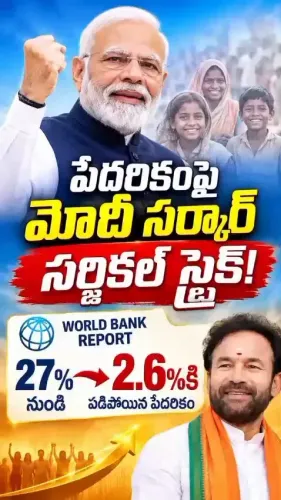
Union Minister G. Kishan Reddy cites a World Bank October 2026 report crediting PM Modi's decade of governance with lifting 49.6 crore Indians from poverty, with LPG coverage rising from 55.9% to near-universal and rural piped water access jumping from 16.7% to over 82%.
Key Takeaways
49.6 crore Indians exited poverty between 2011 and 2023 , per the World Bank Poverty and Equity Report (October 2026) cited by Minister Kishan Reddy.
Extreme poverty in India fell from 27.1% to 2.6% over the same period, according to the same report.
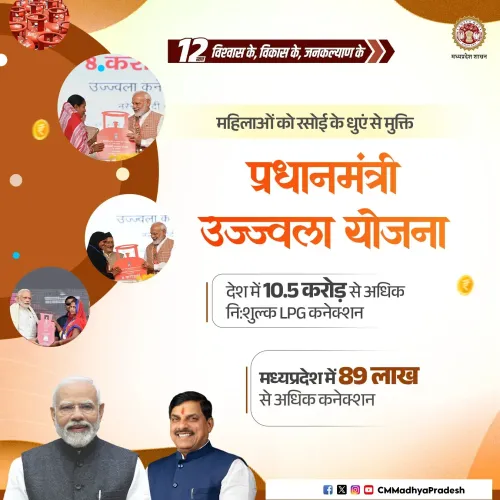
LPG cooking-fuel coverage rose from 55.9% in 2014 to near-universal levels, driven primarily by Pradhan Mantri Ujjwala Yojana (launched May 2016).
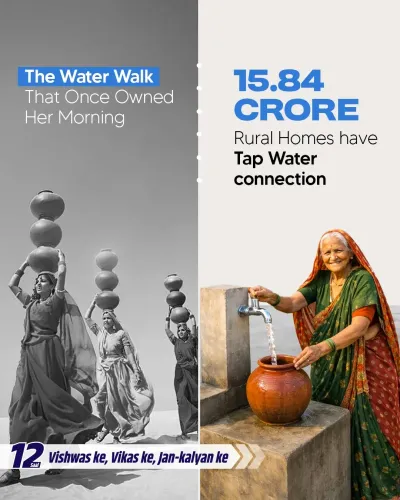
Rural piped tap-water access expanded from 16.7% in 2019 to over 82% under Jal Jeevan Mission (announced August 2019).
Reddy posted in Telugu on November 1, 2026 , framing the gains as the result of PM Modi's 'visionary leadership' over the past decade.
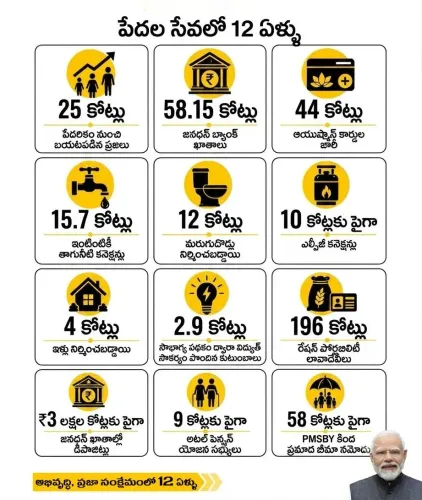
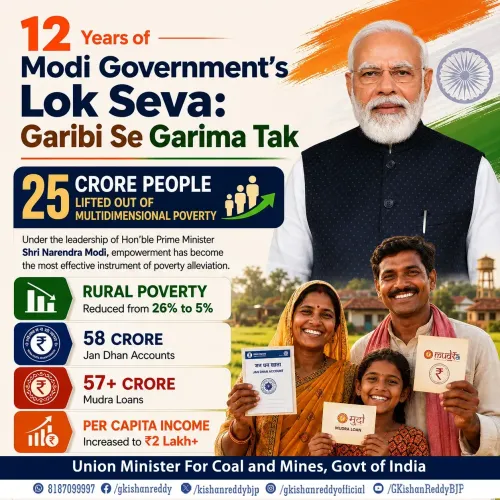
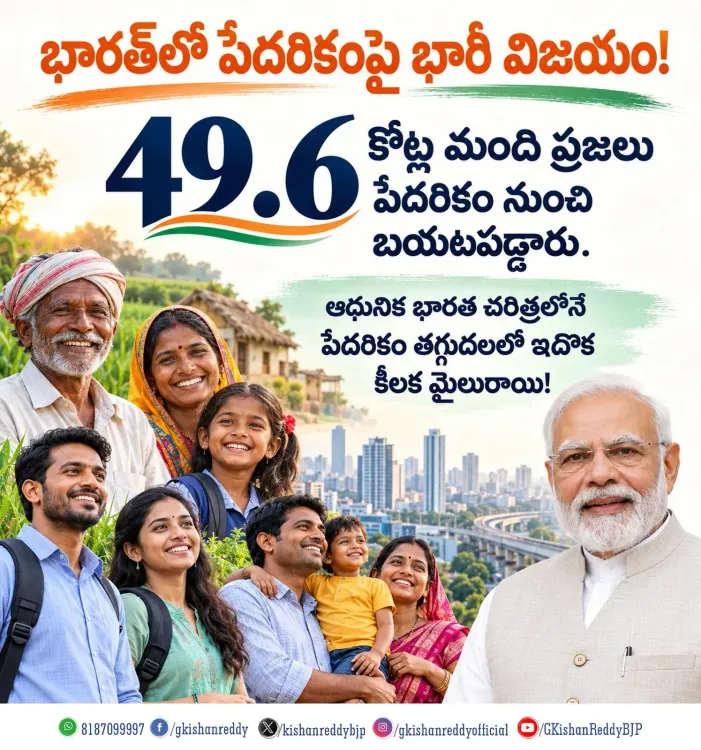
Nearly 49.6 crore Indians have climbed out of poverty in the twelve years between 2011 and 2023 — that is the headline figure Union Coal and Mines Minister G. Kishan Reddy placed before the public on Sunday, November 1, citing a World Bank Poverty and Equity Report (October 2026) to mark what he called a decade of transformative rural progress under Prime Minister Narendra Modi.
Posting in Telugu, the minister translated a sweeping set of numbers into a human story: extreme poverty, he wrote, has fallen from 27.1% to just 2.6%. Behind those percentages are two specific realities that rural India lived — the smoky firewood kitchen and the hours-long walk to fetch water.From firewood smoke to clean cooking: the LPG turnaround
LPG coverage stood at 55.9% in 2014. Today, Reddy says, clean cooking fuel is within reach of nearly every household. That shift traces directly to Pradhan Mantri Ujjwala Yojana, the central scheme launched in May 2016 that provided free LPG connections to women from below-poverty-line families — initially targeting 5 crore BPL households. The scheme became one of the most visible symbols of the government's direct-benefit delivery model, moving millions of women away from biomass smoke that carried serious health consequences.Taps in villages that once had none: Jal Jeevan Mission's numbers
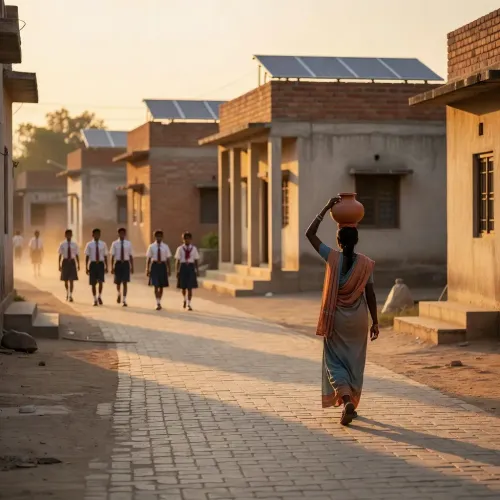
The drinking-water story is equally stark. Rural piped-tap-water coverage was 16.7% in 2019 when Jal Jeevan Mission was announced. Reddy's post puts current coverage at over 82% — a more than fivefold increase in under seven years. The mission, unveiled in August 2019, set a target of functional household tap connections across all rural areas, using a combination of central funds and state co-financing. For millions of women who previously walked miles to collect water, that number represents hours reclaimed every day.The World Bank report at the centre of the claim
Reddy anchors his post explicitly to the World Bank's October 2026 Poverty and Equity Report. The figures he cites — the 49.6-crore lift and the drop in extreme poverty to 2.6% — are drawn from that report and fall within a period when India's coverage of flagship welfare schemes expanded rapidly. Independent poverty tracking has long used multidimensional metrics — cooking fuel access, drinking water, sanitation — as deprivation indicators alongside income measures, and India's gains on those specific dimensions have been tracked in successive government and international assessments since the early 2020s.Whether the precise figures from this report hold under further scrutiny, the direction of travel they describe aligns with the coverage trajectory documented for both Ujjwala and Jal Jeevan Mission over the past decade. The minister's post is a political argument framed in developmental data — and the data, on these two schemes at least, has a documented foundation.
The numbers belong to an ongoing national conversation: India lifted more people out of poverty in a single decade than the entire population of many continents. The next question the data must answer is how durable those gains are.
Point of View
Specifically a World Bank report, to validate the government's direct-benefit delivery model ahead of upcoming electoral and parliamentary cycles. The LPG and tap-water numbers he highlights are the two most politically legible gains: both are tangible, household-level changes that rural women can directly attribute to a specific scheme. By anchoring the argument in international data rather than government self-assessment alone, the communication strategy is designed to pre-empt credibility challenges. The broader arc here is India's pivot from input-based welfare (subsidy allocations, budget outlays) to outcome-based visibility — a shift the ruling party has consistently sought to own in the public narrative.
NationPress
1 Nov 2026
Frequently Asked Questions
What does the World Bank October 2026 report say about poverty in India?
According to the World Bank's Poverty and Equity Report of October 2026, as cited by Minister G. Kishan Reddy, approximately 49.6 crore Indians exited poverty between 2011 and 2023, and extreme poverty dropped from 27.1% to 2.6%.
What is Pradhan Mantri Ujjwala Yojana and what has it achieved?
Pradhan Mantri Ujjwala Yojana is a central scheme launched in May 2016 that provides free LPG connections to women from below-poverty-line households. It initially targeted 5 crore BPL families and has helped raise LPG coverage from 55.9% in 2014 to near-universal levels.
What is Jal Jeevan Mission and how much of rural India now has tap water?
Jal Jeevan Mission is a central scheme announced in August 2019 to provide piped tap water connections to all rural households. Rural piped-water coverage has grown from 16.7% in 2019 to over 82% as per the figures cited by Minister Kishan Reddy.
Why is G. Kishan Reddy posting about poverty data?
As BJP Telangana state president and Union Minister, G. Kishan Reddy regularly uses government and international data on welfare outcomes to highlight the central government's development record, particularly on rural schemes, in support of PM Modi's governance narrative.
How did India measure poverty reduction in this period?
Poverty reduction has been tracked through both income-based and multidimensional metrics, including access to clean cooking fuel, safe drinking water, and sanitation. Agencies such as NITI Aayog and the World Bank have used these indicators in successive reports to document India's deprivation trends.