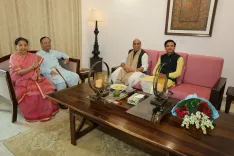
Kishan Reddy fires back at Rahul, Kejriwal on ethanol blending
Synopsis
Union Minister G. Kishan Reddy has hit back at Rahul Gandhi and Arvind Kejriwal over ethanol blending claims, citing Congress's own 2013 Gazette Notification, a shortfall-driven global tender, and procurement data showing a jump from 38 crore litres in 2013-14 to 707 crore litres in 2023-24.
Key Takeaways
In November 2012 , the Congress-led Cabinet Committee on Economic Affairs mandated 5% ethanol blending with a June 2013 deadline.
The January 2013 Gazette Notification allowed up to 10% ethanol blending in petrol — issued under Congress.
Against a 140.4 crore litre requirement, Congress procured only 39.8 crore litres and floated a global tender for 82.03 crore litres .
Ethanol procurement rose from 38 crore litres in 2013-14 to 707 crore litres in 2023-24.
India has prohibited ethanol imports for fuel use since May 2019 ; the Ministry of Commerce confirmed all fuel ethanol is domestically sourced.
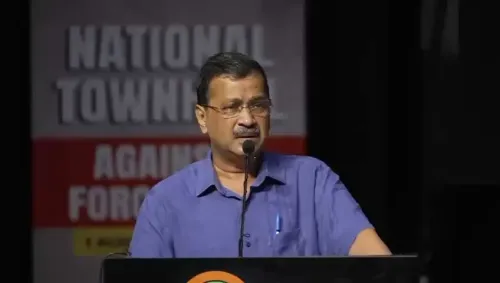
Reddy challenged Kejriwal to explain why foreign governments are protesting a ban the AAP leader claims does not exist.
A decade of opposition criticism on ethanol blending collapsed into a single Gazette Notification on Tuesday, 11 August 2026, when Union Coal and Mines Minister G. Kishan Reddy published a point-by-point rebuttal of claims made by Congress leader Rahul Gandhi and AAP convenor Arvind Kejriwal — citing the opposition's own government records against them.
The Gazette that started it all
Reddy's case opens not with a counter-claim but with a date: 22 November 2012. That is when the Cabinet Committee on Economic Affairs, under a Congress-led government, mandated 5% ethanol blending nationwide, with a deadline of 30 June 2013. Weeks later, on 2 January 2013, the Ministry of Petroleum and Natural Gas issued a Gazette Notification directing Oil Marketing Companies to sell petrol blended with ethanol up to 10 per cent per BIS specifications. The mandate, the percentage, the deadline — all Congress.
Then came the delivery gap. Against a requirement of 140.4 crore litres, Indian producers could supply only 55 crore litres. The finalised quantity shrank further to 39.8 crore litres. Faced with that shortfall, the Congress government floated a global tender for 82.03 crore litres of ethanol — going to the international market because domestic capacity had not been built. Reddy's line is direct: 'Congress wrote the mandate. Congress wrote the 10 per cent. Congress wrote the deadline. And when Congress failed, Congress wrote a global tender.'
The numbers that answer Rahul Gandhi
Reddy places two supply years side by side. Under Congress in 2013-14: 38 crore litres procured. In 2023-24: 707 crore litres. For the current supply year, Indian producers have reportedly offered 1,776 crore litres against a requirement of approximately 1,050 crore litres — nearly double what the country needs. Reddy attributes the shift to a decade of pricing reform, procurement guarantees, long-term offtake agreements and distillery capacity expansion, each of which, he argues, Congress had years to implement and did not.
Farmers in Uttar Pradesh, Maharashtra and Karnataka — sugarcane growers as well as maize and grain producers — are named as the direct beneficiaries of that policy architecture. The political subtext is clear: these are also states with significant electoral weight.
Kejriwal's import claim and the May 2019 ban
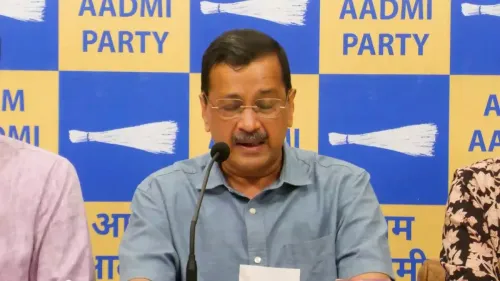
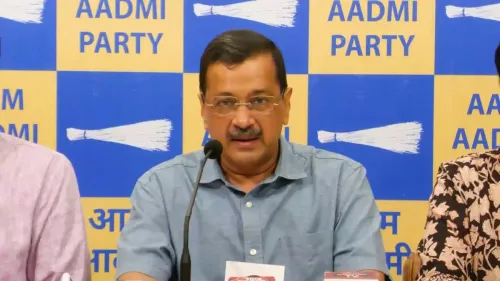
Reddy turns to Kejriwal separately, targeting the AAP leader's assertion that India is importing surplus American ethanol for the E20 programme — a claim Reddy says was made with an eye on Goa Assembly elections. The minister cites a restriction in force since May 2019 that prohibits the import of ethanol for fuel purposes, and notes that the United States government itself has characterised this ban as an 'unfair trade practice' — the very existence of the American objection, Reddy argues, confirms the ban is real and operational.
The Ministry of Commerce and Industry stated on record that every litre of ethanol used for fuel blending is sourced from domestic producers. Reddy demands that Kejriwal 'answer on this, and apologise to the people once again for making fake claims.'
Closing the ledger
Reddy ends where he began — with chronology. He asks Gandhi to address the Gazette Notification of 2 January 2013 directly, and asks Kejriwal to explain why foreign governments are protesting the very import ban he claims does not exist. The final line, drawn from the post's opening: 'Aap pehle chronology samajhiye' ['Understand the chronology first'].
When the data runs from a global tender in 2013 to surplus domestic supply in 2026, the ledger is hard to argue with — and Reddy is making sure both opposition leaders know it.
Point of View
It forces the opposition to answer for its own record. By anchoring every charge to dated Gazette Notifications and official procurement figures, the BJP insulates the attack from 'spin' accusations. The move also serves a dual purpose ahead of state elections — it frames the Ethanol Blending Programme as a farmer-income story in sugarcane-heavy Uttar Pradesh, Maharashtra and Karnataka, converting a technocratic policy debate into a rural-welfare argument. The Kejriwal flank is equally deliberate: by invoking the US government's own trade complaint as evidence that the import ban is real, Reddy turns an international trade dispute into domestic political ammunition.
NationPress
11 Aug 2026
Frequently Asked Questions
Did Congress start India's ethanol blending programme?
Yes. In November 2012, the Congress-led Cabinet Committee on Economic Affairs mandated 5% ethanol blending with a June 2013 deadline, and in January 2013 the Ministry of Petroleum and Natural Gas notified rules allowing up to 10% blending.
Did India import ethanol for fuel blending under Congress?
When domestic supply fell far short — only 39.8 crore litres against a 140.4 crore litre requirement — the Congress government floated a global tender for 82.03 crore litres of ethanol in January 2013.
Is India importing ethanol for E20 fuel from the US?
No. India has prohibited the import of ethanol for fuel purposes since May 2019. The Ministry of Commerce and Industry has stated on record that every litre of fuel ethanol is sourced from domestic producers.
How much ethanol has India procured compared to 2013?
Ethanol procurement rose from 38 crore litres in 2013-14 to 707 crore litres in 2023-24. For the current supply year, domestic producers reportedly offered 1,776 crore litres against a requirement of around 1,050 crore litres.
Why is Kishan Reddy targeting Arvind Kejriwal on ethanol?
Reddy says Kejriwal claimed India was importing surplus American ethanol for E20, which Reddy calls false given the May 2019 import ban. He also notes the US government has itself called the ban an 'unfair trade practice,' contradicting Kejriwal's assertion that no such ban exists.