Kishan Reddy flags mine closure as green opportunity
Synopsis
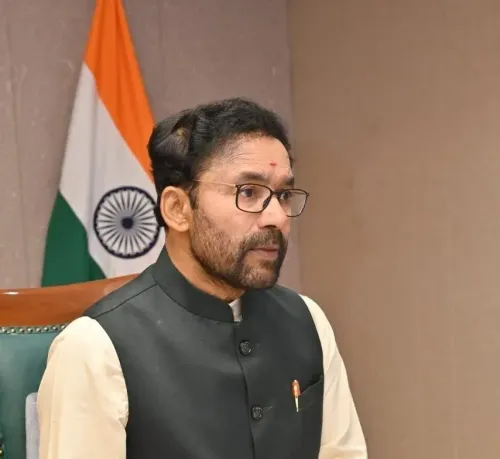
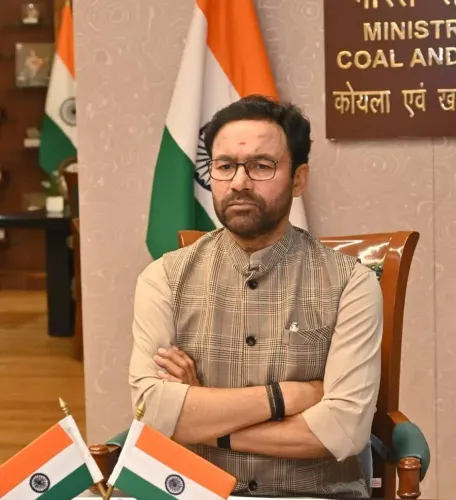
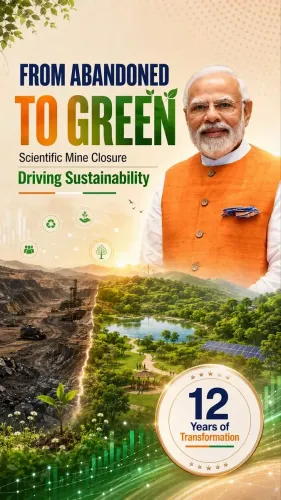
Union Coal and Mines Minister G. Kishan Reddy, speaking at an event joined by German and EU envoys and senior Indian ministers, said India is transforming mine closures into opportunities for ecological restoration and community livelihoods under PM Modi's leadership.
Key Takeaways
Kishan Reddy framed mine closure as a launch pad for ecological restoration, sustainable livelihoods and community empowerment.
The event was attended by Germany's Ambassador H.E.
Ackermann and EU Deputy Head Dr.
Ewa Suwara , highlighting international partnership in India's mining transition.
Jitendra Singh and MoS Coal and Mines Satish Dubey were present, reflecting inter-ministerial coordination.
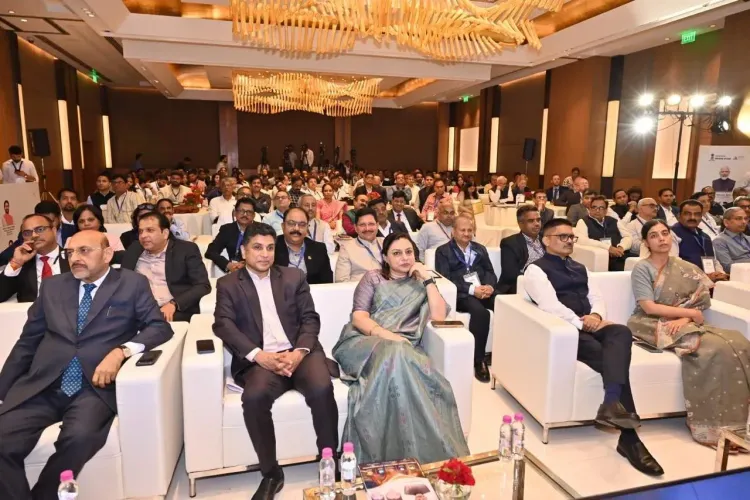
District collectors attended alongside senior Ministry of Coal and Ministry of Mines officials, indicating ground-level implementation focus.
India's National Mineral Policy 2019 and 2020 mine closure guidelines form the regulatory backbone for this initiative.
Follow-up action is expected through state-level project rollouts and potential parliamentary measures on mine reclamation.
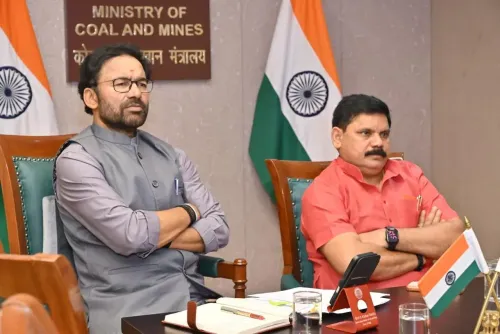
Union Coal and Mines Minister G. Kishan Reddy on Wednesday, 22 July 2026, underscored the government's resolve to reframe mine closure as a gateway to ecological restoration, sustainable livelihoods and community empowerment, addressing a high-level gathering that included senior Indian officials and diplomatic representatives from Germany and the European Union.
Context
Responding to the Prime Minister's Office, Minister Reddy stated that under the leadership of Prime Minister Narendra Modi, India is 'transforming mine closure into the beginning of new opportunities, restoring ecosystems, creating sustainable livelihoods, empowering communities and building a greener, more resilient future.' The event brought together a cross-section of government, international partners and district-level administrators, signalling coordinated intent across ministries and geographies.
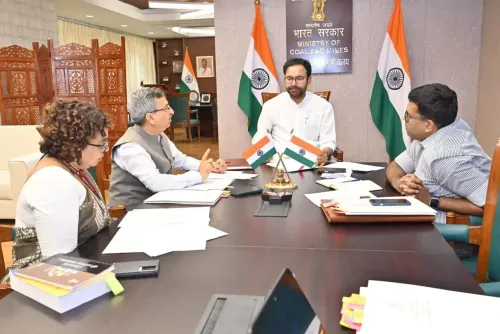
Among those present were H.E. Ambassador Ackermann, Germany's Ambassador to India and Bhutan, and Dr. Ewa Suwara, Deputy Head of the European Union Delegation to India. Their attendance underlines the international dimension of India's evolving mine closure framework, with both Germany and the EU being longstanding partners on energy transition and environmental technology.
Policy Backdrop
India's National Mineral Policy 2019 laid the foundation for sustainable mining practices, mandating environmental management and post-closure rehabilitation of mining areas. The Ministry of Coal reinforced this in 2020 with updated mine closure guidelines that require ecological restoration plans and alternative livelihood strategies as standard components of any closure process.
Also present at the event were Union Minister of State (Independent Charge) for Science and Technology and Earth Sciences Dr. Jitendra Singh, who also holds charge of the Prime Minister's Office, Personnel, Public Grievances, Pensions, Atomic Energy and Space, and Minister of State for Coal and Mines Satish Dubey. Senior officials of the Ministry of Coal and Ministry of Mines, along with district collectors, were also in attendance — reflecting the event's emphasis on ground-level implementation.
Stakeholders and Impact
Mining communities and coal workers in coal-bearing states stand at the centre of this policy pivot. The government's approach seeks to reduce regional dependence on coal by coupling regulatory requirements with project-level pilots for ecosystem recovery and community development. District collectors' presence at the event suggests that implementation is being driven to the administrative grassroots.
The engagement with German and EU counterparts points to the potential for technical cooperation, knowledge transfer and possibly co-financing of restoration pilots. Both partners have deep experience in post-industrial land reclamation, particularly from Germany's own transition away from coal in regions such as the Ruhr Valley.
What's Next
Attention will now turn to the rollout of specific mine closure and reclamation projects across coal-bearing states, and to any follow-up regulatory or budgetary measures that may be tabled in Parliament. The Ministry of Coal and Ministry of Mines are expected to operationalise the framework through state-level action plans and project-specific timelines. India's ability to align these closure mandates with its broader climate commitments will be closely watched by both domestic stakeholders and international partners.
Point of View
Aligning India's extractive sector with its net-zero and just-transition commitments. The presence of German and EU envoys alongside district collectors in a single room signals that this is not merely a statement of intent but an attempt to bridge international technical expertise with local administrative capacity. The inter-ministerial attendance — spanning science, PMO-linked portfolios and coal — suggests the government is building a coalition to prevent mine closure policy from being siloed within a single ministry. If backed by concrete budgetary allocations and state-level mandates, this approach could set a replicable template for coal-dependent regions across central India.
NationPress
23 Jul 2026
Frequently Asked Questions
What did G. Kishan Reddy say about mine closure in India?
Minister G. Kishan Reddy said India, under PM Modi's leadership, is transforming mine closure into an opportunity for ecosystem restoration, sustainable livelihoods and community empowerment, speaking at a high-level event on 22 July 2026.
Who attended the mine closure event with G. Kishan Reddy?
The event was attended by Germany's Ambassador H.E. Ackermann, EU Deputy Head Dr. Ewa Suwara, Union Ministers Dr. Jitendra Singh and Satish Dubey, senior officials of the Coal and Mines Ministries, and district collectors.
What is India's policy on mine closure and rehabilitation?
India's National Mineral Policy 2019 mandates sustainable mining and post-closure rehabilitation. The Ministry of Coal issued updated mine closure guidelines in 2020 requiring ecological restoration and alternative livelihood planning.
How is Germany involved in India's mining transition?
Germany, through its Ambassador and longstanding bilateral ties, partners with India on energy transition, environmental technology and sustainable mining practices, including post-closure land reclamation expertise.
What will happen next after this mine closure event?
The Ministry of Coal and Ministry of Mines are expected to roll out specific mine closure and reclamation projects across coal-bearing states, with potential follow-up regulatory or budgetary measures in Parliament.