Kishan Reddy flags positive power sector outlook amid strong demand
Synopsis
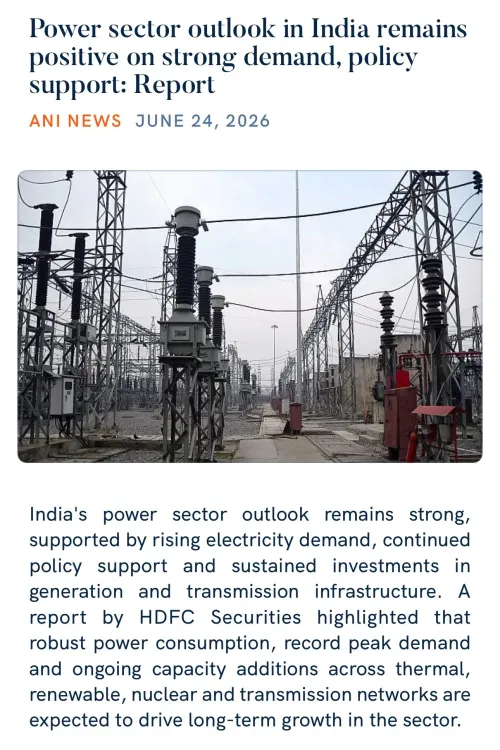
Union Coal and Mines Minister G. Kishan Reddy on 24 June 2026 highlighted a report projecting a positive outlook for India's power sector, backed by strong electricity demand and government policy support, as the country balances coal-based baseload supply with its 500 GW renewable energy ambition.
Key Takeaways
Union Coal and Mines Minister G.
Kishan Reddy shared a report on 24 June 2026 projecting a positive outlook for India's power sector.
The report attributes the optimism to strong electricity demand and sustained policy support from the government.
Roughly 50 percent of India's electricity generation remains thermal, making the Coal Ministry's role central to power sector stability.
India opened commercial coal mining to private players in 2020 to boost domestic supply for thermal power plants.
India has pledged 500 GW of non-fossil fuel capacity by 2030 , pursuing renewable expansion alongside coal as a transitional fuel.
The Central Electricity Authority (CEA) and upcoming coal block auctions in 2026-27 will be key indicators of sector direction.
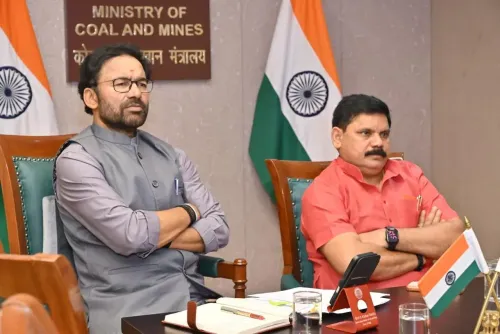
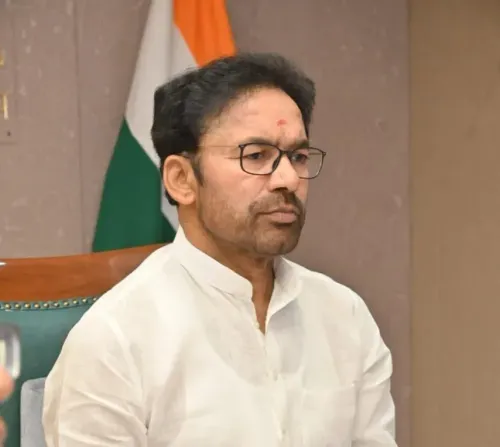
Union Coal and Mines Minister G. Kishan Reddy on Wednesday, 24 June 2026 shared a report highlighting a positive outlook for India's power sector, citing strong electricity demand and sustained policy support as the key drivers. The minister shared the report via the NaMo App, underscoring the ruling dispensation's focus on energy infrastructure as a pillar of economic growth.
Context
The report flagged by Kishan Reddy points to a confluence of factors sustaining optimism in the power sector — rising electricity consumption driven by industrial expansion, urban growth, and the deepening of household electrification. India achieved near-universal household electrification by 2019 under the Saubhagya scheme, and demand has continued to climb since, tracking closely with GDP growth and manufacturing activity.
The minister's role at the Ministry of Coal and Mines makes his amplification of the power outlook particularly significant, as roughly 50 percent of India's electricity generation remains thermal, with coal-based plants forming the backbone of baseload supply.
Policy Backdrop
India's power sector policy has evolved on two parallel tracks: accelerating renewable energy capacity addition while retaining coal as a transitional fuel to ensure grid stability and affordability. At COP26 in 2021, India pledged to achieve 500 GW of non-fossil fuel electricity capacity by 2030, a target that has since anchored the country's energy transition narrative.
On the coal side, the government opened commercial coal mining to private sector participation in 2020, a structural reform aimed at augmenting domestic supply and reducing import dependence. The Electricity Act 2003 and its subsequent amendments have provided the overarching regulatory framework, enabling competition and easing integration of renewable sources into the grid.
The Ministry of Coal plays a central role in managing linkage coal supplies — the administrative allocation of coal to power plants — which directly determines the fuel security and operational efficiency of thermal generators across the country.
Stakeholders and Impact
Power distribution companies (DISCOMs), thermal power generators, and coal mining firms are the primary stakeholders in the ecosystem the minister's post addresses. For DISCOMs, a stable and policy-backed power sector outlook translates into greater confidence in long-term power purchase agreements and infrastructure investment.
Manufacturing sectors benefiting from Production Linked Incentive (PLI) schemes are also significant electricity consumers, and their expansion has been a structural demand driver. A positive sector outlook supports investor sentiment in both conventional and renewable generation assets, as well as in grid infrastructure and storage.
For Telangana — where Kishan Reddy also serves as BJP state president — the broader power sector narrative intersects with state-level politics around electricity tariffs, coal supply adequacy, and the pace of renewable project development.
What's Next
Analysts and industry stakeholders will watch for the next Central Electricity Authority (CEA) annual report and any fresh coal block auction announcements or revisions to linkage policy in 2026-27. The CEA, the statutory body under the Ministry of Power, periodically publishes sector outlook assessments that inform capacity planning and investment decisions.
With India's peak power demand repeatedly setting new records in recent summers, the government's ability to balance coal-based baseload supply with accelerating renewable integration will remain the defining policy challenge — and a politically salient one — through the rest of the decade.
Point of View
Linking the BJP-led government's energy policy record to tangible economic outcomes ahead of what remains a contested political landscape in Telangana. The post reflects the government's broader strategy of presenting coal and renewables as complementary rather than competing pillars of energy security — a framing designed to neutralise criticism from both energy-transition advocates and industrial consumers worried about supply reliability. As Coal Minister, Reddy occupies a pivotal position in this narrative: coal still underpins half the country's generation, and any positive sector signal is as much a validation of coal policy as it is of renewable ambition. The timing, as peak summer demand season recedes and pre-budget policy signals intensify, suggests the ministry is laying groundwork for further structural reforms in coal linkages or block auctions.
NationPress
24 Jun 2026
Frequently Asked Questions
What did Kishan Reddy say about India's power sector?
Union Coal and Mines Minister G. Kishan Reddy shared a report on 24 June 2026 stating that India's power sector outlook remains positive, driven by strong electricity demand and sustained government policy support.
Why is India's power sector outlook considered positive in 2026?
The positive outlook is attributed to rising electricity demand from GDP growth, manufacturing expansion under PLI schemes, and government policy measures including commercial coal mining reforms and renewable energy targets.
What is India's renewable energy target and how does coal fit in?
India has pledged 500 GW of non-fossil fuel electricity capacity by 2030, as committed at COP26 in 2021. However, coal remains a transitional fuel, accounting for roughly 50 percent of current generation, with the Coal Ministry managing supply linkages for thermal plants.
What reforms have been made to India's coal sector for power generation?
In 2020, the government opened commercial coal mining to private sector participation to augment domestic supply and reduce import dependence, with the aim of strengthening fuel security for thermal power plants.
What is the role of the Central Electricity Authority in India's power sector?
The Central Electricity Authority (CEA) is a statutory body under the Ministry of Power that publishes periodic power sector outlook reports and annual assessments used for capacity planning and investment decisions.