Kishan Reddy Hails India–Australia Mining MoUs, CECA Push
Synopsis
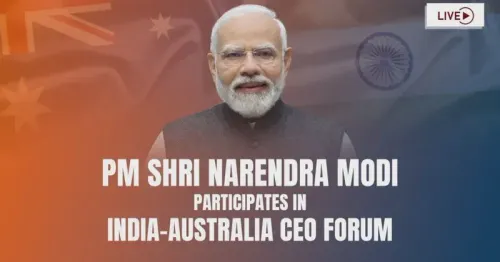
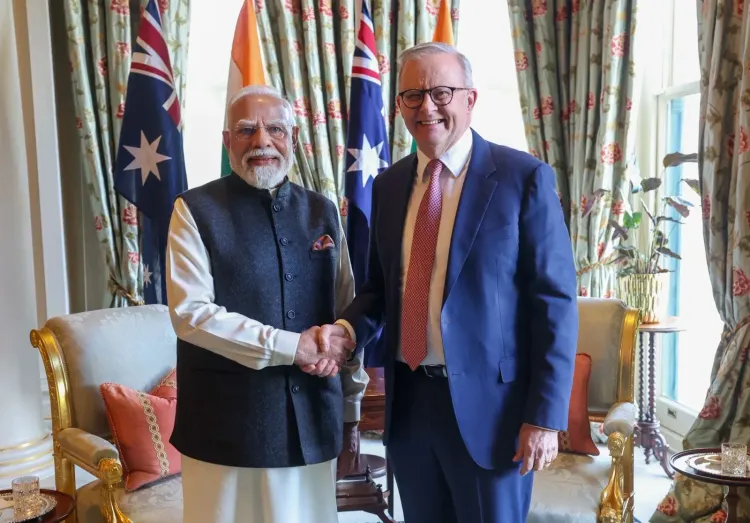
Union Coal and Mines Minister G. Kishan Reddy on 9 July 2026 hailed mining-sector MoUs signed during PM Modi–PM Albanese talks, including a Centre of Excellence at NTSI Bhubaneswar and a GSI–Geoscience Australia pact, as the two nations renewed their push to finalise the Comprehensive Economic Cooperation Agreement.
Key Takeaways
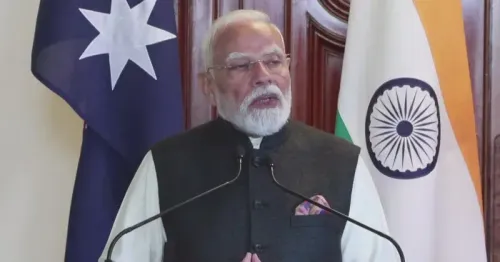
PM Modi and Australian PM Albanese reviewed the India–Australia Comprehensive Strategic Partnership and agreed to accelerate CECA negotiations on 9 July 2026 .
A Centre of Excellence for Mining Equipment, Technology and Services will be established at NTSI, Bhubaneswar under one of the signed MoUs.
The Geological Survey of India and Geoscience Australia signed a cooperation agreement covering advanced exploration, mine safety, mineral processing and mining technology.
The agreements build on the Critical Minerals Partnership announced in March 2023 and the interim trade pact ( ECTA ) signed in April 2022 .
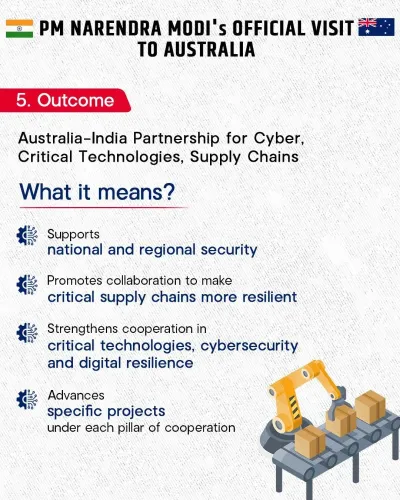
Both nations aim to build 'secure, sustainable and future-ready supply chains' for critical minerals including lithium, cobalt and rare earths.
Kishan Reddy called the outcomes 'landmark initiatives' that will reinforce bilateral commitment to future-ready mineral supply chains.
Union Coal and Mines Minister G. Kishan Reddy on Thursday, 9 July 2026 welcomed the outcomes of high-level talks between Prime Minister Narendra Modi and Australian Prime Minister Anthony Albanese, highlighting the signing of key agreements in the mining sector and a renewed push to conclude the Comprehensive Economic Cooperation Agreement (CECA) between the two nations.
Context
The bilateral discussions reviewed progress under the India–Australia Comprehensive Strategic Partnership, which was elevated to its current comprehensive status in June 2020. Both leaders agreed to deepen efforts toward the CECA, a long-sought full bilateral trade pact that would build on the interim Economic Cooperation and Trade Agreement (ECTA) signed in April 2022. Reddy described the talks as 'fruitful' and said they would 'pave the way for greater trade and investment.'
Among the most sector-specific outcomes, the two sides signed memoranda of understanding in the mining domain, including an agreement to establish a Centre of Excellence for Mining Equipment, Technology and Services at the National Training Site for Infrastructure (NTSI), Bhubaneswar. A separate MoU was signed between the Geological Survey of India (GSI) and Geoscience Australia to collaborate on exploration data, mine safety, mineral processing and advanced mining technology.
Policy Backdrop
The agreements sit within a broader strategic realignment that India and Australia have pursued since 2020, centred on securing diversified supply chains for critical minerals — including lithium, cobalt and rare earth elements essential for energy transition technologies. A formal Critical Minerals Partnership was announced in March 2023, and the latest MoUs extend that framework into institutional knowledge-sharing and skills infrastructure.
The Geological Survey of India, founded in 1851, is India's oldest scientific agency for geological mapping and mineral resource assessment. Its counterpart, Geoscience Australia, is the national geoscience body providing data and advisory services on minerals, energy and groundwater. Collaboration between the two agencies is expected to accelerate advanced exploration, particularly in identifying and delineating mineral deposits critical to both countries' industrial and clean-energy ambitions.
As BJP Telangana state president, Reddy's ministerial oversight of the coal and mines portfolio places him at the centre of India's domestic and international mineral policy. His post signals that the mining MoUs carry significant institutional weight within the government's broader energy-security and industrial strategy.
Stakeholders and Impact
The proposed Centre of Excellence at NTSI, Bhubaneswar is expected to benefit Indian and Australian mining companies, equipment manufacturers and technology service providers by creating a shared platform for training, innovation and standards development. Bhubaneswar, the capital of mineral-rich Odisha, is a strategic location given the state's large reserves of iron ore, bauxite and chromite.
Critical minerals processors and downstream industries in both countries stand to gain from improved geological data sharing and harmonised exploration practices. For India, which is expanding domestic processing capacity to reduce dependence on single-source suppliers, the partnership with Australia — one of the world's largest producers of lithium and rare earths — offers a rules-based supply chain alternative aligned with Quad-era strategic priorities.
What's Next
Analysts will watch for formal launch timelines and funding commitments for the Centre of Excellence at NTSI, as well as progress on CECA negotiations in upcoming parliamentary sessions of both countries. The next annual India–Australia Leaders' Summit is expected to serve as a milestone for reviewing implementation of the MoUs and any further sectoral agreements. Reddy's statement that these initiatives will build 'secure, sustainable and future-ready supply chains' signals that the mining cooperation track will remain a priority pillar of the bilateral relationship in the near term.
Point of View
Embedding cooperation into scientific agencies and skills infrastructure. G. Kishan Reddy's prominent amplification of the outcomes signals that the Modi government views critical minerals diplomacy as a core pillar of both its energy-transition strategy and its Indo-Pacific alignment. The choice of Bhubaneswar — in mineral-rich Odisha — as the home of the new Centre of Excellence is politically and strategically deliberate, linking domestic resource geography to international partnership architecture. Sustained progress on CECA, however, remains the harder test: negotiations have stretched over years, and the MoUs, however significant, do not substitute for the market access commitments a full trade agreement would unlock.
NationPress
8 Oct 2026
Frequently Asked Questions
What MoUs did India and Australia sign in the mining sector in July 2026?
India and Australia signed MoUs to establish a Centre of Excellence for Mining Equipment, Technology and Services at NTSI, Bhubaneswar, and to enable collaboration between the Geological Survey of India and Geoscience Australia on critical minerals, exploration, mine safety and mining technology.
What is the India–Australia Comprehensive Strategic Partnership?
The India–Australia Comprehensive Strategic Partnership is a bilateral framework elevated to comprehensive status in June 2020, covering security, trade, education, technology and critical minerals cooperation between the two countries.
What is CECA and where do India–Australia negotiations stand?
CECA stands for Comprehensive Economic Cooperation Agreement, a full bilateral trade pact under negotiation between India and Australia. An interim agreement, the ECTA, was signed in April 2022, and the July 2026 Modi–Albanese talks renewed commitment to completing the full CECA.
What is the Centre of Excellence for Mining at NTSI Bhubaneswar?
It is a proposed joint institution to be set up at the National Training Site for Infrastructure in Bhubaneswar, Odisha, aimed at advancing mining equipment, technology and services through India–Australia collaboration.
Why are India and Australia cooperating on critical minerals?
Both countries seek to diversify supply chains for lithium, cobalt and rare earths away from single-source dependence, supporting their respective clean-energy transitions and aligning with their shared Quad strategic framework. A formal Critical Minerals Partnership was announced in March 2023.