Kishan Reddy Hails India's E20 Petrol Rollout as Science-Led
Synopsis
Union Minister G. Kishan Reddy has defended India's ethanol blending journey as gradual and evidence-based, citing a progression from E15 in 2021 to a nationwide E20 rollout in April 2025 covering over 25 million petrol cars and 200 million two-wheelers.
Key Takeaways
Nationwide E20 rollout — petrol blended with 20 per cent ethanol — was claimed to have launched in April 2025 , per Minister Kishan Reddy's post.
The blending trajectory moved from E15 (2021) to E19 (2024) to E20 (2025) , covering over 25 million petrol cars and 200+ million two-wheelers .
India's Ethanol Blending Programme dates to 2003; the National Policy on Biofuels 2018 set the 20% target, originally for 2030 and later advanced.
The programme targets energy security (cutting crude imports), farmer income (sugarcane demand), and emission reduction simultaneously.
Kishan Reddy holds the Coal and Mines portfolio — his championing of the E20 milestone reflects a unified BJP government messaging push on clean energy.
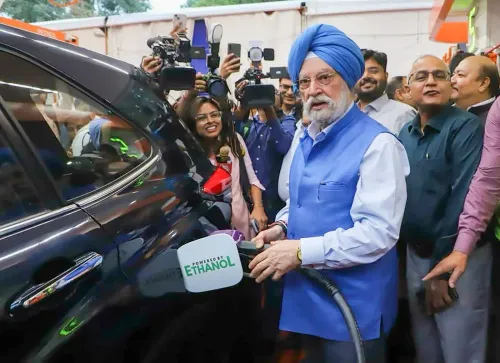
Five years of quietly raising the ethanol bar — and Union Coal and Mines Minister G. Kishan Reddy says the numbers now tell their own story. On Wednesday, 29 July 2026, the minister took to X to defend India's ethanol blending journey as 'gradual, scientific and evidence-based,' pointing to a trajectory that moved from E15 in 2021 to E19 in 2024 and culminated in a nationwide E20 rollout in April 2025.
From E15 to E20: A Four-Year Climb
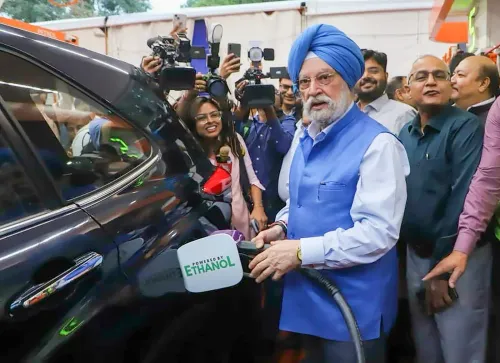
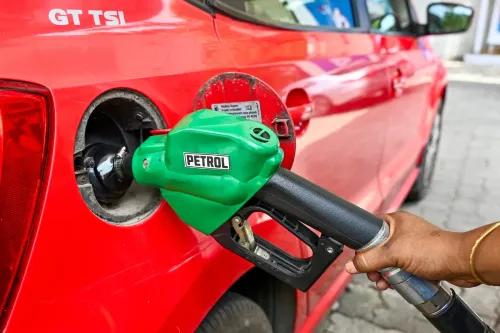
The minister's post charts a deliberate staircase of blending targets, each step preceded by planning rather than political decree. The April 2025 E20 rollout — petrol blended with 20 per cent ethanol — is presented as the culmination of that process, now covering a vehicle fleet the post describes as more than 25 million petrol cars and over 200 million two-wheelers. That is a significant slice of India's road-transport ecosystem absorbing a meaningfully different fuel mix.
India's Ethanol Blending Programme, first launched in 2003, spent its early years as an underperformer against its own targets. The National Policy on Biofuels 2018 reset ambitions, originally pegging 20 per cent blending by 2030 — a deadline the government later advanced to 2025. Kishan Reddy's post implicitly marks that accelerated target as met.
Energy Security, Farm Income, and the Climate Ledger
The ethanol blending push has never been a single-issue policy. At its core sits energy security: every litre of domestically produced ethanol — drawn primarily from sugarcane and its derivatives — is a litre of crude oil India does not need to import. For a country that imports roughly 85 per cent of its crude requirements, that arithmetic matters. Sugarcane farmers, oil marketing companies, and the nation's fuel-import bill all sit inside the same policy equation.
The programme also feeds into India's climate commitments, with higher ethanol content in petrol reducing tailpipe carbon emissions relative to pure fossil-fuel combustion. The minister's framing — 'evidence-based' — is a deliberate signal that the programme has moved past aspiration into measurable outcome.
A Coal Minister's Stake in the Clean-Energy Argument
It is worth noting that Kishan Reddy's formal portfolio is Coal and Mines, not Petroleum. His decision to publicly champion the E20 milestone reflects the BJP government's broader effort to present its energy transition credentials as a unified front — coal modernisation and biofuel scale-up as parallel tracks, not contradictions. As BJP Telangana state president, he also carries a political audience in a state where sugarcane cultivation and allied industries hold economic weight.
The road ahead will test the claims embedded in this milestone: whether vehicle compatibility issues surface at scale, how ethanol supply chains hold through lean agricultural seasons, and whether retail fuel prices remain stable enough to avoid consumer pushback. The evidence, as the minister puts it, is speaking — the question is how long the conversation stays this clean.
Frequently Asked Questions
What is E20 petrol and when did India roll it out?
E20 is petrol blended with 20 per cent ethanol. According to Union Minister G. Kishan Reddy, India rolled it out nationwide in April 2025 , covering more than 25 million petrol cars and 200 million two-wheelers.
What is India's Ethanol Blending Programme?
India's Ethanol Blending Programme, launched in 2003 , aims to mix domestically produced ethanol — primarily from sugarcane — with petrol to reduce crude oil imports and lower vehicular emissions. The National Policy on Biofuels 2018 set a 20 per cent blending target, originally by 2030, later advanced to 2025.
Is E20 petrol compatible with all cars and two-wheelers in India?
Vehicle compatibility with E20 is an ongoing area of attention. Automakers have been required to produce E20-compatible vehicles from specified dates, but older vehicles on the road may have varying compatibility levels. The government has said the rollout was carefully planned to address these concerns.
Why is G. Kishan Reddy, a Coal Minister, talking about ethanol blending?
G. Kishan Reddy is Union Minister of Coal and Mines, not Petroleum. His post reflects the BJP government's broader effort to present a unified energy-transition narrative, positioning coal modernisation and biofuel scale-up as complementary parts of the same policy direction.
How does ethanol blending benefit Indian farmers?
Ethanol in India is primarily produced from sugarcane and its by-products. Higher blending targets create additional demand for sugarcane, providing an alternative revenue stream for farmers and helping stabilise agricultural incomes, particularly in major cane-growing states.