Kishan Reddy Hails India's First Hydrogen Train Launch
Synopsis
Union Minister G. Kishan Reddy celebrated the flag-off of India's first indigenously designed hydrogen-powered train by PM Modi on the Jind–Sonipat route in Haryana, calling it a historic milestone under Make in India and the National Green Hydrogen Mission.
Key Takeaways
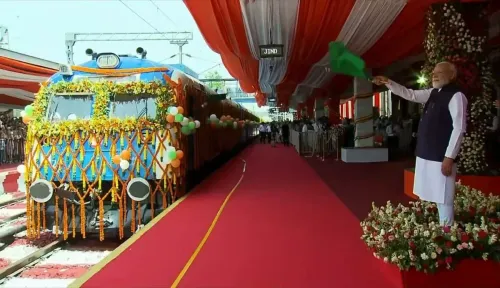
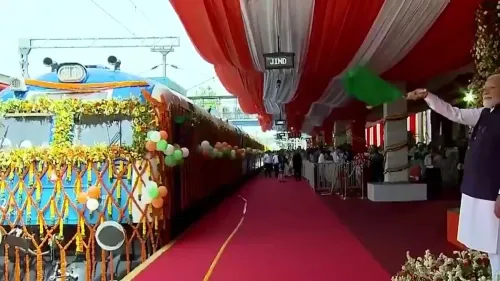
Prime Minister Narendra Modi flagged off India's first indigenously designed and manufactured hydrogen-powered train on 17 July 2026 .
The train operates on the Jind–Sonipat rail corridor in Haryana and emits only water vapour, with zero harmful emissions during operation.
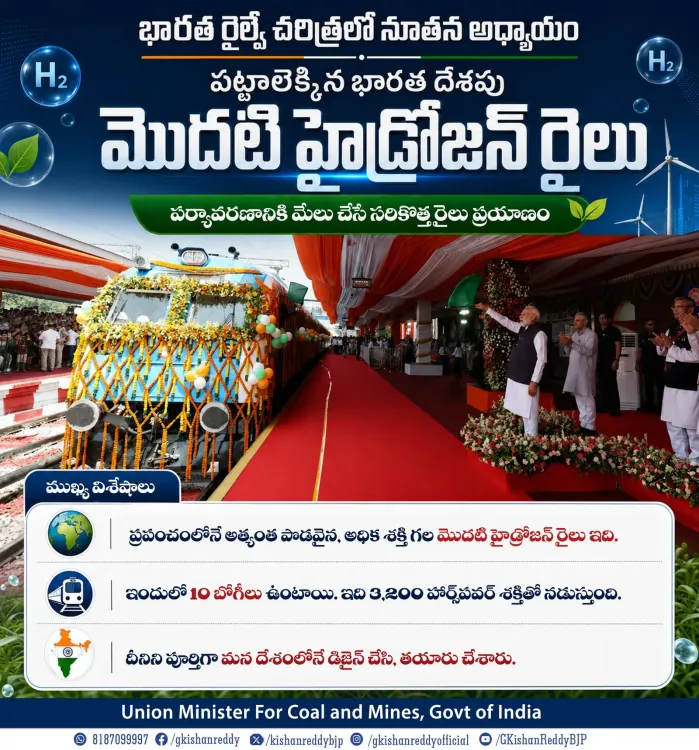
According to the minister's post, the train has 10 coaches , generates 3,200 horsepower , and can carry up to 2,600 passengers .
The project is positioned under the Make in India initiative and the National Green Hydrogen Mission (2023) , targeting reduced diesel imports and lower carbon emissions.
Union Railways Minister Ashwini Vaishnaw oversaw the programme; Minister G.
Kishan Reddy extended congratulations to both him and the Prime Minister.
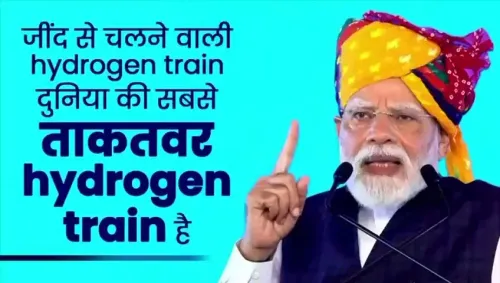
India joins a small group of nations — including Germany — that have operationalised hydrogen train technology, with this being claimed as the world's longest such train in service.
Union Coal and Mines Minister G. Kishan Reddy on Friday, 17 July 2026, celebrated the flag-off of India's first indigenously designed and manufactured hydrogen-powered train, inaugurated by Prime Minister Narendra Modi. The train commenced its maiden run on the Jind–Sonipat route in Haryana, marking what Reddy described as a historic chapter in the country's railway sector.
Context
In a post on X, Minister Reddy wrote in Telugu: 'భారత రైల్వే రంగంలో ఒక చారిత్రాత్మక అధ్యాయం మొదలైంది' ('A historic chapter has begun in India's railway sector'). He highlighted that the train was entirely designed and built within India under the Make in India vision, and conveyed congratulations to PM Modi and Union Railways Minister Ashwini Vaishnaw for the achievement. According to the post, the train emits only water vapour during operation, producing zero harmful emissions.
Reddy's post listed several key features attributed to the new train: a 10-coach configuration, a power output of 3,200 horsepower, and a passenger capacity of 2,600. He further claimed it is the longest hydrogen-powered train currently in operation anywhere in the world, placing India alongside a select group of nations that have developed such technology domestically.
Policy Backdrop
The launch sits at the intersection of two major central government initiatives. The Make in India scheme, launched in 2014, has consistently pushed for domestic design and manufacturing across strategic sectors, with railways being a flagship area. The National Green Hydrogen Mission, announced in 2023, set out to scale up green hydrogen production and deployment across transport and industry.
Indian Railways has been targeting non-electrified sections of its vast network — where diesel traction still dominates — as priority corridors for alternative propulsion technologies. Hydrogen fuel-cell trains are seen as a viable solution for such routes, reducing dependence on imported diesel and cutting lifecycle emissions. The Atmanirbhar Bharat Abhiyan, launched in 2020, further reinforced the policy preference for indigenous development over the procurement of foreign rolling stock.
Globally, hydrogen train programmes have been operational in countries such as Germany since the late 2010s. India's entry into this space with a domestically developed train would, if the claims hold, represent a significant technological milestone for a developing economy.
Stakeholders and Impact
Railway passengers on the Jind–Sonipat corridor in Haryana are the immediate beneficiaries, gaining access to a zero-emission mode of transport. For the broader rail network, the demonstration of hydrogen propulsion on a revenue-service route could accelerate deployment on other non-electrified sections, where diesel-powered locomotives currently account for a substantial share of Indian Railways' fuel expenditure and carbon footprint.
From an energy-security perspective, Minister Reddy's post underlined the economic benefit: reduced diesel consumption translates directly into lower fuel import bills. India imports a significant portion of its crude oil, making diesel substitution in the transport sector a strategic as well as environmental priority. The Railways Ministry, under Ashwini Vaishnaw, has been the nodal agency driving this programme, and the successful flag-off strengthens the case for scaling up hydrogen rolling stock procurement.
What's Next
Attention will now turn to whether the Jind–Sonipat service transitions from a demonstration run to regular commercial operation, and how quickly additional routes are identified for hydrogen train deployment. Integration with the National Green Hydrogen Mission's production targets will be critical — a scaling of the train fleet requires a parallel ramp-up in domestic green hydrogen supply. Parliamentary scrutiny of capital expenditure allocations and technology-transfer milestones is expected in upcoming sessions. The success of this corridor will likely determine the pace of India's broader hydrogen rail ambitions and its ability to position itself as an exporter of the technology.
Point of View
Celebrated loudly by a senior BJP minister, is as much a political statement as a technological one — it allows the ruling dispensation to weave together Make in India, green energy, and energy-security narratives ahead of a period of intense policy scrutiny. Minister Kishan Reddy's effusive post signals a coordinated amplification effort across the party's leadership, designed to associate the BJP with futuristic, clean-technology governance. The choice of the Jind–Sonipat corridor in Haryana — a politically significant state — as the inaugural route is unlikely to be incidental. Whether the demonstration translates into scalable commercial deployment will be the real test, and that depends on whether domestic green hydrogen production can keep pace with the ambition on display.
NationPress
17 Jul 2026
Frequently Asked Questions
What is India's first hydrogen-powered train and where does it run?
India's first indigenously designed and manufactured hydrogen-powered train was flagged off by PM Narendra Modi on 17 July 2026 and operates on the Jind–Sonipat route in Haryana. It emits only water vapour, producing zero harmful pollutants during operation.
What are the key features of India's hydrogen train?
According to Union Minister G. Kishan Reddy's post, the train has 10 coaches, a power output of 3,200 horsepower, and can carry up to 2,600 passengers at a time. It is claimed to be the longest hydrogen-powered train currently in service anywhere in the world.
How does the hydrogen train help reduce India's fuel import bill?
By replacing diesel traction on non-electrified rail corridors, the hydrogen train reduces India's dependence on imported crude oil and diesel. Indian Railways spends significantly on diesel fuel, and scaling up hydrogen propulsion is expected to ease that import burden over time.
What government schemes back India's hydrogen train programme?
The hydrogen train is aligned with the Make in India initiative (launched 2014), the Atmanirbhar Bharat Abhiyan (2020), and the National Green Hydrogen Mission (2023), all of which promote domestic manufacturing and green energy adoption across the transport sector.
Which minister is responsible for the hydrogen train project?
Union Railways Minister Ashwini Vaishnaw has overseen the development and rollout of the hydrogen train programme. Prime Minister Narendra Modi performed the flag-off, and multiple senior ministers including G. Kishan Reddy have publicly celebrated the launch.