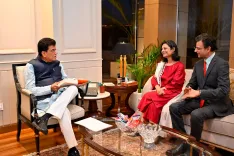
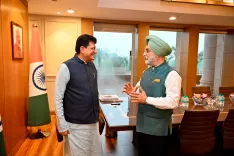
Kishan Reddy Hails Modi's Indonesia Visit, BrahMos Ties
Synopsis
Union Coal and Mines Minister G. Kishan Reddy has welcomed PM Modi's visit to Indonesia as a milestone in the Comprehensive Strategic Partnership, highlighting outcomes in critical minerals, defence including BrahMos cooperation, space, and agriculture as markers of deepening bilateral trust.
Key Takeaways
PM Modi 's visit to Indonesia has been hailed by Union Minister G.
Kishan Reddy as a significant milestone in the Comprehensive Strategic Partnership .
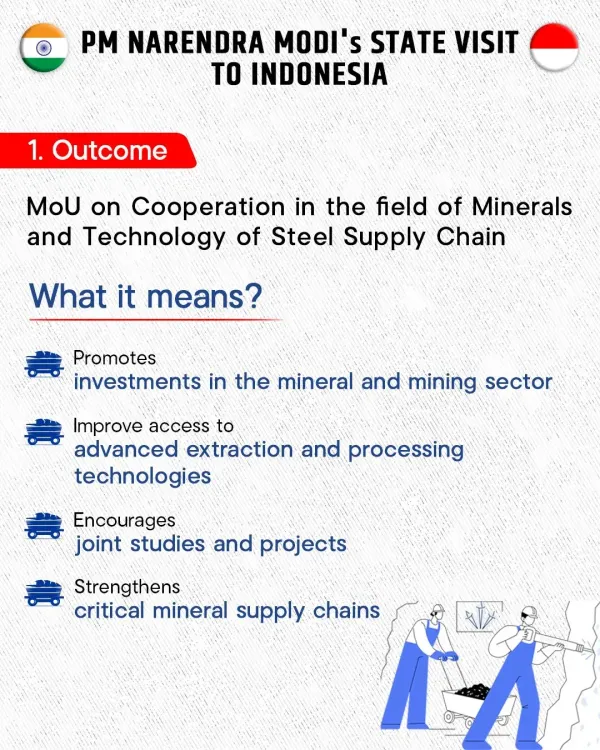
Bilateral outcomes span critical minerals, steel, agriculture, space, disaster management , and telecommunications .
Defence cooperation, including the BrahMos supersonic cruise missile programme, features prominently in the visit's outcomes.
The Comprehensive Strategic Partnership between India and Indonesia was originally established during PM Modi 's 2018 Jakarta visit.
The engagement reflects India's broader Act East Policy and Indo-Pacific strategy centred on ASEAN partnerships.
Critical minerals cooperation with Indonesia — one of the world's largest nickel producers — holds direct relevance to India's clean energy and industrial ambitions.
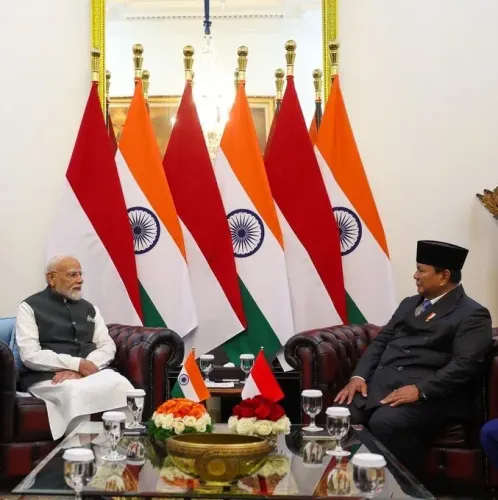
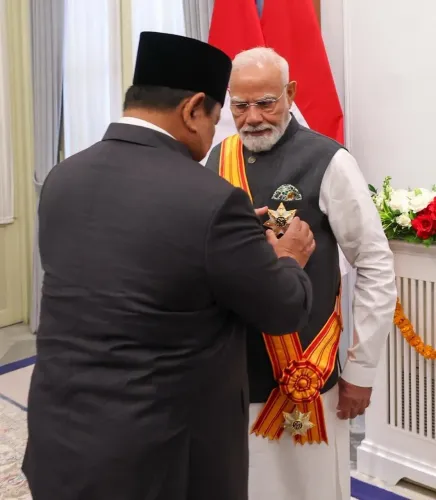
Union Coal and Mines Minister G. Kishan Reddy on Tuesday, July 7, 2026, welcomed Prime Minister Narendra Modi's visit to Indonesia, calling it 'another significant milestone' in the Comprehensive Strategic Partnership between the two nations. The minister highlighted wide-ranging outcomes spanning critical minerals, steel, agriculture, space, disaster management, telecommunications, and defence — including cooperation on the BrahMos supersonic cruise missile programme.
Context
PM Modi's visit to Jakarta represents a major push under India's Act East Policy, which prioritises deepening strategic and economic ties with ASEAN nations. Indonesia, as the largest economy in Southeast Asia, occupies a central role in India's Indo-Pacific outreach. Kishan Reddy noted that the 'wide-ranging outcomes' of the visit 'reflect the growing strategic trust between our two nations.'
The Comprehensive Strategic Partnership between India and Indonesia was first established during PM Modi's 2018 visit to Jakarta, providing a framework for cooperation across defence, trade, and technology. The current visit builds on that foundation with a broader and more substantive agenda.
Policy Backdrop
The BrahMos programme — a joint India-Russia supersonic cruise missile initiative — has been a centrepiece of India-Indonesia defence discussions since at least 2017, when India formally offered the missile system to Jakarta. The minister's explicit mention of BrahMos cooperation signals that defence exports remain a priority pillar in the bilateral relationship.
Beyond defence, the emphasis on critical minerals cooperation is significant. Indonesia holds some of the world's largest reserves of nickel and other minerals essential to battery technology and clean energy supply chains — resources that align directly with India's industrial and energy transition goals. The inclusion of space and telecommunications in the outcomes further signals a broadening of the partnership beyond traditional trade and security domains.
Stakeholders and Impact
India's defence manufacturing sector, particularly entities involved in the BrahMos programme, stands to benefit from any formalised export or co-production agreement with Indonesia. Progress on this front would mark a milestone for India's ambition to become a major defence exporter under the Make in India initiative.
The critical minerals sector is equally significant. Securing supply-chain partnerships with Indonesia could reduce India's dependence on other sourcing markets and support domestic manufacturing in steel, electronics, and electric vehicles. Stakeholders in agriculture and disaster management cooperation also stand to gain from the technical and institutional linkages being forged.
What's Next
Analysts and industry bodies will closely watch the implementation of the pacts agreed during PM Modi's visit, particularly in critical minerals and defence. Any formal agreement on BrahMos delivery timelines or joint production arrangements would represent a landmark in India's defence export history.
The next ASEAN-India Summit is expected to provide a further platform to consolidate the outcomes of this visit. For G. Kishan Reddy, whose portfolio includes mines and critical minerals, the Indonesia engagement also carries direct policy relevance as India seeks to diversify and secure its mineral supply chains for the long term.
Point of View
Amplifying diplomatic outcomes domestically. The explicit mention of BrahMos is notable: it positions the visit not merely as a trade engagement but as a defence export milestone, feeding into the 'Make in India' narrative in the strategic sector. The critical minerals dimension adds a layer of economic self-interest that gives the partnership long-term structural weight beyond ceremonial optics. Together, these signals suggest India is treating the Indonesia relationship as a serious pillar of its Indo-Pacific architecture, not a peripheral bilateral.
NationPress
7 Jul 2026
Frequently Asked Questions
What was the outcome of PM Modi's visit to Indonesia in 2026?
PM Modi's visit to Indonesia in July 2026 produced wide-ranging outcomes covering critical minerals, steel, agriculture, space, disaster management, telecommunications, and defence cooperation including the BrahMos missile programme, according to Union Minister G. Kishan Reddy.
What is the India-Indonesia Comprehensive Strategic Partnership?
The Comprehensive Strategic Partnership is the upgraded bilateral framework between India and Indonesia, first established during PM Modi's 2018 visit to Jakarta, covering defence, trade, and technology cooperation.
What is the BrahMos missile and why does it matter for India-Indonesia ties?
BrahMos is a supersonic cruise missile developed jointly by India and Russia. India has been in discussions to export BrahMos to Indonesia since 2017, and the 2026 visit marks a renewed push on this defence cooperation.
Why is Indonesia important for India's critical minerals strategy?
Indonesia holds among the world's largest reserves of nickel and other critical minerals essential for battery technology and clean energy, making it a strategically important partner for India's industrial and energy transition goals.
What is India's Act East Policy?
India's Act East Policy is a strategic foreign policy initiative aimed at deepening economic, cultural, and security ties with ASEAN nations and the broader Indo-Pacific region, with Indonesia being a central partner.