Kishan Reddy Hails Skyroot's Vikram-1 as Modi's Space Vision

Synopsis
Union Minister G. Kishan Reddy has hailed Skyroot Aerospace's Vikram-1 as a defining moment for India's space sector, attributing the Hyderabad startup's pending orbital launch to PM Modi's landmark 2020 reforms that opened rocketry and satellite activity to private enterprise.
Key Takeaways
Kishan Reddy publicly celebrated Skyroot Aerospace 's upcoming Vikram-1 orbital launch on 18 July 2026 .
Vikram-1 is described as India's first privately developed orbital launch vehicle, built by the Hyderabad -based startup.
The minister credited PM Narendra Modi 's government with enabling the milestone through space-sector liberalisation reforms approved in 2020 .
The 2020 reforms opened launch-vehicle and satellite activities to private companies, creating the regulatory space for startups like Skyroot to operate.
ISRO continues to serve as the anchor institution while private entrants expand India's overall launch capacity.
A successful orbital mission would place India among a small group of nations with privately operated orbital launch capability.
Union Coal and Mines Minister G. Kishan Reddy on Saturday, 18 July 2026, celebrated Skyroot Aerospace's upcoming maiden orbital launch of Vikram-1 — billed as India's first privately developed orbital launch vehicle — calling it a defining moment in the country's space journey and crediting the achievement to Prime Minister Narendra Modi's decision to open the space sector to private participation.
Context
Skyroot Aerospace, headquartered in Hyderabad, is preparing for the maiden orbital flight of its Vikram-1 rocket — a milestone that would mark the first time a privately built launch vehicle reaches orbit from Indian soil. Kishan Reddy, who also serves as BJP's Telangana state president, described the development as 'a shining testament to the visionary leadership of Prime Minister Narendra Modi.' The minister noted that the launch represents New India 'taking flight', anchoring the achievement in the broader narrative of national ambition and entrepreneurial energy.
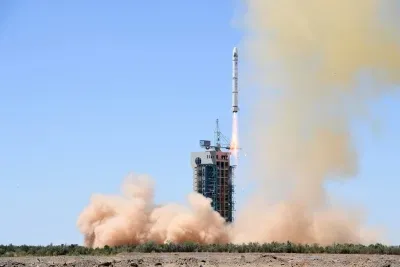
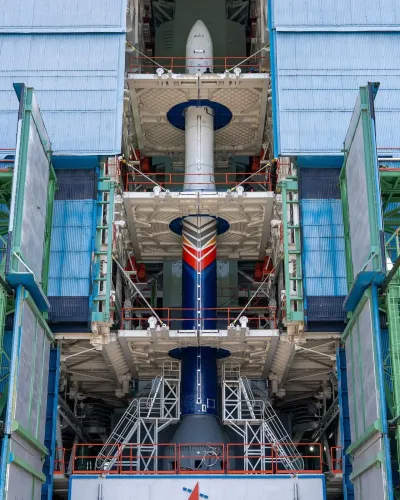
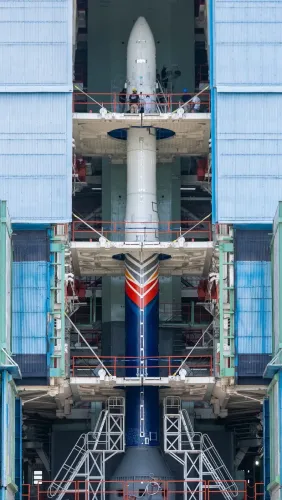
The minister's post, tagged #IndiaWithVikram1, was accompanied by four images and drew attention to the Hyderabad-based startup as a symbol of what private enterprise can achieve within a reformed regulatory environment.
Policy Backdrop
In 2020, the Government of India approved landmark reforms liberalising the space sector, permitting private companies to design, build, and launch their own rockets and satellites — a structural shift that ended decades of near-exclusive state control. The Indian National Space Promotion and Authorisation Centre (IN-SPACe) was established as the nodal body to facilitate and regulate private space activity, working alongside ISRO.
Successive Indian governments had gradually moved away from a pure state-monopoly model, but the 2020 reforms were the most sweeping, opening the entire launch-vehicle and satellite value chain to startups and established industry players alike. The policy was explicitly designed to foster domestic high-technology manufacturing, reduce launch costs through competition, and position India as a global launch destination.
Stakeholders and Impact
Skyroot Aerospace was among the earliest private companies to benefit from the liberalised framework, having earlier conducted sub-orbital test flights of its smaller Vikram-S rocket. An orbital success with Vikram-1 would place India in a select group of nations with privately operated orbital launch capability, alongside the United States and a handful of others.
For ISRO, the development is complementary rather than competitive: the agency increasingly partners with private firms, freeing its own resources for deep-space and strategic missions. For the broader ecosystem of private space startups, a successful Vikram-1 launch would validate the commercial model and likely attract further investment into the sector. Hyderabad's emerging identity as a space-tech hub — already home to satellite and defence electronics firms — stands to be reinforced.
What's Next
Regulatory clearances for the first private orbital launch remain the immediate watch point, as do any announcements from Skyroot regarding the launch window, payload details, and commercial customers aboard the vehicle. Competing private launch startups are also advancing their own programmes, meaning the broader private-launch market in India could see rapid evolution in the near term.
If the Vikram-1 orbital mission succeeds, it is likely to accelerate policy conversations around dedicated private launch infrastructure and streamlined licensing — potentially making India a more competitive destination for international satellite launch contracts.
Point of View
The BJP frames a technological milestone as electoral proof of governance competence. The timing — ahead of what would be a globally watched launch — gives the ruling party a high-visibility win in the narrative of 'New India.' For Kishan Reddy personally, championing a Hyderabad-based startup reinforces his standing as Telangana's senior BJP voice at a time when the party is working to expand its footprint in the state. More broadly, the post reflects a deliberate strategy of associating the government with India's private-sector success stories in frontier technology.
NationPress
18 Jul 2026
Frequently Asked Questions
What is Vikram-1 and who built it?
Vikram-1 is a launch vehicle developed by Skyroot Aerospace , a private startup based in Hyderabad , and is described as India's first privately built orbital rocket.
Why is the Vikram-1 launch significant for India?
A successful orbital launch by Vikram-1 would make India one of a handful of countries where a privately developed rocket has reached orbit, marking a major step in the commercialisation of India's space sector.
What reforms opened India's space sector to private companies?
In 2020 , the Government of India approved reforms permitting private firms to build and launch rockets and satellites, and established IN-SPACe as the regulatory body to oversee private space activity.
What did G. Kishan Reddy say about Vikram-1?
G. Kishan Reddy called the Vikram-1 launch 'a defining moment in India's space journey' and said it was a testament to PM Modi 's leadership in opening the space sector to private participation.
What is Skyroot Aerospace's connection to Hyderabad?
Skyroot Aerospace is headquartered in Hyderabad , Telangana, and is one of the leading private launch-vehicle startups to emerge from India's liberalised space ecosystem.