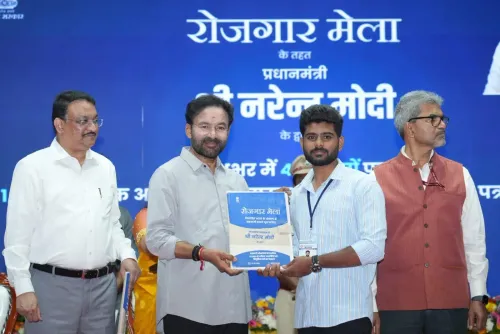
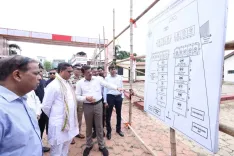
Kishan Reddy hails tribal youth in India's semiconductor push
Synopsis
Union Coal Minister G. Kishan Reddy on 5 July 2026 highlighted women and youth from remote and tribal regions acquiring semiconductor skills, linking their progress to PM Modi's Yuva Shakti vision and India's goal of becoming a global chip manufacturing hub under the Aatmanirbhar Bharat framework.
Key Takeaways
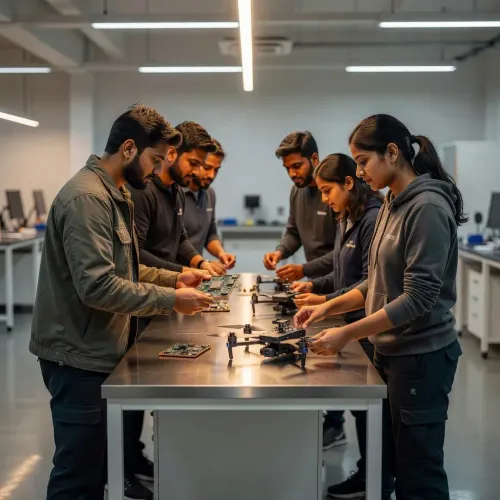
Kishan Reddy praised women and youth from remote and tribal regions for acquiring advanced semiconductor skills on 5 July 2026 .
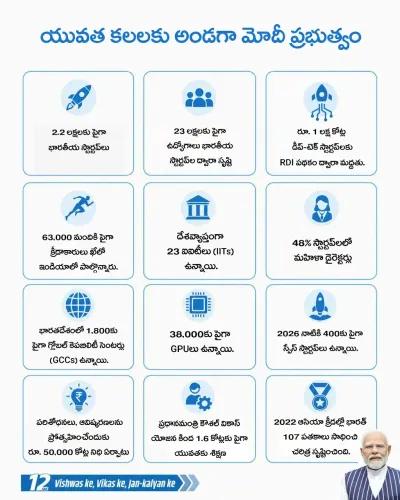
He linked their progress to PM Modi 's 'Yuva Shakti' vision of empowering youth through technology, innovation, and manufacturing.
The India Semiconductor Mission was established in 2021 to build a domestic semiconductor and display ecosystem.
A Production Linked Incentive (PLI) scheme for electronics and semiconductors was also approved in 2021 to attract investment.
India's semiconductor push is part of the Aatmanirbhar Bharat self-reliance framework launched in 2020 .
Inclusion of tribal and remote-district youth aims to widen India's semiconductor talent pipeline beyond established urban tech clusters.
Union Coal and Mines Minister G. Kishan Reddy on Sunday, 5 July 2026, praised the growing participation of women and youth from remote and tribal regions in India's semiconductor sector, calling their progress a reflection of Prime Minister Narendra Modi's vision of empowering the country's youth through technology and manufacturing.
Context
In his post on X, Kishan Reddy wrote that 'the story of India's semiconductor revolution is also the story of our young talent rising to seize new opportunities,' specifically highlighting women and youth from remote and tribal regions who are acquiring advanced skills in one of the world's most strategic industries. He described their journeys as evidence of the transformative impact of Prime Minister Modi's 'Yuva Shakti' vision — linking youth empowerment with technology, innovation, and domestic manufacturing.
The minister framed these individual success stories within the larger national goal of building an Aatmanirbhar Bharat (self-reliant India) and positioning the country as a global semiconductor hub.
Policy Backdrop
India's semiconductor ambitions took institutional shape in 2021 when the government established the India Semiconductor Mission under the Ministry of Electronics and Information Technology, alongside a Production Linked Incentive (PLI) scheme for electronics and semiconductors designed to attract large-scale manufacturing investments into the country.
Both initiatives sit within the broader Aatmanirbhar Bharat framework launched in 2020, which seeks to reduce India's dependence on imports across strategic sectors — from critical minerals to advanced electronics — by building domestic capacity and supply chains. The emphasis on skilling youth from tribal and remote districts extends earlier digital inclusion programmes into high-technology manufacturing, widening the talent pipeline beyond urban centres.
India's push for semiconductor self-reliance has also been driven by the global chip shortages of the early 2020s, which exposed vulnerabilities in supply chains across automotive, defence, and consumer electronics sectors worldwide.
Stakeholders and Impact
The minister's remarks spotlight a constituency that has historically been on the margins of India's technology economy: tribal communities and women from remote districts. Their entry into semiconductor skilling programmes signals an attempt to broaden the social base of India's manufacturing ambitions, moving beyond established technology clusters in cities such as Bengaluru, Hyderabad, and Pune.
For the semiconductor workforce pipeline, inclusion of these groups addresses both a skills gap and a demographic dividend argument — India's large young population, if trained in advanced manufacturing, could provide a competitive labour advantage as global chipmakers diversify production away from East Asia. Industry stakeholders and skilling bodies are likely to watch the rollout of any targeted certification programmes for tribal and remote districts under electronics missions.
What's Next
Attention will now turn to the rollout of approved semiconductor fabrication projects and whether new skill certification programmes specifically targeting tribal and remote districts are formally announced under the India Semiconductor Mission or allied skilling schemes. Kishan Reddy's public endorsement — even from outside the direct electronics policy remit — signals political momentum behind the narrative of inclusive high-tech growth. If India is to credibly position itself as a global semiconductor hub, translating that political messaging into verifiable skilling outcomes and fabrication capacity will be the defining test in the months ahead.
Point of View
The BJP is weaving an inclusive-growth narrative into India's semiconductor ambitions, a sector typically associated with urban, upper-middle-class talent pools. This positions the semiconductor mission not merely as an industrial policy win but as a social mobility story ahead of electoral cycles in states with significant tribal constituencies, including Telangana, where Reddy serves as BJP president. The move also reflects a pattern of senior ministers across portfolios amplifying the Aatmanirbhar Bharat and Yuva Shakti messaging, signalling coordinated political communication rather than a standalone ministerial statement. The credibility of this narrative will ultimately rest on whether skilling outcomes in tribal districts are backed by verifiable data and formal programme announcements.
NationPress
5 Jul 2026
Frequently Asked Questions
What did Kishan Reddy say about India's semiconductor sector?
On 5 July 2026, Union Coal and Mines Minister G. Kishan Reddy praised women and youth from remote and tribal regions for acquiring advanced semiconductor skills, calling their progress a reflection of PM Modi's Yuva Shakti vision and a step toward making India a global semiconductor hub.
What is the India Semiconductor Mission?
The India Semiconductor Mission is a government initiative established in 2021 under the Ministry of Electronics and Information Technology to develop India's semiconductor and display manufacturing ecosystem and reduce dependence on imports.
What is Aatmanirbhar Bharat and how does it relate to semiconductors?
Aatmanirbhar Bharat, launched in 2020, is a self-reliance initiative aimed at boosting domestic manufacturing across strategic sectors. Semiconductors are a key focus, with PLI schemes and the India Semiconductor Mission both falling under this broader framework.
Why is India focusing on tribal youth for semiconductor skilling?
Bringing tribal and remote-district youth into semiconductor training broadens India's talent pipeline beyond urban centres, addresses skills gaps in a strategic industry, and aligns with social inclusion goals embedded in programmes like Yuva Shakti.
Is semiconductor policy under the Coal and Mines Ministry?
No, semiconductor policy falls primarily under the Ministry of Electronics and Information Technology. G. Kishan Reddy's remarks reflect political support for the initiative rather than a direct ministerial responsibility.