Kishan Reddy Highlights PM Vidya Lakshmi Scheme Benefits

Synopsis
Union Minister G. Kishan Reddy spotlighted the PM Vidya Lakshmi scheme, citing over 1.12 lakh sanctioned loans worth ₹15,634.78 crore. The scheme offers collateral-free loans, a 3% interest subsidy, and a 75% government guarantee to students at 1,425 premier institutions including IITs and IIMs.
Key Takeaways
1,12,817 education loans have been sanctioned under the PM Vidya Lakshmi scheme as of the minister's post.
Total approved credit stands at ₹15,634.78 crore , with a government allocation of ₹3,600 crore for 2024–25 to 2030–31.
Students at 1,425 top institutions , including IITs and IIMs, can access loans without collateral .
Loans up to ₹10 lakh carry a 3% interest subsidy for families earning up to ₹8 lakh annually .
Loans up to ₹7.5 lakh are backed by a 75% central government guarantee .
Loans are disbursed through public sector banks, private banks, RRBs, and cooperative banks.
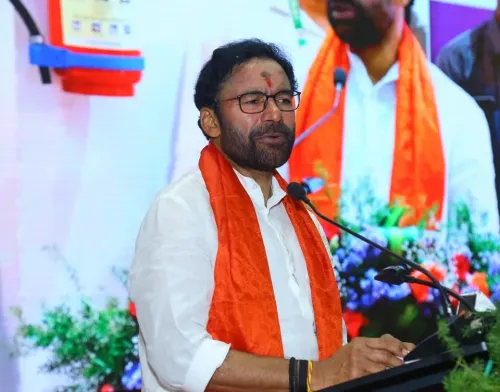
Over 1.12 lakh students have already secured education loans under the PM Vidya Lakshmi scheme — and Union Coal and Mines Minister G. Kishan Reddy wants every aspiring student in the country to know it. On Thursday, 13 August 2026, the BJP Telangana state president posted a detailed breakdown of the scheme on X, calling it the fulfilment of Prime Minister Narendra Modi's pledge that no student should be forced to abandon higher education because of money.
What PM Vidya Lakshmi actually offers students
The scheme, launched in November 2024, is built around three core promises. First, students admitted to any of 1,425 top-ranked institutions — including IITs and IIMs — can access education loans without any collateral. Second, loans up to ₹10 lakh carry a 3% interest subsidy for families with an annual income of up to ₹8 lakh. Third, loans up to ₹7.5 lakh come with a 75% central government guarantee — meaning the state itself stands behind the borrower if repayment falters.
Reddy's post, written in Telugu, quoted the scheme's progress figures directly: 1,12,817 loans sanctioned, totalling ₹15,634.78 crore in approved credit. The government has allocated ₹3,600 crore for the scheme across the 2024–25 to 2030–31 period. Loans are accessible through public sector banks, private banks, Regional Rural Banks (RRBs), and cooperative banks — a deliberate multi-channel design to reach students in smaller towns and rural districts.
A single-window push that builds on a decade of policy
The Vidya Lakshmi portal — first launched in 2015 — had already created a unified platform for education loan applications across participating banks. The PM Vidya Lakshmi scheme layers a formal interest subsidy and a government credit guarantee on top of that infrastructure, directly addressing the two biggest friction points students face: the fear of high interest burdens and the inability to offer collateral.
Reddy framed the scheme as the Prime Minister's personal resolve made policy — 'ఆర్థిక ఇబ్బందుల వల్ల ఏ విద్యార్థి చదువు ఆగిపోకూడదు' (no student's education should stop because of financial hardship). The political subtext is clear: with Telangana in opposition hands at the state level, the BJP is keen to demonstrate that central welfare schemes are reaching students regardless of which party governs the state.
For a family earning under ₹8 lakh a year — the same income ceiling used in the OBC non-creamy layer definition — a collateral-free loan with a 3% subsidy to an IIT or IIM is a structural shift in access. The question now is disbursement velocity: sanctions crossing ₹15,600 crore is a headline number, but how fast that money reaches students' accounts will determine whether the scheme's ambition matches its execution.
Point of View
The policy targets the aspirational middle and lower-middle class rather than the very poorest, who may still face access barriers. Kishan Reddy's Telugu-language post signals a deliberate outreach to Andhra and Telangana audiences, states where higher education aspirations run high but household incomes often fall near that ₹8 lakh threshold. The scheme's real test will be disbursement speed and bank willingness to lend in Tier-2 and Tier-3 catchments, where the government guarantee is meant to shift risk but institutional inertia often persists.
NationPress
13 Aug 2026
Frequently Asked Questions
What is the PM Vidya Lakshmi scheme?
PM Vidya Lakshmi is a central government scheme that provides collateral-free education loans, a 3% interest subsidy on loans up to ₹10 lakh, and a 75% government guarantee on loans up to ₹7.5 lakh to students admitted to 1,425 premier institutions including IITs and IIMs.
Who is eligible for a loan under PM Vidya Lakshmi?
Students admitted to any of the 1,425 top-ranked institutions listed under the scheme are eligible. The 3% interest subsidy applies to families with an annual income of up to ₹8 lakh.
How many loans have been sanctioned under PM Vidya Lakshmi so far?
As per the figures cited by Union Minister G. Kishan Reddy, 1,12,817 loans have been sanctioned, amounting to ₹15,634.78 crore in approved credit.
Which banks disburse PM Vidya Lakshmi loans?
Loans are available through public sector banks, private banks, Regional Rural Banks (RRBs), and cooperative banks, giving students access across urban and rural areas.
What is the government budget allocated for PM Vidya Lakshmi?
The central government has allocated ₹3,600 crore for the scheme covering the period from 2024–25 to 2030–31.