Kishan Reddy highlights PM-Vidyalaxmi loan push for students

Synopsis
Union Minister G. Kishan Reddy highlights that PM-Vidyalaxmi, launched in November 2024, has sanctioned over 1.12 lakh collateral-free education loans worth ₹15,634.78 crore, backed by a ₹3,600 crore allocation and a 3% interest subvention for eligible students.
Key Takeaways
1,12,817 education loans sanctioned under PM-Vidyalaxmi since its launch in November 2024 .
Total loan amount approved stands at ₹15,634.78 crore , with ₹3,600 crore allocated from 2024–25 to 2030–31 for interest subvention.
Eligible students receive a 3% interest subvention on loans up to ₹10 lakh if annual family income is up to ₹8 lakh .
Applications are processed through a unified digital portal covering public, private, regional rural and cooperative banks.
The complementary PM-USP CGFSEL scheme has issued 14,65,880 credit guarantees worth ₹59,843.74 crore since its 2015 launch.
The twin-scheme architecture aims to raise India's Gross Enrolment Ratio in higher education by reducing financial barriers for lower-middle-income families.
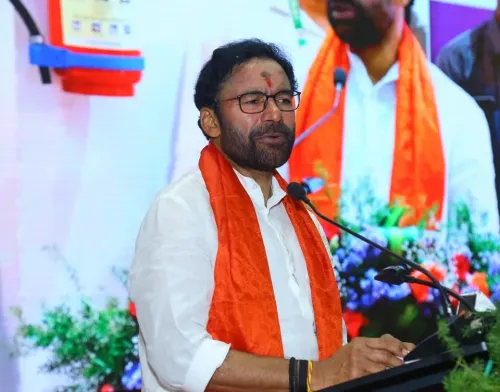
Over 1.12 lakh education loans sanctioned, ₹15,634.78 crore approved, and a generation of first-generation college-goers no longer turned away at a bank counter — Union Coal and Mines Minister G. Kishan Reddy on Thursday, August 6, 2026, laid out the early scorecard of the PM-Vidyalaxmi scheme, the Centre's collateral-free and guarantor-free education loan programme that went live in November 2024.
What PM-Vidyalaxmi offers and who it reaches
The scheme strips away two of the biggest roadblocks that historically kept lower-middle-income families from bank loan counters: the demand for collateral and the need for a guarantor. Students from families earning up to ₹8 lakh annually are eligible for a 3% interest subvention on loans up to ₹10 lakh — a direct cost reduction on what is often a household's single largest financial commitment.
Applications flow through the PM-Vidyalaxmi Portal, a unified digital gateway that connects borrowers to Public Sector Banks, Private Banks, Regional Rural Banks and Cooperative Banks. The government has earmarked ₹3,600 crore across the period 2024–25 to 2030–31 to sustain the subvention outgo — a multi-year fiscal commitment designed to outlast a single budget cycle.
The older credit guarantee backbone: PM-USP CGFSEL since 2015
PM-Vidyalaxmi does not stand alone. Running in parallel is the PM Uchchatar Shiksha Protsahan Credit Guarantee Fund Scheme for Education Loans (PM-USP CGFSEL), which has been operating since 2015. Since launch, it has issued 14,65,880 credit guarantees worth ₹59,843.74 crore — giving banks the backstop they need to lend without demanding security from students who have none.
Together, the two instruments address different ends of the same problem: PM-USP CGFSEL de-risks the banks; PM-Vidyalaxmi cuts the cost for the borrower. The combination is the Centre's most layered attempt yet to move the needle on the country's Gross Enrolment Ratio (GER) in higher education.
GER as the long game
India's GER in higher education has climbed steadily over the past decade but still trails peer economies at comparable income levels. Financial exclusion — not aspiration — has long been identified as the primary brake. By combining interest subvention with credit guarantees and a single digital application window, the government is betting that removing friction at the financing stage will translate into more enrolments, not just more loans.
The next test will come when the Ministry of Education releases updated GER data and when the ₹3,600 crore allocation faces its first mid-term review in the 2027–28 budget cycle — the moment that will reveal whether disbursal has matched ambition.
Point of View
The rollout gives the BJP a concrete welfare metric to defend in Telangana and other states where first-generation college aspirants are a significant voter bloc. The real credibility test, however, is not loan sanctions but eventual GER movement — a figure the Ministry of Education controls and which independent analysts will scrutinise when next published. If disbursals trail sanctions, the headline numbers could become a liability rather than an asset.
NationPress
6 Aug 2026
Frequently Asked Questions
What is PM-Vidyalaxmi scheme and who is eligible?
PM-Vidyalaxmi is a central government scheme launched in November 2024 that provides collateral-free and guarantor-free education loans. Students from families with an annual income up to ₹8 lakh are eligible for a 3% interest subvention on loans up to ₹10 lakh.
How many loans have been sanctioned under PM-Vidyalaxmi so far?
As per figures shared by Union Minister G. Kishan Reddy, 1,12,817 education loans worth ₹15,634.78 crore have been sanctioned under the scheme since its launch.
How do I apply for a PM-Vidyalaxmi education loan?
Students can apply through the PM-Vidyalaxmi Portal online. The portal connects applicants to Public Sector Banks, Private Banks, Regional Rural Banks and Cooperative Banks through a simplified digital process.
What is PM-USP CGFSEL and how is it different from PM-Vidyalaxmi?
PM-USP CGFSEL is a credit guarantee scheme launched in 2015 that backs banks against default risk on education loans, enabling them to lend without collateral. PM-Vidyalaxmi, launched in 2024, directly reduces the borrower's interest burden through a subvention. The two schemes work in tandem.
How much has the government budgeted for PM-Vidyalaxmi?
The government has allocated ₹3,600 crore for the PM-Vidyalaxmi scheme covering the period from 2024–25 to 2030–31 to fund the interest subvention component.