Kishan Reddy leads Indian delegation at IMARC 2026 in Sydney
Synopsis
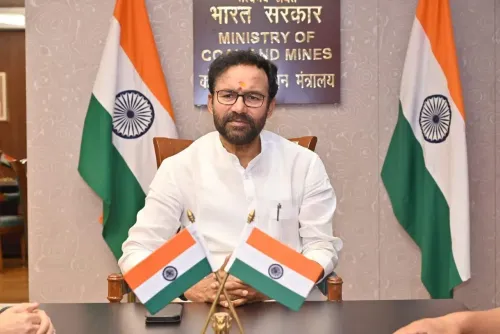
Union Coal and Mines Minister G. Kishan Reddy led India's delegation at the IMARC 2026 reception in Sydney on October 26, engaging global mining ministers, ambassadors, and industry leaders — as India deepens its push for critical mineral partnerships and foreign mining investment.
Key Takeaways
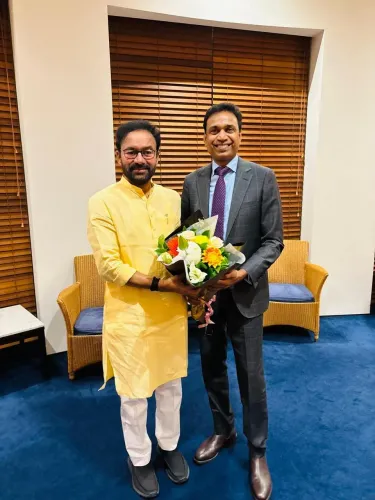
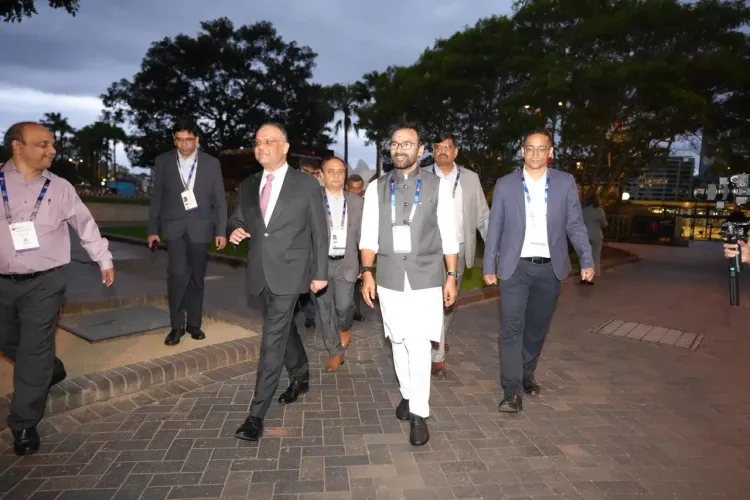
Kishan Reddy led India's delegation at the IMARC 2026 reception held at the Museum of Contemporary Art Australia in Sydney on October 26, 2026 .
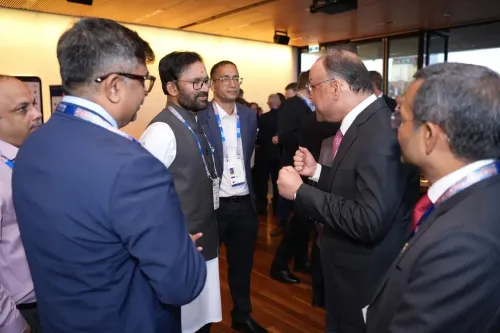
He met ministerial colleagues, ambassadors, and industry leaders from multiple countries, exchanging perspectives on mining and resources.
Australia holds major reserves of lithium, cobalt, and rare earths that align with India's energy transition and critical minerals strategy.
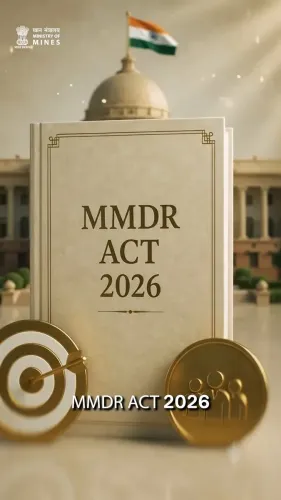
India amended the MMDR Act in 2015 and 2021 to introduce competitive auctions and attract private investment in the minerals sector.
India has increased senior ministerial participation in international mining forums to promote domestic auctions, secure critical mineral imports, and draw foreign investment into exploration.
Follow-up MoUs or investment commitments emerging from IMARC 2026 will be key indicators of the visit's tangible impact.
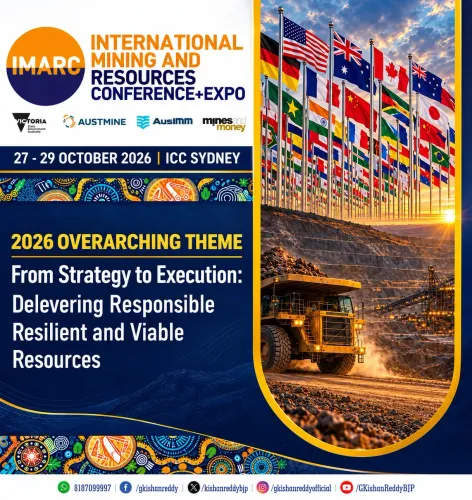
From the Museum of Contemporary Art Australia in Sydney, Union Coal and Mines Minister G. Kishan Reddy stepped into one of the world's premier mining diplomacy arenas on Monday, October 26, 2026 — leading India's delegation at the opening reception of the International Mining and Resources Conference (IMARC) 2026.
India at the top table of global mining diplomacy
IMARC, held annually in Australia, draws mining ministers, ambassadors, and resource-sector executives from dozens of countries — making it far more than a trade show. It is where deals are seeded, supply-chain partnerships are floated, and nations stake their claims in the global race for critical minerals. Kishan Reddy's presence at the reception signals India's intent to be a consistent, senior-level voice at that table.
The minister described the evening as an opportunity for 'exchanging perspectives and strengthening engagement in the mining and resources sector,' meeting ministerial colleagues, ambassadors, and industry leaders from across the globe.
Why Australia, why now
Australia is not an incidental host. It sits atop some of the world's largest reserves of lithium, cobalt, and rare earths — exactly the minerals India needs to power its energy transition, from electric vehicles to grid-scale storage. The two countries have built bilateral resource-cooperation frameworks in recent years, and India's participation in IMARC has grown more deliberate and senior with each edition.
Back home, India has been aggressively overhauling its mining regime. Amendments to the Mines and Minerals (Development and Regulation) Act in 2015 and 2021 replaced discretionary allocations with competitive auctions, opening the sector to private capital. The next frontier is attracting foreign exploration investment and locking in critical-mineral import partnerships — precisely what ministerial face-time at forums like IMARC is designed to deliver.
What follows Sydney
The real test of any ministerial engagement at IMARC is what comes after the reception — whether bilateral conversations crystallise into investment commitments, memoranda of understanding, or concrete additions to India's critical minerals mission. Kishan Reddy's delegation-level presence raises the prospect of formal follow-ups, though specific outcomes from the 2026 conference are yet to be announced.
India's strategic calculus is straightforward: secure the raw materials abroad that the domestic geology cannot supply fast enough, while simultaneously making India's own mining blocks attractive to the same global investors gathered in Sydney this week.
The delegation's next moves — and whether any MoUs emerge from these corridors — will define whether IMARC 2026 was a handshake or a headline.
Point of View
Not just diplomatic courtesy. Australia is a calculated choice — its lithium and rare-earth reserves are a direct answer to India's critical mineral deficit as the energy transition accelerates. The deeper question is whether these engagements are graduating from relationship-building to binding supply-chain agreements, which would mark a genuine upgrade in India's mineral diplomacy. Domestically, the optics reinforce the government's narrative that the MMDR reforms are producing international credibility.
NationPress
26 Oct 2026
Frequently Asked Questions
What is IMARC and why is it important for India?
IMARC, or the International Mining and Resources Conference, is an annual global forum hosted in Australia that brings together mining ministers, ambassadors, and industry executives. For India, it is a key platform to forge critical mineral partnerships, attract foreign investment into domestic mining, and align with countries like Australia that hold reserves of lithium, cobalt, and rare earths essential for India's energy transition.
Why did G. Kishan Reddy attend IMARC 2026 in Sydney?
As Union Minister of Coal and Mines, G. Kishan Reddy led the Indian delegation at the IMARC 2026 reception to strengthen India's engagement with global mining and resources stakeholders, exchange perspectives with ministerial counterparts and industry leaders, and advance India's critical minerals and foreign investment agenda.
What is India's critical minerals strategy and how does Australia fit in?
India is seeking to secure reliable imports of critical minerals — lithium, cobalt, rare earths — needed for electric vehicles and clean energy infrastructure. Australia, with its large reserves of these minerals and an established bilateral resource-cooperation framework with India, is a priority partner in this strategy.
What reforms has India made to its mining sector in recent years?
India amended the Mines and Minerals (Development and Regulation) Act in 2015 and again in 2021 to replace discretionary block allocations with competitive auctions, opening the sector to private and foreign investment and improving transparency in mineral resource allocation.
What outcomes could follow India's participation in IMARC 2026?
Potential outcomes include investment commitments, memoranda of understanding with Australian and other international mining firms, and progress on India's critical minerals mission. Specific deals or MoUs from the 2026 conference had not been formally announced at the time of reporting.