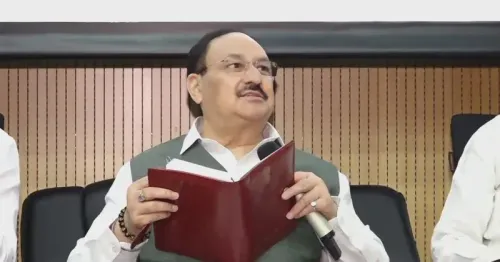
Kishan Reddy, Nadda Review AIIMS Bibinagar Progress
Synopsis
Union Ministers G. Kishan Reddy and J.P. Nadda jointly reviewed AIIMS Bibinagar in Telangana on 9 July 2026. With over 87% construction complete, the institute serves 1,800 OPD patients daily, has delivered 1.56 lakh teleconsultations, and co-developed a prosthetic leg with DRDO.
Key Takeaways
Over 87% of AIIMS Bibinagar's construction is complete, with hospital, academic, hostel, and AYUSH wings operational.
The institute serves nearly 1,800 OPD patients daily across 250 beds , with treatment under PM-JAY and Aarogyasri.
1.56 lakh+ eSanjeevani teleconsultations have been delivered across all 33 districts of Telangana.
900+ students are enrolled across MBBS, PG, super-speciality, nursing, and allied health programmes, supported by 132 faculty .
The institute has secured ₹64 crore in research grants, produced 1,150+ publications , and co-developed the ADIDOC prosthetic leg with DRDO.
Community outreach has reached 66,000+ people through 547 medical camps and 6 adopted villages .
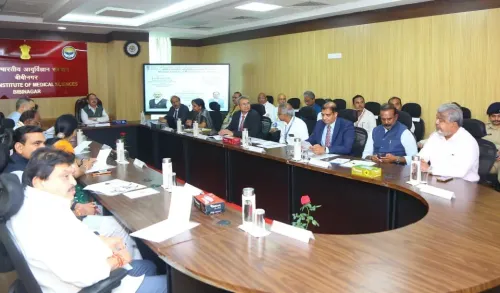
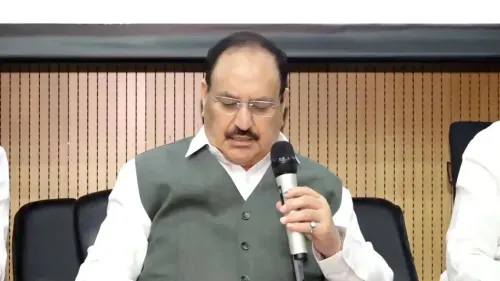
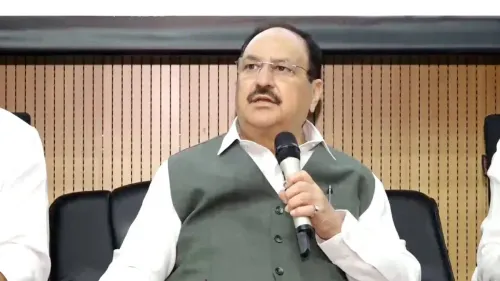
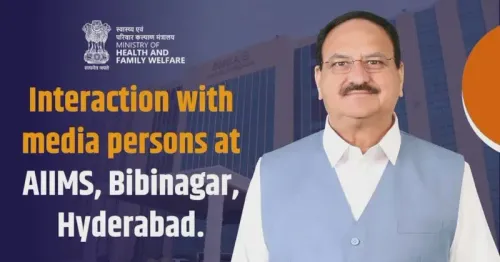
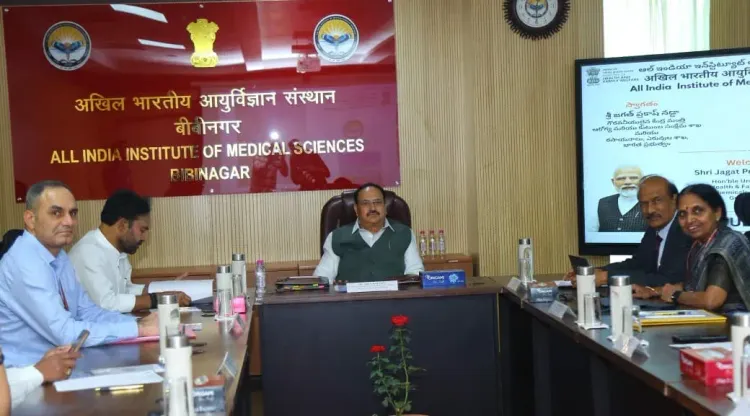
Union Coal and Mines Minister G. Kishan Reddy joined Union Health Minister J.P. Nadda on 9 July 2026 to inspect the ongoing construction and operations of AIIMS Bibinagar in Telangana, describing the institution as steadily emerging as a centre of excellence in healthcare, medical education, and research.
Context
AIIMS Bibinagar is one of 22 new All India Institutes of Medical Sciences approved under the Pradhan Mantri Swasthya Suraksha Yojana (PMSSY) Phase-IV in 2015, aimed at expanding tertiary healthcare access to states with historically low capacity. Telangana was among the beneficiary states, with the institute designated an Institution of National Importance under central government mandate. The joint visit by two senior Union ministers signals continued federal oversight of the project's delivery timeline.
Kishan Reddy, who also serves as BJP Telangana state president, noted in his post that it was 'heartening to witness the remarkable progress' of the institution. The review covered both physical infrastructure and operational metrics across multiple verticals.
Policy Backdrop
The PMSSY, first launched in 2003, was designed to correct regional imbalances in tertiary medical care by seeding new AIIMS campuses across underserved states. AIIMS Bibinagar's integration with Ayushman Bharat Pradhan Mantri Jan Arogya Yojana (PM-JAY) and the Aarogyasri state health scheme reflects the broader policy architecture linking infrastructure investment with insurance-backed cashless treatment for eligible beneficiaries.
The institute's adoption of the Ayushman Bharat Digital Mission (ABDM) — with 90% of patients reportedly integrated into the digital health ecosystem — aligns with the central government's push for interoperable health records across public facilities. The 1.56 lakh+ eSanjeevani teleconsultations delivered across all 33 districts of Telangana further embed the institute in the state's digital health infrastructure.
Key Highlights from the Review
According to Kishan Reddy's post, over 87% of construction is complete, with hospital, academic, hostel, and AYUSH facilities now operational. The institute currently enrols 900+ students across MBBS, postgraduate, super-speciality, nursing, and allied health programmes, supported by 132 faculty members and 133 senior residents. Daily outpatient load stands at nearly 1,800 patients across 250 beds, with advanced diagnostics and emergency services in place.
On the research front, the institute has registered 129 research projects, secured ₹64 crore in grants, and produced 1,150+ publications. A notable innovation highlighted is the 'ADIDOC' prosthetic leg, developed in collaboration with the Defence Research and Development Organisation (DRDO). Community outreach has extended to 6 adopted villages, 547 medical camps, and healthcare access for 66,000+ people, alongside a newly launched community radio station for public health awareness.
Stakeholders and Impact
For patients in Telangana — particularly those in rural and semi-urban districts — AIIMS Bibinagar represents a rare point of access to super-speciality care under cashless schemes. The eSanjeevani teleconsultation footprint across all 33 districts suggests the institute's reach extends well beyond its physical campus in Bibinagar, Yadadri Bhuvanagiri district.
Medical students and faculty stand to benefit from an expanding research ecosystem, while the DRDO collaboration on the ADIDOC prosthetic signals potential for civilian-use medical device innovation rooted in the institution. Community radio and outreach camps indicate an effort to address preventive care gaps in the institute's adopted villages.
What's Next
With construction past the 87% mark, attention will turn to the timeline for full commissioning of remaining facilities and the ramp-up of bed capacity beyond the current 250. Parliamentary scrutiny of PMSSY budget utilisation and construction completion across all new AIIMS campuses is likely to intensify as projects near their final phases. Further expansion of the eSanjeevani network and deeper ABDM integration will be key indicators of the institute's digital health ambitions.
Point of View
Underlining the BJP's stake in showcasing central health infrastructure in a state it does not govern. The metrics cited, from teleconsultation volumes to DRDO collaboration, are calibrated to demonstrate that new AIIMS campuses are moving beyond construction milestones toward functional, multi-dimensional institutions. The emphasis on PM-JAY and ABDM integration positions AIIMS Bibinagar within the Ayushman Bharat policy arc, reinforcing the Centre's narrative of insurance-linked, technology-enabled universal health coverage. With full commissioning still pending, the visit also sets a public benchmark against which future progress — or delays — will be measured.
NationPress
9 Jul 2026
Frequently Asked Questions
Where is AIIMS Bibinagar located?
AIIMS Bibinagar is located in Bibinagar, Yadadri Bhuvanagiri district, Telangana. It is one of the new AIIMS campuses established under the Pradhan Mantri Swasthya Suraksha Yojana.
How many OPD patients does AIIMS Bibinagar serve daily?
AIIMS Bibinagar serves nearly 1,800 OPD patients daily, with 250 beds and services covered under PM-JAY and the Aarogyasri state health scheme.
What is the ADIDOC prosthetic leg developed at AIIMS Bibinagar?
The ADIDOC is a prosthetic leg developed by AIIMS Bibinagar in collaboration with the Defence Research and Development Organisation (DRDO), representing a civilian-use medical device innovation from the institute.
What is the construction status of AIIMS Bibinagar in 2026?
As of July 2026, over 87% of AIIMS Bibinagar's construction is complete, with hospital, academic, hostel, and AYUSH facilities already operational.
How many eSanjeevani teleconsultations has AIIMS Bibinagar delivered?
AIIMS Bibinagar has delivered over 1.56 lakh eSanjeevani teleconsultations across all 33 districts of Telangana, with 90% of patients integrated into the Ayushman Bharat Digital Mission.