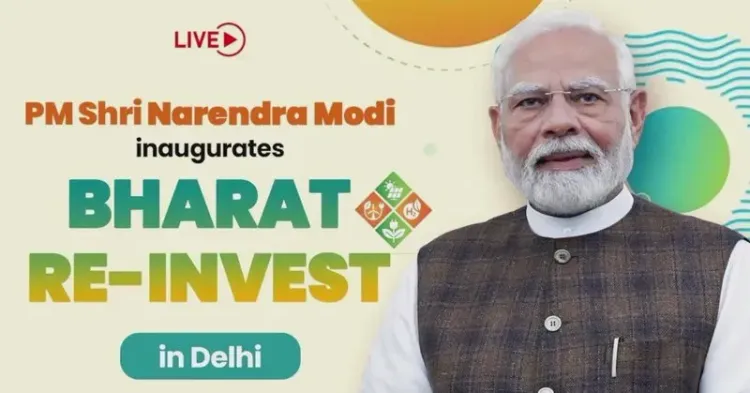
Kishan Reddy: PM Modi Inaugurates Bharat Renewable Energy Summit
Synopsis
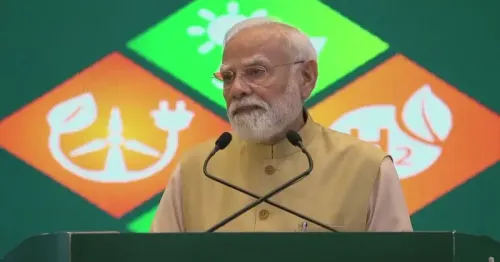
PM Narendra Modi inaugurated the Bharat Renewable Energy Summit & Expo in New Delhi on November 2, 2026, with Coal and Mines Minister G. Kishan Reddy amplifying the event live on X as India pushes toward its 500 GW clean-energy target by 2030.
Key Takeaways
PM Narendra Modi inaugurated the Bharat Renewable Energy Summit & Expo in New Delhi on November 2, 2026 .
Union Coal and Mines Minister G.
Kishan Reddy broadcast the inauguration live on X, underlining the event's political prominence.
The summit is set against India's COP26 pledge of 500 GW non-fossil fuel capacity by 2030 .
India's National Solar Mission , launched in 2010 , laid the policy foundation for the country's current renewable energy scale-up.
Coal remains India's dominant electricity source, creating a dual mandate for Kishan Reddy across his two portfolios.
Analysts will watch for new capacity targets, financing mechanisms, or state-level project announcements from the summit.
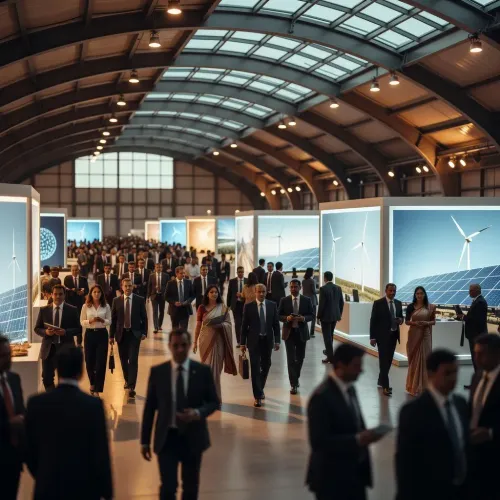
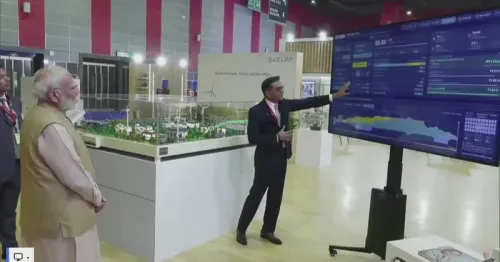
With a live broadcast drawing national attention, Prime Minister Narendra Modi on Monday, November 2, 2026 inaugurated the Bharat Renewable Energy Summit & Expo in New Delhi — a flagship industry gathering designed to sharpen India's clean-energy ambitions and court fresh investment into solar, wind, and green hydrogen. Union Coal and Mines Minister G. Kishan Reddy, who also serves as BJP Telangana state president, shared the live broadcast on X, signalling the political weight the ruling dispensation is lending to the event.
A summit that carries a 500 GW promise
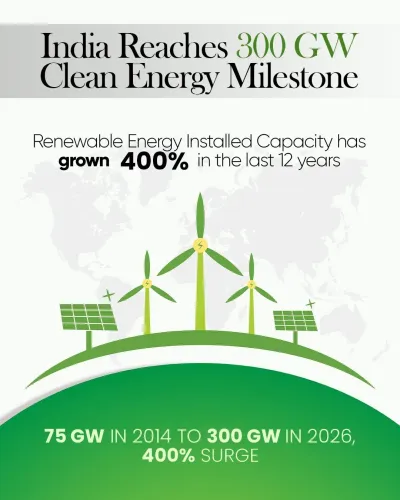
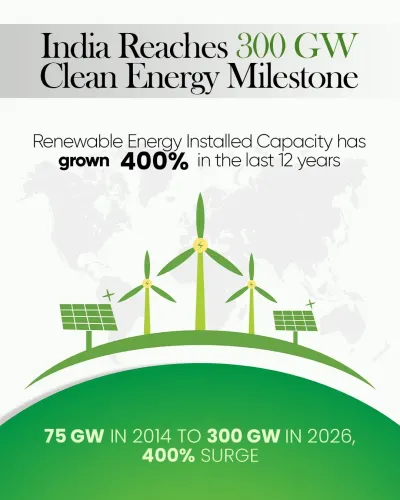
The backdrop to this inauguration is India's audacious climate pledge at COP26 in 2021 — a commitment to reach 500 GW of non-fossil fuel installed capacity by 2030. That target, announced by Modi himself on the Glasgow stage, has since become the organising logic behind a succession of high-profile summits, policy pushes, and state-level project announcements. The Bharat Renewable Energy Summit fits squarely into that tradition: a moment to take stock of progress, set fresh milestones, and tell the world India is still on track.
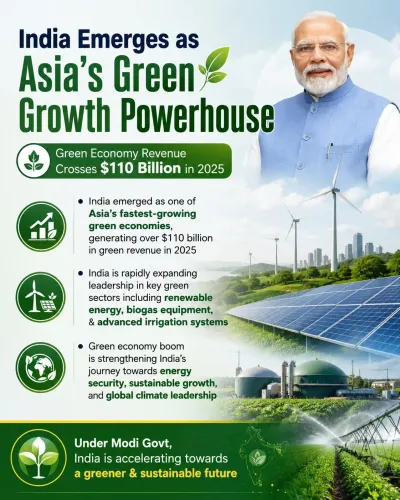
India's renewable energy journey has roots stretching back to the National Solar Mission of 2010, which first placed utility-scale solar on the national agenda. In the intervening years, the country has climbed to become one of the world's largest renewable energy markets, even as coal remains the dominant source of day-to-day power — a tension that ministers like Kishan Reddy, who oversees both portfolios, must navigate constantly.
Kishan Reddy's dual mandate — coal today, renewables tomorrow
No minister embodies India's energy paradox more visibly than G. Kishan Reddy. As the keeper of both the Coal and Mines portfolios, he is simultaneously responsible for sustaining the thermal backbone of India's grid and for championing the clean-energy transition that is expected to erode coal's share over the coming decade. His decision to amplify the Prime Minister's inauguration of a renewable energy summit underscores that, at least in official messaging, both imperatives are presented as complementary rather than contradictory.
Successive governments have used events of this kind to attract renewable energy companies and institutional investors, announce production-linked incentives, and signal regulatory intent. What emerges from the summit's sessions — new capacity targets, state-level project pipelines, or financing frameworks — will determine whether this inauguration becomes a genuine inflection point or another milestone in a long march already well under way.
Delhi as the stage for India's clean-energy pitch
New Delhi has become the default venue for India's biggest policy and industry summits, and the choice of the capital reinforces that this is a national-level statement, not a regional one. With renewable energy companies and investors watching closely, the Bharat Renewable Energy Summit & Expo offers the government a live platform to translate the 500 GW pledge into bankable project announcements. The question every analyst in the room will be asking: does today's inauguration come with concrete numbers attached?
Point of View
Not competing, tracks. High-profile inaugurations of this kind have historically preceded policy announcements on capacity targets or incentive schemes, giving today's event a significance beyond the ceremonial. For Kishan Reddy personally, sharing the live broadcast reinforces his position as a bridge between the old energy economy and the new one India is building — a useful narrative as Telangana remains a state with both significant coal reserves and fast-growing solar ambitions. Whether this summit produces binding commitments or remains aspirational will be the real test of its legacy.
NationPress
2 Nov 2026
Frequently Asked Questions
What is the Bharat Renewable Energy Summit and Expo?
The Bharat Renewable Energy Summit & Expo is a major industry and policy event held in New Delhi focused on renewable energy technologies, investment, and India's clean-energy transition goals.
What is India's renewable energy target for 2030?
India has pledged to achieve 500 GW of non-fossil fuel installed capacity by 2030 , a commitment made by PM Modi at the COP26 climate summit in 2021 .
Why is Coal Minister G. Kishan Reddy involved in a renewable energy event?
G. Kishan Reddy holds the combined portfolio of Coal and Mines , making him responsible for both sustaining India's coal-dependent power grid and supporting the renewable energy transition — two mandates the government presents as complementary.
What was India's National Solar Mission?
The National Solar Mission was launched in 2010 to scale up utility-scale solar power in India and formed the foundational policy framework for the country's subsequent clean-energy expansion.
What should I watch for after the Bharat Renewable Energy Summit 2026?
Key announcements to follow include new renewable capacity targets, state-level project pipelines, production-linked incentive schemes, and financing mechanisms that may be unveiled during or immediately after the summit.