Kishan Reddy Highlights India's Solar Surge from 2.5 GW to 155 GW
Synopsis
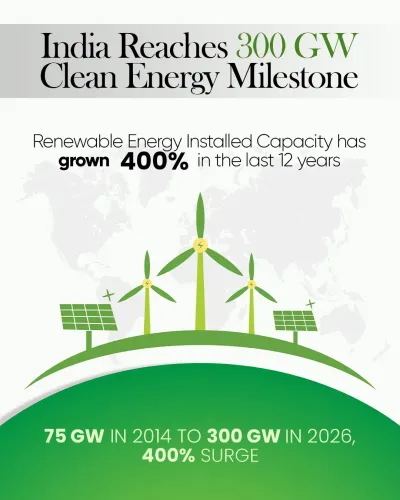
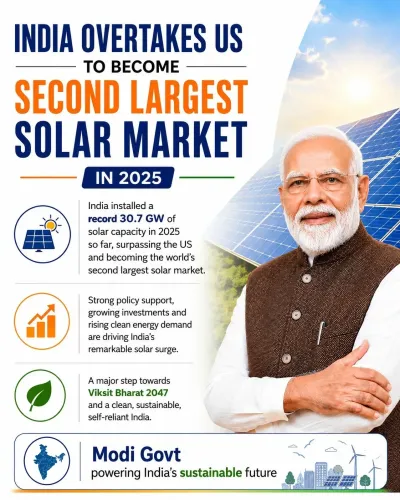
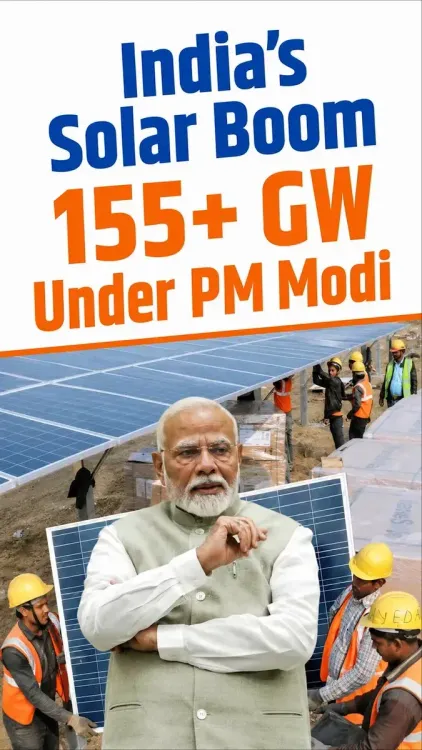
Union Coal and Mines Minister G. Kishan Reddy has highlighted India's solar capacity surge from 2.5 GW to over 155 GW in a decade, attributing the growth to PM Modi's leadership and schemes like PM Surya Ghar and PM-KUSUM that are bringing solar energy to homes and farms.
Key Takeaways
India's installed solar capacity has grown from 2.5 GW to over 155 GW over the past decade, a nearly 62-fold increase.
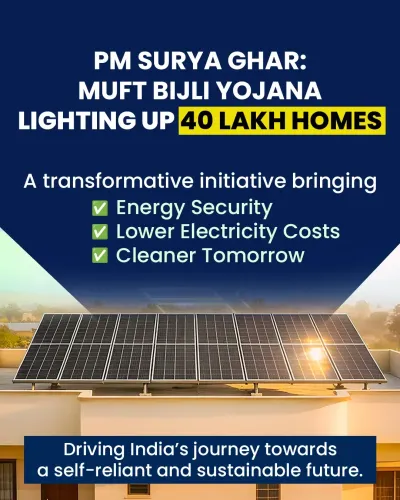
PM Surya Ghar provides subsidised or free rooftop solar electricity to residential households across India.
PM-KUSUM promotes solar-powered irrigation pumps and decentralised plants specifically for farmers.
India committed to 500 GW of non-fossil fuel capacity by 2030 at COP26 in Glasgow in 2021.
Both schemes are anchored in the Atmanirbhar Bharat framework to reduce dependence on imported solar components.
India's solar mission traces its policy roots to the Jawaharlal Nehru National Solar Mission launched in 2010.
Union Coal and Mines Minister G. Kishan Reddy on Tuesday, May 26, 2026 highlighted India's rapid expansion in solar energy capacity, citing a decade-long surge from 2.5 GW to over 155 GW of installed solar power under the leadership of Prime Minister Narendra Modi. The minister credited flagship schemes PM Surya Ghar and PM-KUSUM with driving solar adoption at the household and farm level, framing the growth as central to India's vision of an Atmanirbhar Bharat (self-reliant India).
Context
Reddy's post underscores a significant milestone in India's clean energy narrative. In his words, 'India's clean energy journey is scripting a new chapter of growth, sustainability and self-reliance.' The minister pointed to the near-62-fold increase in solar capacity over a single decade as a testament to the country's accelerated pivot away from fossil-fuel dependency for new power additions.
The remarks come as India continues to balance rising electricity demand with its international climate commitments. At COP26 in Glasgow in 2021, India pledged to achieve 500 GW of non-fossil fuel capacity by 2030, a target that has anchored domestic renewable energy policy since.
Policy Backdrop
India's solar ambitions trace their institutional roots to the Jawaharlal Nehru National Solar Mission, launched in 2010, which set the first grid-connected solar targets for the country. The policy architecture has since expanded considerably, with the current government layering in demand-side and decentralised programmes.
PM Surya Ghar is designed to install rooftop solar systems on residential households, offering subsidised or free electricity to enrolled families. PM-KUSUM — the Pradhan Mantri Kisan Urja Suraksha evam Utthaan Mahabhiyan — targets farmers directly, promoting solar-powered irrigation pumps and small decentralised solar plants to reduce agricultural dependence on grid power and diesel.
Both schemes sit within the broader Atmanirbhar Bharat framework, which seeks to reduce India's import dependence on solar photovoltaic modules and support domestic manufacturing across the clean-energy supply chain.
Stakeholders and Impact
The beneficiaries of these programmes span two of India's largest constituencies: households seeking lower electricity bills and farmers seeking reliable, affordable irrigation. Rooftop solar adoption under PM Surya Ghar has the potential to reduce monthly power costs for millions of families, particularly in states with high solar irradiance.
For the agricultural sector, PM-KUSUM addresses a long-standing vulnerability — the dependence on erratic grid supply or expensive diesel pumps for crop irrigation. By anchoring energy access at the farm level, the scheme also reduces the subsidy burden on state electricity distribution companies that have historically cross-subsidised agricultural consumers.
The renewable energy sector itself stands as a key stakeholder, with domestic solar manufacturers, engineering firms, and project developers all positioned to benefit from continued government-backed demand generation.
What's Next
Attention will now focus on the pace of subsidy disbursement and physical installation targets under both PM Surya Ghar and PM-KUSUM, as the gap between announced capacity and on-ground implementation has historically been a pressure point for India's renewable programmes. Parliamentary updates and ministry-level reviews are expected to track progress against the 500 GW non-fossil fuel target by 2030.
With successive COP climate summits continuing to spotlight India's energy transition, the government's ability to demonstrate verifiable capacity additions — and to scale decentralised solar to rural and semi-urban India — will be closely watched by both domestic policymakers and international climate observers.
Point of View
Positioning the BJP-led government's clean energy record as a pillar of the Atmanirbhar Bharat brand ahead of what are likely continued international climate discussions. The choice of a Coal and Mines minister — rather than the Power or New and Renewable Energy minister — to champion solar growth is notable, signalling an effort to project the government as holistically committed to the energy transition rather than siloed by portfolio. The 2.5 GW-to-155 GW framing is a rhetorically powerful benchmark that anchors the government's decade-long record against a single, easily communicated metric. This pattern of ministerial social-media amplification of scheme milestones has become a consistent feature of BJP's political communication strategy, blending policy messaging with electoral positioning.
NationPress
19 Sept 2026
Frequently Asked Questions
What is India's current installed solar capacity?
According to Union Minister G. Kishan Reddy's statement on May 26, 2026, India's installed solar capacity stands at over 155 GW , up from just 2.5 GW a decade ago.
What is PM Surya Ghar scheme?
PM Surya Ghar is a central government scheme that installs rooftop solar systems on residential households, providing subsidised or free electricity to enrolled families to reduce their monthly power costs.
What is PM-KUSUM scheme and who benefits?
PM-KUSUM — Pradhan Mantri Kisan Urja Suraksha evam Utthaan Mahabhiyan — benefits farmers by promoting solar-powered irrigation pumps and decentralised solar plants, reducing their dependence on grid power and diesel.
What is India's renewable energy target for 2030?
India pledged at COP26 in Glasgow in 2021 to achieve 500 GW of non-fossil fuel electricity capacity by 2030 , a commitment that has anchored domestic renewable energy policy since.
When did India's solar mission begin?
India's institutional solar policy began with the Jawaharlal Nehru National Solar Mission , launched in 2010 , which set the country's first grid-connected solar power targets.