Kishan Reddy Reviews QFMB Mines, Pushes to Boost Mineral Security

Synopsis
Union Mines Minister G. Kishan Reddy reviewed the Quartz, Feldspar, Mica and Barytes sector on October 24, examining a Committee Report and directing officials to expedite decisions, advancing India's mineral security under the Atmanirbhar Bharat framework.
Key Takeaways
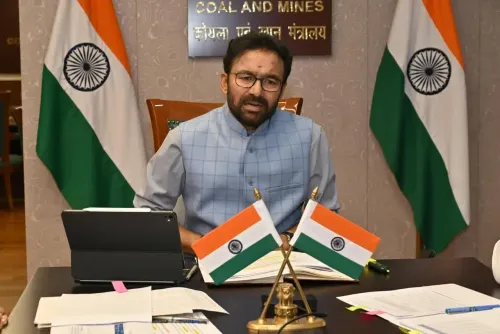
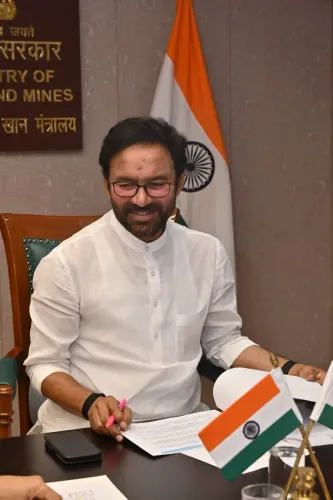
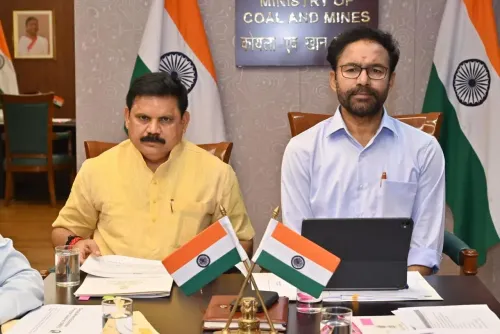
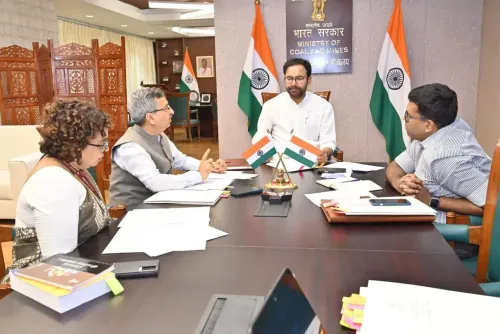
Kishan Reddy conducted a review of QFMB (Quartz, Feldspar, Mica and Barytes) mines on Saturday, October 24, 2026 .
The minister examined a Committee Report on the sector and identified key challenges in the mining ecosystem.
Officials were directed to expedite decisions and ensure timely follow-up on the report's recommendations.
The four minerals are critical inputs for ceramics, glass, electronics, cosmetics, and oil and gas drilling industries.
The review aligns with the National Mineral Policy 2019 and MMDR Act amendments of 2020–2021 prioritising scientific mining and faster block auctions.
India's domestic QFMB production is central to the broader Atmanirbhar Bharat supply-chain self-reliance push.
India's mineral governance got a direct push on Saturday, October 24, 2026, as Union Coal and Mines Minister G. Kishan Reddy concluded the week with a hands-on review of Quartz, Feldspar, Mica and Barytes (QFMB) mines — four non-metallic minerals critical to industries ranging from ceramics and glass to electronics and oil drilling.
What the QFMB review covered
The minister examined a Committee Report on the sector alongside 'key challenges' in the mining ecosystem, directing officials at the Ministry of Mines (@MinesMinIndia) to 'expedite decisions and ensure timely follow-up.' The specific identity and recommendations of the committee have not been made public, but the focus on regulatory speed is consistent with long-standing bottlenecks in non-metallic mineral clearances. Reddy framed the review as part of India's push for 'mineral security through scientific mining and responsible development.'
Why quartz, feldspar, mica and barytes matter now
Quartz feeds the semiconductor and solar panel supply chain. Feldspar is indispensable to ceramics and glass manufacturing. Mica underpins electrical insulation and cosmetics. Barytes — also spelled barite — is a high-density mineral essential to oil and gas drilling fluids, and India is among the world's top producers. Together, these four minerals sit at the intersection of industrial self-reliance and export competitiveness, making regulatory delays in their mining ecosystem a direct drag on downstream manufacturing.
The policy architecture behind the push
The review lands within a well-established policy framework. The National Mineral Policy 2019 made scientific mining and reduced import dependence core objectives for industrial minerals. Amendments to the Mines and Minerals (Development and Regulation) Act in 2020–2021 introduced provisions for faster block auctions and strengthened District Mineral Foundations. Periodic ministerial reviews of non-metallic sectors are a standard mechanism within this framework — a way of pushing committee recommendations off shelves and into action. The broader Atmanirbhar Bharat agenda has only sharpened the urgency: supply-chain fragility exposed in recent years has put a premium on securing domestic feedstock for manufacturing.
Officials put on the clock
Reddy's directive to 'expedite decisions' signals impatience with the procedural drag that has historically slowed lease renewals and environmental clearances in this sector. The instruction to ensure 'timely follow-up' puts officials on notice that the committee's recommendations should translate into notifications, not footnotes. Mining companies and mineral processing industries — the primary stakeholders in the QFMB value chain — will be watching for concrete follow-through, whether through revised auction timelines or faster clearance pipelines.
The real test now is whether this week's directive accelerates the one thing that has eluded India's non-metallic mineral sector for years: speed.
Point of View
Particularly when downstream industrial sectors are signalling supply stress. The explicit language around 'mineral security' and 'scientific mining' echoes the vocabulary of both the National Mineral Policy 2019 and the Atmanirbhar Bharat industrial agenda, suggesting this review is as much about signalling political intent as administrative follow-through. For the QFMB sector specifically, the real measure will be whether clearance timelines and lease renewal processes show measurable improvement in the months following this directive. With India's semiconductor and renewable-energy manufacturing ambitions accelerating demand for quartz in particular, the stakes of continued regulatory delay are rising fast.
NationPress
24 Oct 2026
Frequently Asked Questions
What are QFMB minerals and why are they important for India?
QFMB stands for Quartz, Feldspar, Mica and Barytes — four non-metallic minerals used in ceramics, glass, electronics, cosmetics and oil-well drilling fluids. India is a significant global producer of all four, and their domestic supply is critical to reducing import dependence in key manufacturing sectors.
What did G. Kishan Reddy direct officials to do in the QFMB review?
Reddy directed Ministry of Mines officials to expedite decisions on a Committee Report covering the QFMB sector and to ensure timely follow-up, with the stated goal of strengthening India's mineral security through scientific mining and responsible development.
What is India's National Mineral Policy 2019?
The National Mineral Policy 2019 is a central government framework that prioritises scientific mining, sustainable development and reduced import dependence for industrial minerals. It forms the backbone of regulatory reforms including faster block auctions and district mineral foundation strengthening.
How do the 2020-2021 MMDR Act amendments relate to QFMB mining?
Amendments to the Mines and Minerals (Development and Regulation) Act in 2020-2021 introduced provisions for faster block auctions and strengthened District Mineral Foundations, directly aimed at reducing the clearance delays that have historically slowed non-metallic mineral production including QFMB.
What is Atmanirbhar Bharat's connection to India's mineral sector?
The Atmanirbhar Bharat initiative places a premium on securing domestic raw material supplies to reduce vulnerability to global supply-chain disruptions. QFMB minerals are directly linked to this goal as feedstocks for electronics, glass and oil-field industries that India is scaling up domestically.