Kishan Reddy Visits PM SVANidhi Tiffin Centre in Kacheguda
Synopsis
Union Minister G. Kishan Reddy visited a PM SVANidhi-backed tiffin centre in Kacheguda, Hyderabad, on 27 June 2026, sharing a meal with residents and paying via UPI to demonstrate the on-ground convergence of welfare credit and Digital India's cashless payment infrastructure.
Key Takeaways
Kishan Reddy , Union Coal and Mines Minister and BJP Telangana president, visited a PM SVANidhi beneficiary's tiffin centre in Shamsheerbagh, Kacheguda, Hyderabad on 27 June 2026 .
The minister paid for his breakfast via UPI , framing the transaction as evidence of Digital India 's reach into everyday informal commerce.
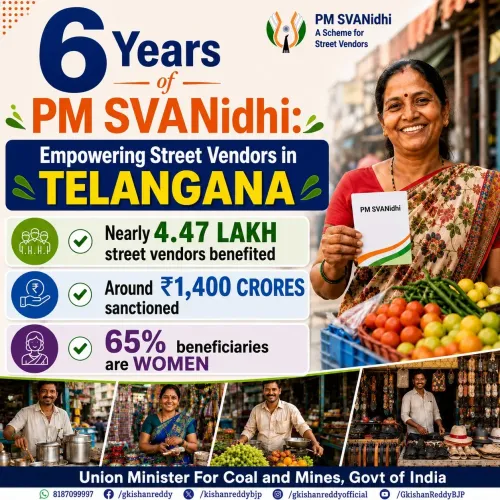
PM SVANidhi , launched in June 2020 , provides collateral-free working-capital loans to street vendors as part of the Atmanirbhar Bharat package.
UPI , operated by NPCI since 2016 , has been progressively integrated with welfare schemes and small-business transactions across India.
Senior BJP leaders including Shri Chintala Ramachandra Reddy and local party workers accompanied the minister during the visit.
The visit reflects the BJP's broader strategy of demonstrating welfare delivery at the grassroots level in Telangana .
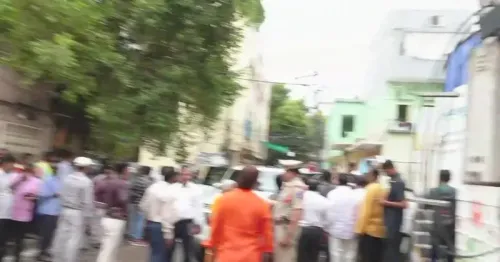
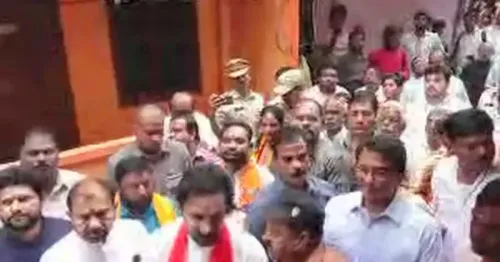
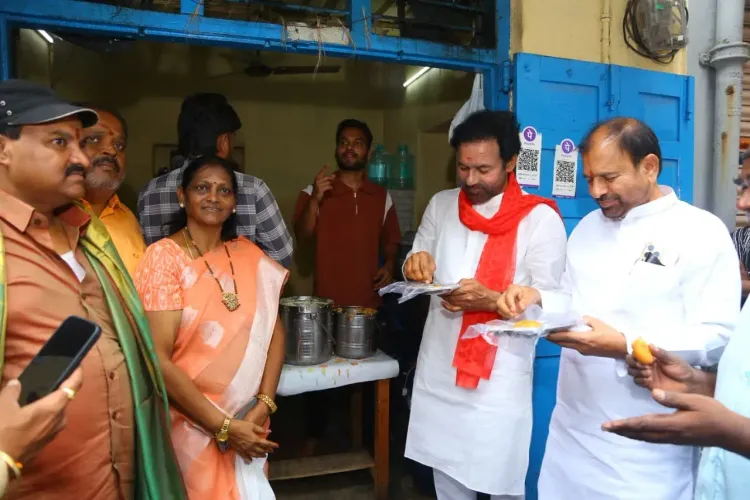
Union Coal and Mines Minister and BJP Telangana state president G. Kishan Reddy visited a local tiffin centre run by a PM SVANidhi scheme beneficiary in Shamsheerbagh, Kacheguda, Hyderabad on Saturday, 27 June 2026, interacting with residents over breakfast and paying for his meal via UPI to highlight the reach of the Digital India programme.
Context
Kishan Reddy shared that he 'visited a local tiffin centre run by a PM SVANidhi beneficiary in Shamsheerbagh, Kacheguda and interacted with the residents over a plate of piping hot breakfast.' He added that he 'paid through UPI — a glimpse of how Digital India is transforming everyday life.' Senior BJP leaders and party workers, including Shri Chintala Ramachandra Reddy, were present during the visit.
The tiffin centre in Kacheguda — a busy urban locality in Hyderabad, Telangana — represents the kind of micro-enterprise the PM SVANidhi scheme was designed to support: small street vendors and informal food stalls that form the backbone of neighbourhood commerce in Indian cities.
Policy Backdrop
The Pradhan Mantri Street Vendor's AtmaNirbhar Nidhi (PM SVANidhi) scheme was launched in June 2020 as part of the Atmanirbhar Bharat package to provide collateral-free working-capital loans to street vendors affected by the economic disruptions of that period. The scheme has since expanded to cover urban vendors across multiple loan tranches, enabling recipients to stabilise and grow small food and retail businesses.
The Digital India programme, formally launched in 2015, and the Unified Payments Interface (UPI) — rolled out by the National Payments Corporation of India (NPCI) in 2016 — have progressively been integrated into welfare delivery and small-business transactions. UPI's real-time mobile payment infrastructure has made cashless transactions accessible even at the smallest street-side enterprises.
Stakeholders and Impact
Street vendors and urban small traders are the primary beneficiaries of PM SVANidhi, receiving collateral-free micro-credit that allows them to invest in supplies, equipment, and working capital without depending on informal moneylenders. The scheme's convergence with UPI means beneficiaries can also build a digital transaction history, improving their eligibility for higher loan tranches.
For Hyderabad's dense urban vending ecosystem, such ministerial visits serve as a public signal of central government attention to the informal economy in Telangana, a state where the BJP has been actively building its grassroots presence. The participation of local karyakartas alongside senior leadership reflects the party's outreach strategy in urban constituencies.
What's Next
Quarterly progress reports on PM SVANidhi loan disbursements will be a key indicator of how effectively the scheme is reaching vendors in cities like Hyderabad. Analysts will also watch for any state-level moves to integrate UPI acceptance with municipal street-vending licences, which could further formalise the sector. Kishan Reddy's visible engagement with welfare beneficiaries in Telangana is likely to continue as the BJP seeks to consolidate its urban voter base in the state.
Point of View
The minister collapses the distance between central policy and local lived experience — a communication device the party has used consistently since 2020 to validate Atmanirbhar Bharat on the ground. In Telangana, where the BJP is working to expand its urban footprint, such hyperlocal engagements by the state president double as political outreach. The convergence of credit access and cashless payments in a single visit signals that welfare schemes are increasingly being packaged together for maximum visibility ahead of future electoral cycles.
NationPress
26 Sept 2026
Frequently Asked Questions
What is the PM SVANidhi scheme?
PM SVANidhi, or Pradhan Mantri Street Vendor's AtmaNirbhar Nidhi, is a central government scheme launched in June 2020 that provides collateral-free working-capital loans to street vendors, helping them sustain and grow their small businesses without relying on informal moneylenders.
Why did Kishan Reddy visit a tiffin centre in Kacheguda?
Kishan Reddy visited the tiffin centre in Shamsheerbagh, Kacheguda on 27 June 2026 to interact with a PM SVANidhi beneficiary and local residents, and to highlight how Digital India and UPI are transforming everyday transactions at the grassroots level.
What is UPI and how does it connect to welfare schemes?
UPI, or Unified Payments Interface, is a real-time mobile payment system operated by the National Payments Corporation of India since 2016. It has been integrated with welfare disbursements and small-business transactions, allowing scheme beneficiaries to conduct and record cashless payments.
Who is G. Kishan Reddy?
G. Kishan Reddy is the Union Minister of Coal and Mines in the central government and the president of the BJP's Telangana state unit. He represents Secunderabad in Parliament and is a senior figure in the party's Telangana operations.
What is the significance of the Kacheguda visit for BJP in Telangana?
The visit signals the BJP's effort to demonstrate on-ground delivery of central welfare schemes in Telangana, a state where the party is actively building its urban grassroots presence. Ministerial engagement with scheme beneficiaries is part of a broader outreach strategy in the state.