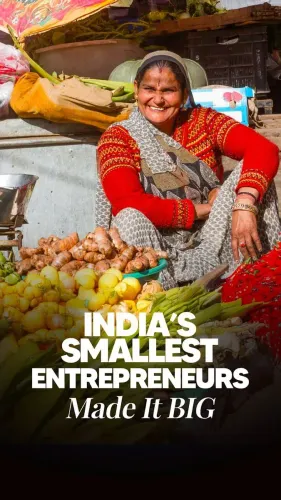
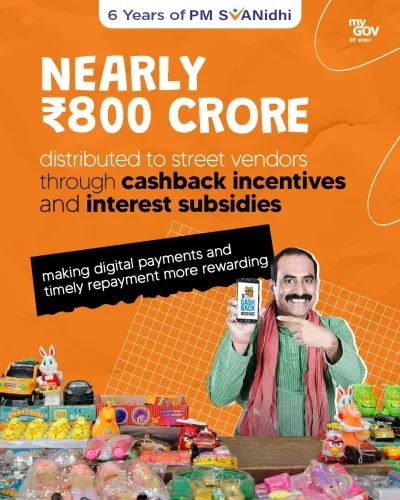
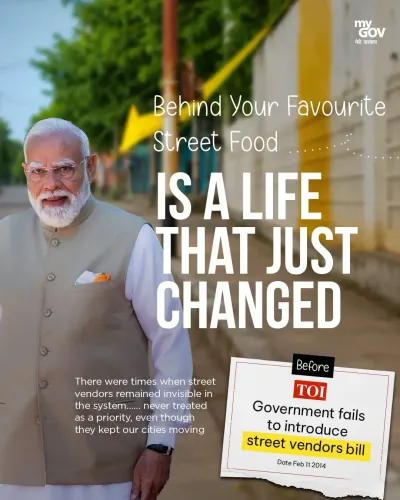
Kishan Reddy: PM SVANidhi transforms Telangana street vendors
Synopsis
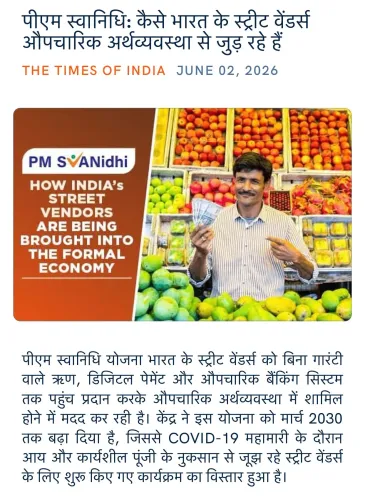
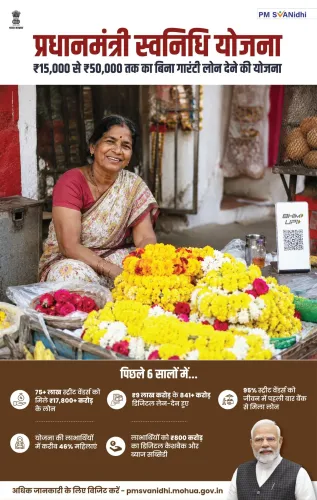
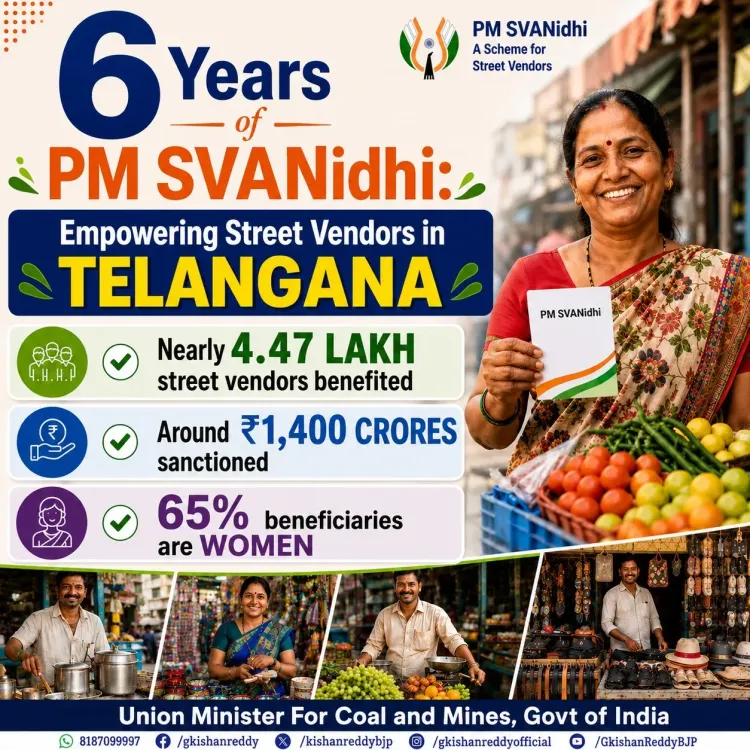
Union Minister G. Kishan Reddy on 1 June 2026 marked six years of PM SVANidhi, highlighting that nearly 4.47 lakh street vendors in Telangana have benefited, around Rs 1,400 crore has been sanctioned, and 65 per cent of beneficiaries are women, framing the scheme as central to Aatmanirbhar Bharat goals.
Key Takeaways
PM SVANidhi completed six years on 1 June 2026 , launched in 2020 to provide collateral-free loans to urban street vendors.
Nearly 4.47 lakh street vendors in Telangana have benefited from the scheme, according to Union Minister G.
Around Rs 1,400 crore has been sanctioned under the scheme in Telangana.
65 per cent of Telangana beneficiaries are women, highlighting a strong gender-inclusion outcome.
The scheme is part of the Aatmanirbhar Bharat framework, building on earlier financial inclusion efforts such as Jan Dhan and MUDRA loans.
Implementation is tracked through urban local bodies and digital platforms, with periodic utilisation data released by the Ministry of Housing and Urban Affairs .
Union Coal and Mines Minister and BJP Telangana state president G. Kishan Reddy on Monday, 1 June 2026 marked the sixth anniversary of the PM SVANidhi scheme, highlighting its reach among street vendors in Telangana and crediting the initiative to the leadership of Prime Minister Narendra Modi.
Context
PM SVANidhi — formally the Pradhan Mantri Street Vendor's AtmaNirbhar Nidhi — was launched on 1 June 2020 to provide collateral-free working capital loans to urban street vendors who had seen their livelihoods disrupted by COVID-19 lockdowns. The scheme began with an initial loan tranche of up to Rs 10,000 and was subsequently expanded with higher loan tiers and interest subsidies to deepen its reach. Reddy's post, carrying the hashtag #6YearsofPMSVANidhi, frames the anniversary as a milestone in the government's financial inclusion agenda.
In his post, the minister stated that the scheme has enabled nearly 4.47 lakh street vendors in Telangana to access collateral-free loans and strengthen their livelihoods, with around Rs 1,400 crore sanctioned in the state. He also noted that 65 per cent of the beneficiaries in Telangana are women, underscoring the scheme's role in advancing women-led economic participation.
Policy Backdrop
PM SVANidhi sits within the broader Aatmanirbhar Bharat policy framework announced in 2019–2020, which sought to extend formal credit access to workers in the informal economy. It follows an established sequence of central government financial inclusion measures — including Jan Dhan accounts and MUDRA loans — aimed at reducing the urban poor's dependence on informal moneylenders. Implementation is tracked through municipal bodies and digital platforms, which record disbursement data, repayment rates, and loan upgrades across states.
As BJP's Telangana state president, Reddy's highlighting of state-level numbers reflects both a policy communication and a political signalling exercise — drawing attention to central scheme delivery in a state governed by a rival party. The scheme is administered by the Ministry of Housing and Urban Affairs, with state governments and urban local bodies playing a key role in vendor identification and loan facilitation.
Stakeholders and Impact
Street vendors — a large and historically underserved segment of India's urban informal workforce — are the primary beneficiaries. The scheme's reported 65 per cent female beneficiary share in Telangana aligns with national-level data showing women vendors as a significant constituency for the programme. Access to formal credit allows vendors to avoid high-interest informal loans, invest in stock and equipment, and build a credit history that may unlock larger institutional finance over time.
Urban local bodies in Telangana are responsible for issuing vendor certificates of vending, which serve as the entry point for loan eligibility. The scheme's digital infrastructure links vendors to banks and microfinance institutions, creating a paper trail that supports both accountability and loan renewal eligibility.
What's Next
The Ministry of Housing and Urban Affairs periodically releases utilisation certificates and scheme progress data, which will indicate whether Telangana's figures are on a growth trajectory heading into the scheme's seventh year. State-level review meetings on loan renewal, grievance redressal, and third-tranche disbursements are expected as the anniversary mobilises fresh administrative attention. With the scheme now six years old, the policy conversation is likely to shift toward sustainability — measuring how many beneficiaries have graduated to higher credit tiers and formal banking relationships, and whether the programme continues to expand its urban coverage across Telangana and other states.
Point of View
Sanctioned amounts, and women's share — he anchors an abstract welfare narrative in locally verifiable terms, a tactic increasingly common in BJP's state-level communication strategy. The emphasis on women beneficiaries (65 per cent) is deliberate, connecting the scheme to the broader 'Nari Shakti' messaging that has featured prominently in central government outreach since 2023. As PM SVANidhi enters its seventh year, the political contest over credit for its implementation — between the Centre and state governments — is likely to intensify ahead of future electoral cycles in Telangana.
NationPress
19 Sept 2026
Frequently Asked Questions
What is PM SVANidhi scheme and who benefits from it?
PM SVANidhi, or Pradhan Mantri Street Vendor's AtmaNirbhar Nidhi, is a central government scheme launched on 1 June 2020 that provides collateral-free working capital loans to urban street vendors, starting at Rs 10,000, to help them rebuild livelihoods and access formal credit.
How many street vendors have benefited from PM SVANidhi in Telangana?
According to Union Minister G. Kishan Reddy, nearly 4.47 lakh street vendors in Telangana have benefited from the PM SVANidhi scheme, with around Rs 1,400 crore sanctioned in the state.
What percentage of PM SVANidhi beneficiaries in Telangana are women?
65 per cent of PM SVANidhi beneficiaries in Telangana are women, as stated by Union Minister G. Kishan Reddy on the scheme's sixth anniversary.
When was PM SVANidhi launched and why?
PM SVANidhi was launched on 1 June 2020 as part of the Aatmanirbhar Bharat initiative to provide financial relief to urban street vendors whose livelihoods were severely disrupted by COVID-19 lockdowns.
How does PM SVANidhi relate to Aatmanirbhar Bharat?
PM SVANidhi is a key component of the Aatmanirbhar Bharat policy framework, extending formal credit to informal urban workers and reducing their dependence on high-interest moneylenders, in line with earlier inclusion measures such as Jan Dhan accounts and MUDRA loans.