Kolkata–Biratnagar rail cargo service launched, first train carries 40 containers
Synopsis
For the first time, a direct rail freight train has connected Kolkata Port to Nepal's Biratnagar — breaking the monopoly of Birgunj as Nepal's sole rail-linked customs point. With 40 containers of Australian canola grain in the inaugural run and a 24-hour transit promise, this is the most tangible upgrade to India–Nepal trade infrastructure in years.
Key Takeaways
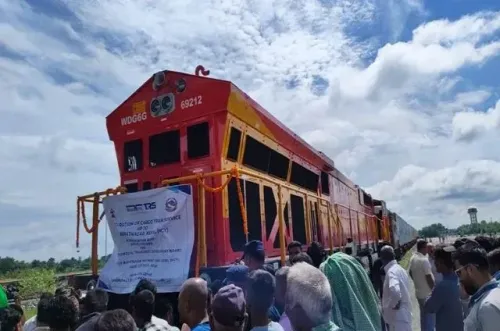
The first-ever Kolkata–Biratnagar rail cargo service was inaugurated on 17 July , with the inaugural train carrying 40 forty-foot containers .
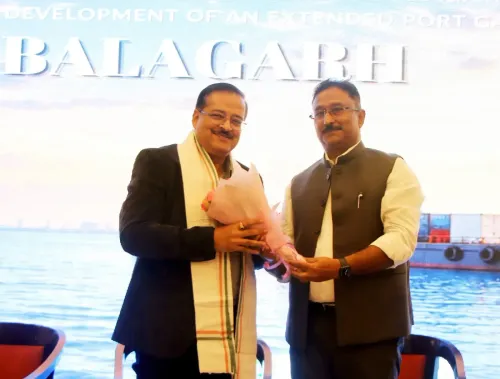
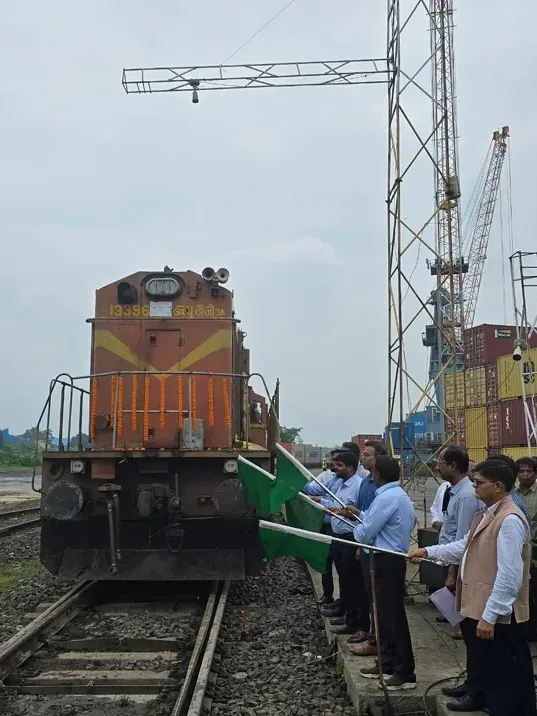
The service was flagged off by Nepal's Consul General Jhakka Prasad Acharya alongside officials from Kolkata Customs , Kolkata Port , and CONCOR .
The inaugural shipment was farmer-dressed bulk canola grain from Fremantle, Australia , operated by Maersk Line for Nepal's Swastik Oil Industries .
Biratnagar becomes Nepal's second rail-linked customs point after Birgunj , with capacity for up to 45 containers per train.
Cargo is expected to reach Biratnagar in approximately 24 hours , reducing demurrage, detention, and road haulage costs for Nepali importers.
The regulatory framework was enabled by a CBIC amendment on 4 November 2025 and a Kolkata Customs public notice on 26 February 2026 .
A first-ever direct rail freight service between Kolkata and Biratnagar, an eastern city in Nepal, was officially inaugurated on Friday, 17 July, marking a landmark expansion of the Nepal–India Transit Treaty framework. The inaugural freight train departed from Kolkata Port carrying 40 high-capacity forty-foot containers bound for the Biratnagar Customs Yard, according to the Consulate General of Nepal in Kolkata.
Key Developments
The service was jointly flagged off by Nepal's Consul General in Kolkata, Jhakka Prasad Acharya, alongside officials from Kolkata Customs, Kolkata Port, and the Container Corporation of India Limited (CONCOR). The train passes through the Jogbani Integrated Customs Yard on the Nepal–India border before arriving at Biratnagar, and at full capacity can carry up to 45 forty-foot containers in a single run.
The inaugural shipment comprised farmer-dressed bulk canola grain imported from Fremantle, Australia, operated under Maersk Line for Nepal's Swastik Oil Industries. All containers have been fitted with the Electronic Cargo Tracking System (ECTS) to ensure real-time monitoring and compliance.
What This Changes for Nepal
Until now, Birgunj — adjoining the Indian town of Raxaul — was Nepal's only rail-linked customs point for containerised imports from seaports. The Biratnagar service opens a second rail corridor, enabling regular commercial movement of both containerised and bulk cargo through eastern Nepal.
Rail transport is expected to deliver cargo to Biratnagar in approximately 24 hours, compared to significantly longer road transit times. The Consulate General noted that rail offers a safer, more reliable, and lower-cost alternative, with the new route expected to reduce port demurrage charges, container detention fees, and road haulage costs for Nepali importers.
Regulatory Groundwork
The service is the result of sustained regulatory effort spanning over a year. The Central Board of Indirect Taxes and Customs (CBIC) amended the Electronic Cargo Tracking System (ECTS) Regulations, 2019, on 4 November 2025, expanding the scope of rail cargo transportation from the Indian ports of Kolkata, Haldia, and Visakhapatnam to the Biratnagar Customs Office. Following that, Kolkata Customs issued a public notice on 26 February 2026 establishing the procedural framework for the new route.
The logistics solution was enabled through the collaborative efforts of Indian Railways, Syama Prasad Mookerjee Port, Customs, Maersk Line, Inland World Logistics, and Transecure (ECTS), according to CONCOR's Area-IV (East).
Impact on Regional Trade
The new corridor is expected to strengthen the competitiveness of Nepali industries by cutting logistics costs and improving supply chain reliability. Analysts note that eastern Nepal — home to significant agro-processing and manufacturing activity — has historically been underserved by containerised rail links, making this a structurally significant development for the region's trade infrastructure.
With both countries deepening connectivity under the Nepal–India Transit Treaty, the Biratnagar rail link represents the most tangible expansion of that framework in recent years, and sets a precedent for extending similar services to other Nepal customs points in the future.
Point of View
And Nepal's trade competitiveness depends on how quickly this becomes a high-frequency commercial service rather than a symbolic inaugural run. If demurrage and detention costs fall as projected, Nepali agro-processors could see a meaningful input-cost advantage — but only if Indian Railways and CONCOR sustain the operational reliability that road transport, for all its inefficiencies, has historically provided.
NationPress
16 Oct 2026
Frequently Asked Questions
What is the new Kolkata–Biratnagar rail cargo service?
It is the first-ever direct rail freight link between Kolkata Port in India and the Biratnagar Customs Yard in eastern Nepal, inaugurated on 17 July under the Nepal–India Transit Treaty. The service allows Nepal to receive containerised and bulk cargo imports from third countries via Indian seaports, with a single train capable of carrying up to 45 forty-foot containers.
What was carried in the inaugural train?
The first shipment comprised 40 forty-foot containers of farmer-dressed bulk canola grain imported from Fremantle, Australia, operated by Maersk Line for Nepal's Swastik Oil Industries. All containers were fitted with the Electronic Cargo Tracking System (ECTS).
Why does the Biratnagar service matter for Nepal?
Until now, Birgunj was Nepal's only rail-linked customs point for containerised seaport imports, leaving eastern Nepal dependent on costlier and slower road transport. The Biratnagar route is expected to cut logistics costs by reducing port demurrage, container detention charges, and road haulage expenses, while delivering cargo in approximately 24 hours.
What regulatory changes enabled this service?
The Central Board of Indirect Taxes and Customs (CBIC) amended the ECTS Regulations, 2019, on 4 November 2025, expanding rail cargo scope from Kolkata, Haldia, and Visakhapatnam to the Biratnagar Customs Office. Kolkata Customs then issued a public notice on 26 February 2026 establishing the operational framework for the route.
Which organisations were involved in launching the service?
The service was flagged off by Nepal's Consul General in Kolkata, Jhakka Prasad Acharya, with officials from Kolkata Customs, Kolkata Port, and CONCOR. The logistics operation involved Indian Railways, Syama Prasad Mookerjee Port, Maersk Line, Inland World Logistics, and Transecure for ECTS tracking.