Kolkata Police tighten Zero FIR protocol after Baruipur rape-murder case

Synopsis
A minor's rape and murder in Baruipur has forced Kolkata Police to confront a systemic failure: Zero FIRs — designed after the 2012 Delhi gang-rape to prevent jurisdictional delays — were still getting stuck at station level. Commissioner Ajay Nand's binding order now mandates personal officer-to-officer handovers, mandatory complainant disclosure, and immediate DSP-level reporting for all crimes against women.
Key Takeaways
Kolkata Police Commissioner Ajay Nand issued binding Zero FIR transfer guidelines on 12 July .
The order mandates personal officer-to-officer contact during every Zero FIR transfer and requires complainants to be informed of follow-up action.
For offences against women, the divisional Deputy Commissioner of Police must be notified immediately upon Zero FIR registration and transfer.
The directive was triggered by the rape and murder of a minor in Baruipur, South 24 Parganas ; four persons have been arrested.
Accused Pravas Mondal was killed in a police encounter after allegedly attempting to snatch an officer's firearm while in custody.
Santanu Mukhopadhyay , a DSP -rank officer, has been appointed as the new investigating officer, replacing two Inspector-rank officers in succession.
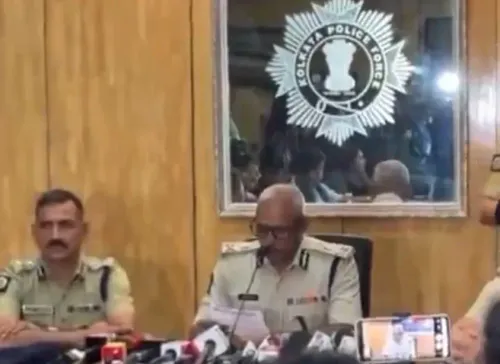
Kolkata Police have issued binding guidelines to accelerate the registration and transfer of Zero FIRs across its jurisdiction and into neighbouring districts, Kolkata Police Commissioner Ajay Nand announced on Sunday, 12 July. The directive targets administrative reluctance and systemic delays at the police station level that, according to the order, have been adversely impacting the timely disposal of criminal cases and the effective administration of criminal justice.
What the New Guidelines Mandate
Under the revised protocol, the officer-in-charge registering a Zero FIR must personally contact the officer-in-charge of the receiving police station to ensure an immediate and seamless handover of the case. The transferring officer is also required to communicate all relevant facts of the case, along with the complainant's contact details, directly to the receiving officer.
Critically, victims and their families can no longer be kept uninformed. The complainant must be told the exact follow-up action being taken, and the contact details of the receiving station's officer-in-charge must be shared with them — a transparency measure aimed at closing the information gap that has historically disadvantaged complainants navigating inter-district transfers.
Special Provisions for Crimes Against Women
The order introduces an additional layer of oversight for offences against women. 'In all cases relating to offences against women, the registration and transfer of the Zero FIR shall be reported immediately to the concerned divisional Deputy Commissioner of Police,' the order stated. This effectively places a senior officer on alert from the moment such a case is filed, reducing the risk of a case stalling at the station level.
The Baruipur Case That Triggered the Order
The guidelines follow the recent brutal rape and murder of a minor in Baruipur, South 24 Parganas district. Four persons have been arrested in connection with the crime. One of them, Pravas Mondal, was killed in an encounter last week after he allegedly attempted to escape from police custody by snatching the firearm of an escorting officer.
On the same day the guidelines were issued, West Bengal Police replaced the investigating officer in the Baruipur case for the second time. Santanu Mukhopadhyay, a Deputy Superintendent of Police (DSP)-rank officer, has been appointed to lead the investigation — a step up from the two Inspector-rank officers who had previously handled the case in succession. The change signals mounting institutional pressure to demonstrate credible investigative rigour.
Wider Context: Zero FIR and Its Importance
A Zero FIR allows a complainant to register a case at any police station regardless of jurisdiction, with the FIR subsequently transferred to the station that has territorial authority. The provision, introduced following the Justice Verma Committee recommendations after the 2012 Delhi gang-rape case, was designed specifically to prevent jurisdictional disputes from delaying action in serious crimes — particularly sexual offences. The Kolkata directive acknowledges that, over a decade later, those delays persist.
This is not the first time West Bengal has faced scrutiny over handling of crimes against women. The new order, if enforced consistently, could set a procedural benchmark for other state police forces grappling with similar inter-district transfer bottlenecks. How rigorously it is implemented will be closely watched.
Point of View
Victims pay the price first. The real test of this order is not its language but whether divisional DCPs actually act on the mandatory notifications — or treat them as paperwork.
NationPress
11 Oct 2026
Frequently Asked Questions
What is a Zero FIR and why does it matter?
A Zero FIR allows a complainant to register a case at any police station, regardless of where the offence occurred, with the FIR then transferred to the jurisdictionally correct station. It was introduced following the Justice Verma Committee recommendations after the 2012 Delhi gang-rape case to prevent jurisdictional disputes from delaying action, particularly in crimes against women.
What do Kolkata Police's new Zero FIR guidelines require?
The guidelines require the officer registering a Zero FIR to personally contact the receiving station's officer-in-charge to ensure a seamless handover. Complainants must be told what follow-up action is being taken and given the contact details of the receiving officer. For crimes against women, the divisional Deputy Commissioner of Police must be notified immediately.
What triggered the new Zero FIR order in Kolkata?
The guidelines were issued following the rape and murder of a minor in Baruipur, South 24 Parganas. Four persons have been arrested; one accused, Pravas Mondal, was killed in a police encounter after allegedly attempting to escape custody by snatching an officer's firearm.
Who is now investigating the Baruipur rape-murder case?
Santanu Mukhopadhyay, a Deputy Superintendent of Police (DSP)-rank officer, has been appointed to lead the investigation. He replaces two Inspector-rank officers who were removed in succession, signalling a push for more senior oversight of the case.
How does this order affect victims of crimes against women in West Bengal?
Under the new protocol, victims or their families must be kept informed of every transfer action taken on their Zero FIR, and the receiving officer's contact details must be shared with them. Additionally, a divisional DCP must be alerted the moment a Zero FIR involving a crime against a woman is registered and transferred, adding a senior oversight layer from the outset.