KTR Hails Yadadri Unit-5 Sync as BRS Power Legacy
Synopsis
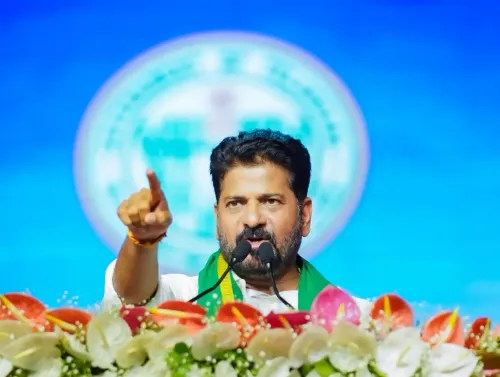
BRS working president K. T. Rama Rao highlighted the grid synchronisation of Yadadri Thermal Power Plant's 800 MW Unit-5, underscoring the state's rise from 7,778 MW installed capacity in 2014 to nearly 20,000 MW — a milestone he attributes to KCR's decade-long power vision.
Key Takeaways
Unit-5 (800 MW) of the Yadadri Thermal Power Plant has been successfully synchronised with the grid, marking a fresh milestone for the project.
Yadadri is a 4,000 MW mega project in Nalgonda district, Telangana , built under a ₹20,400 crore EPC contract awarded to BHEL .
Telangana's installed power capacity grew from 7,778 MW in 2014 to nearly 20,000 MW over the decade 2014–2023.
BRS working president KTR attributed the expansion to former Chief Minister K.
Chandrashekar Rao (KCR) 's vision for the state's power sector.
The Yadadri project forms part of Telangana's post-bifurcation strategy to build dedicated generation assets and reduce dependence on inter-state power purchases.
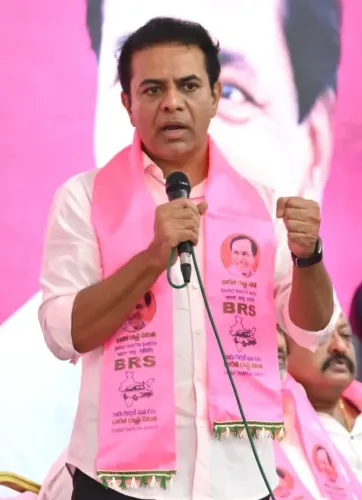
A 800 MW unit quietly clicking into the national grid may sound like a technical footnote — but for BRS working president K. T. Rama Rao, the successful synchronisation of Unit-5 at the Yadadri Thermal Power Plant is a chapter in a decade-long power story he wants Telangana to remember. On Tuesday, 20 October 2026, KTR took to X to mark the milestone, framing it as proof of what former Chief Minister K. Chandrashekar Rao's vision for the state actually built.
From 7,778 MW to Nearly 20,000 MW — a Decade of Capacity
When Telangana was carved out of Andhra Pradesh in June 2014, it inherited an installed power capacity of just 7,778 MW — and a reputation for chronic load-shedding. The numbers KTR cited on Tuesday tell the scale of what followed: the state has pushed its installed capacity to nearly 20,000 MW within a decade. That near-tripling of generation capacity underpins the industrial corridors, the 24-hour agricultural supply commitments, and the data-centre investments that defined Hyderabad's decade of growth.
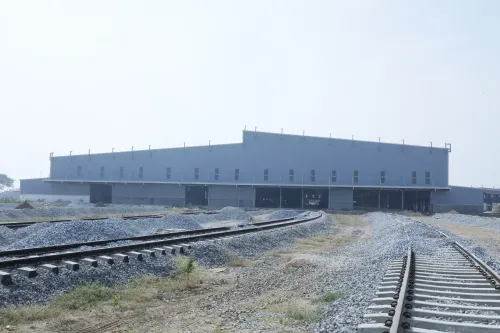
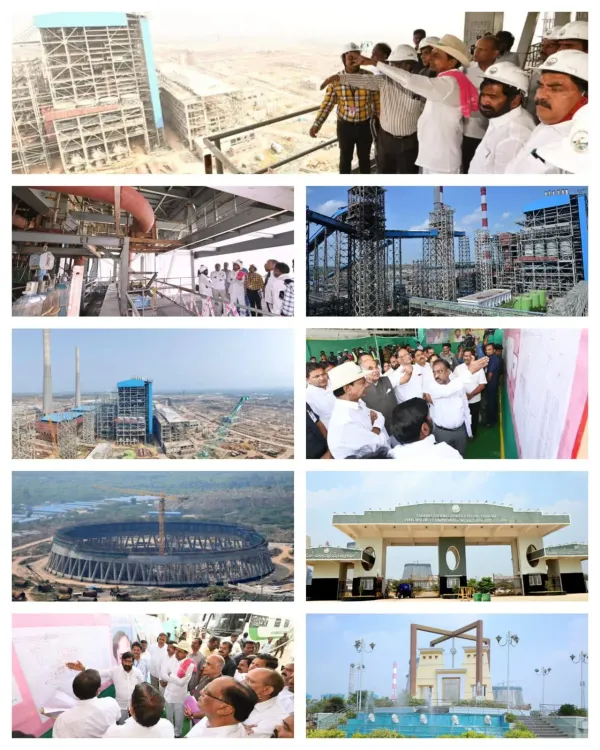
The Yadadri plant sits at the centre of that transformation. Planned as a 4,000 MW coal-based mega project in Nalgonda district, it was anchored by a ₹20,400 crore engineering, procurement and construction contract awarded to public-sector giant BHEL (Bharat Heavy Electricals Limited). The scale of the order made it one of the largest single EPC contracts BHEL had received at the time, and its phased commissioning has been a closely watched indicator of the state's power ambitions.
What Unit-5's Grid Synchronisation Actually Means
Synchronisation with the grid is the moment a new generation unit stops being a construction project and starts being usable power. With Unit-5 now synced, Yadadri adds another 800 MW to the state's supply stack — capacity that can be dispatched to homes, farms, and factories within the TSECPDCL and TSNPDCL distribution networks. Each commissioned unit at Yadadri edges the plant closer to its full 4,000 MW nameplate, reducing Telangana's dependence on costly merchant power and central government allocations.
KTR tagged the milestone under the hashtag #TelanganaDecade, a framing that situates this infrastructure win squarely within the BRS's electoral and ideological narrative: that the period 2014–2023 under KCR's leadership was a foundational era the current Congress government has inherited — and must be judged against.
BHEL's Yadadri Bet and the Broader State-Sector Play
The Yadadri contract was a strategic lifeline for BHEL at a time when India's private power sector was slowing fresh thermal orders. Telangana's willingness to route a ₹20,400 crore contract through the public-sector manufacturer reinforced BHEL's order book and kept its heavy-engineering workforce active. For the state, it meant a domestically built plant with long-term service and spares support — a consideration that matters for a utility with limited forex reserves for imported equipment.
The broader pattern, post-bifurcation, was deliberate: Telangana governments built dedicated generation assets — thermal, solar, hydel — rather than depend on inter-state power purchase agreements that could be renegotiated or curtailed. Yadadri is the flagship of that self-sufficiency doctrine.
With remaining Yadadri units still on the commissioning path and the state navigating power purchase agreements and potential tariff revisions, each unit that reaches full commercial operation will carry both engineering and political weight. Telangana's power story is not over — Unit-5's synchronisation is just the latest line written in it.
Point of View
BRS is linking present-day infrastructure gains to the previous KCR government rather than the incumbent Congress dispensation. This is a common opposition playbook — claim the credit line of long-gestation projects whose groundwork was laid on their watch. The 800 MW synchronisation at Yadadri gives BRS a tangible, verifiable data point to anchor that narrative. For the Congress government in Hyderabad, every Yadadri unit that comes online is a double-edged commissioning: welcome supply, but timed to feed a rival's legacy campaign.
NationPress
20 Oct 2026
Frequently Asked Questions
What is the Yadadri Thermal Power Plant and where is it located?
The Yadadri Thermal Power Plant is a 4,000 MW coal-based power project located in Nalgonda district, Telangana . It was conceived as a flagship generation project by the Telangana state government following the state's formation in 2014.
What does grid synchronisation of Unit-5 at Yadadri mean?
Grid synchronisation means Unit-5's 800 MW of generation capacity has been connected to and matched with the electrical grid, allowing power from that unit to be dispatched to consumers for the first time.
What was the BHEL contract for Yadadri Thermal Power Plant?
Bharat Heavy Electricals Limited (BHEL) was awarded an engineering, procurement and construction (EPC) contract worth ₹20,400 crore to build the Yadadri plant — one of the largest single EPC orders in BHEL's history at the time.
How much has Telangana's power capacity grown since 2014?
Telangana's installed power capacity grew from 7,778 MW in 2014 to nearly 20,000 MW over the decade through 2023, according to figures cited by BRS working president KTR.
Why is KTR highlighting Yadadri's milestone now?
KTR is using each Yadadri commissioning milestone to reinforce the BRS narrative that former Chief Minister KCR's decade in power (2014–2023) built Telangana's modern power infrastructure — a political claim he is making as the party operates in opposition to the current Congress government.